





Edwardian Carved Trunk
An edwardian carved trunk provides sturdy storage built from solid oak or camphor wood with traditional hand-carved decoration.
Edwardian Carved Trunk
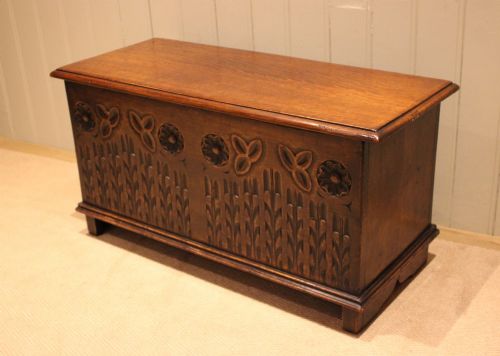
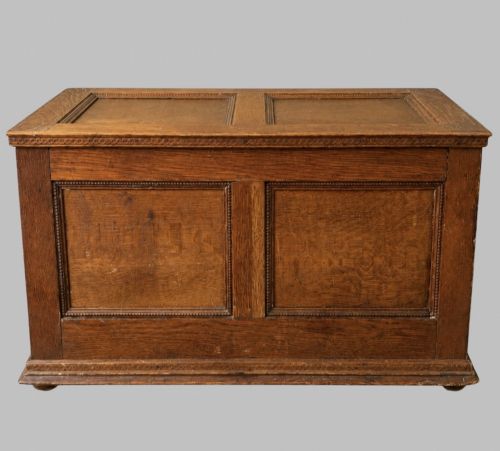
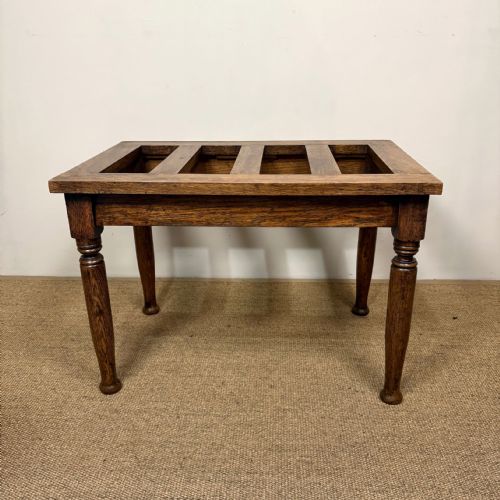
An edwardian carved trunk encompasses storage chests, coffers, and luggage stands produced during the early twentieth century alongside related examples from the nineteenth century. The listings on this page most frequently present panelled oak coffers and blanket chests featuring traditional carved decoration.
These items served practical household functions for storing textiles, blankets, and personal belongings in domestic settings. The selection spans straightforward utility pieces alongside more decorative regional and revival styles.
How they were made
Construction relies primarily on solid oak, mahogany, and camphor wood joined using traditional panelled techniques. Carved details are worked directly into the timber surface by hand, utilising chisels and gouges to create geometric or floral motifs.
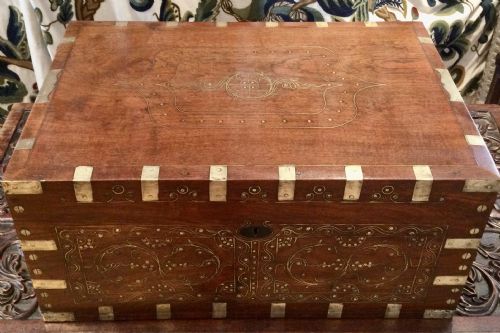
Hardware such as brass hinges and latches provide structural reinforcement and functional closure. Surface finishes remain true to the natural timber grain, sometimes enhanced with liming or wax polish.
The furniture styles represented span Arts and Crafts, Jacobean Revival, and Black Forest style alongside standard oak coffers.
What varies in quality
Quality separates through the selection of timber and the precision of the joinery rather than ornamental excess. Solid wood construction with cleanly fitted panels and robust internal framing represents the higher standard of manufacture.
The depth and crispness of the hand-carved details distinguish superior pieces from simpler workshop production. Original brass hardware and well-preserved timber surfaces add to the integrity of a piece.
The Edwardian Carved Trunk Glossary
- Coffer
- A heavy wooden chest traditionally used for storing valuables or dry goods. These boxes often feature hinged lids and raised feet.
- Luggage stand
- A low wooden frame designed to support suitcases or trunks at a convenient height in bedrooms. They frequently incorporate slatted tops and open lower shelves.
- Camphor wood
- An aromatic hardwood native to Asia, prized for its insect-repellent properties and distinct scent. It appears in travel chests and storage boxes.
- Jacobean Revival
- A design style mimicking seventeenth-century English furnishings, characterised by heavy proportions and geometric panelling. This aesthetic appears frequently in revival-era woodwork.
Edwardian Carved Trunk: Frequently Asked Questions
Where did people keep these trunks?
These storage pieces sat at the foot of beds or in hallways for holding heavy blankets and winter linens.
Smaller luggage stands functioned inside guest bedrooms to hold travelling bags off cold floors.
Can I use an old trunk daily?
Solid timber construction makes these chests robust enough for holding modern blankets and bedding in a living room or bedroom.
Keep them away from direct heat sources to prevent the timber joints from drying out and shifting.
How do I identify Edwardian oak?
Edwardian oak furniture typically displays a lighter natural tone compared to the dark finishes applied during the Victorian period.
The carving often reflects simplified Arts and Crafts influences rather than dense Victorian ornamentation.
What is camphor wood?
Camphor wood is a durable Asian timber known for its natural aromatic scent that deters moths and insects.
Trunks made from this material often feature pale grain patterns with smooth polished surfaces.