

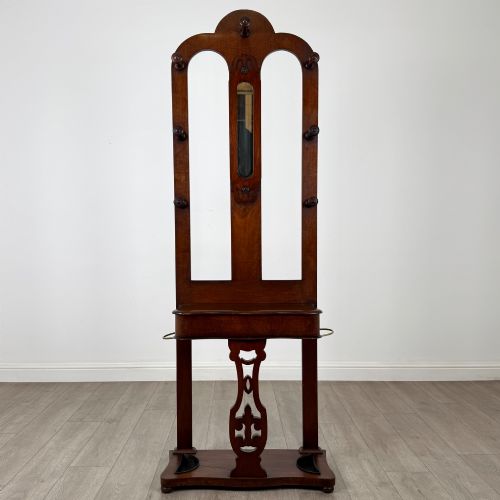
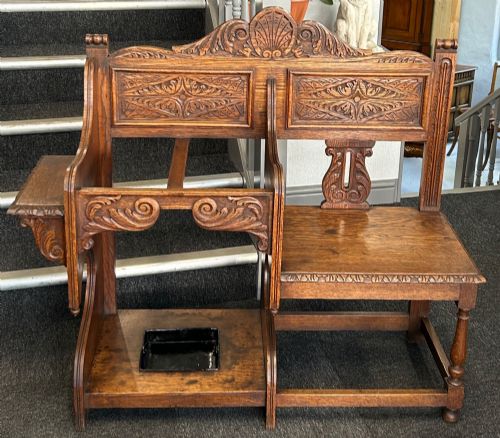
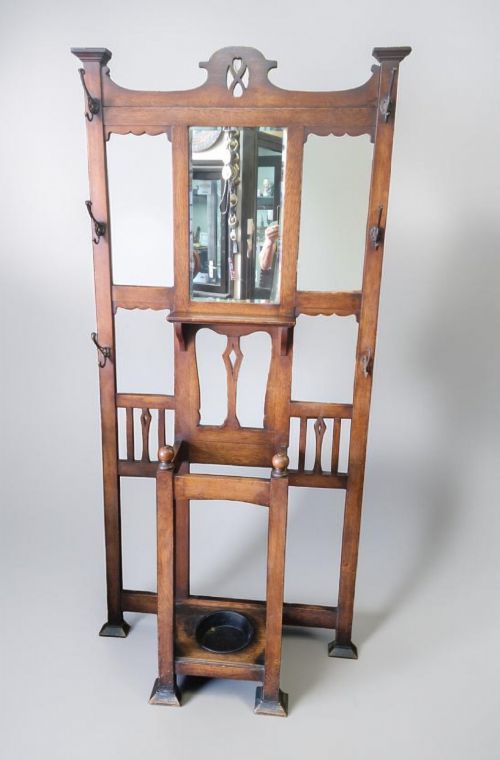
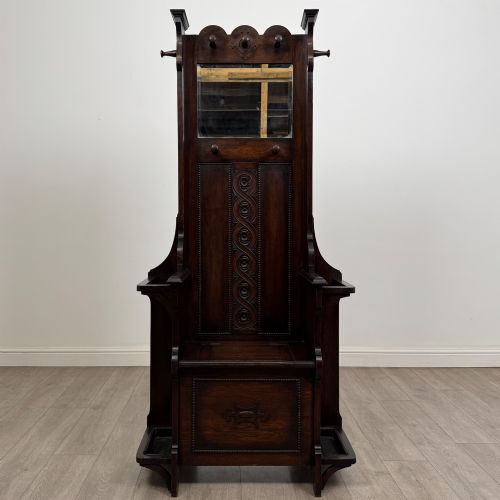



Edwardian Carved Stick Stand
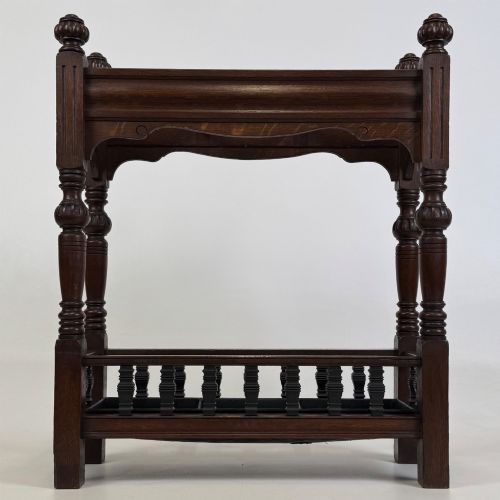
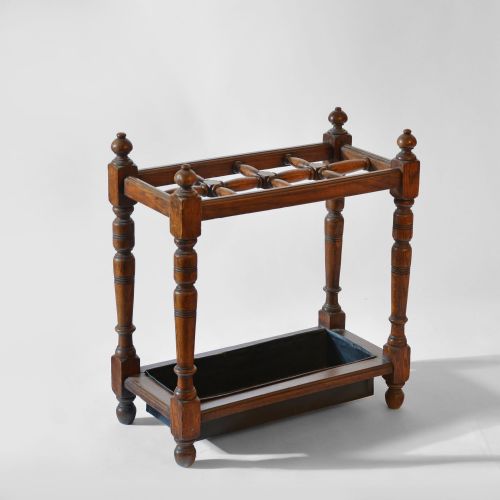
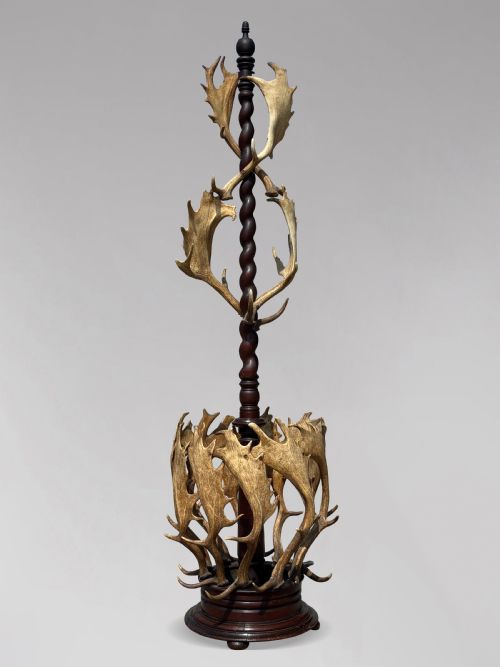
An Edwardian carved stick stand organises heavy wet weather gear with deep relief carving and sturdy timber.
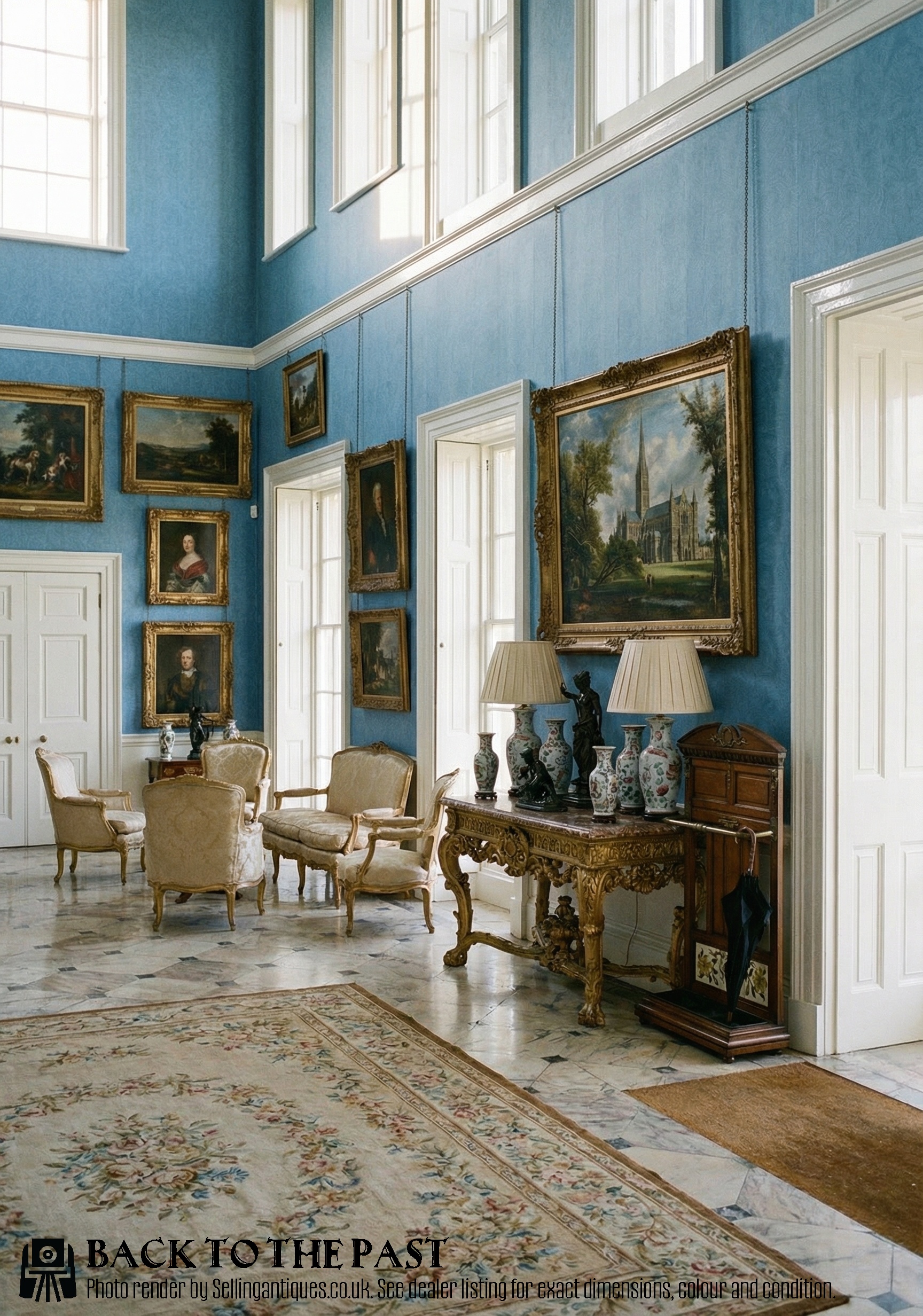
Edwardian Carved Stick Stand
An edwardian carved stick stand forms part of the furniture found in entrance halls and passages. These pieces combine practicality with distinct decorative styles ranging from plain country house models to elaborate hall furniture.
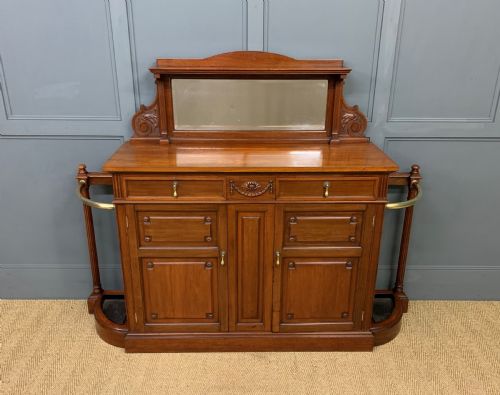
The selections on this page span the Victorian, Edwardian, and early twentieth century periods. Alongside dedicated stick and umbrella stands, the listings include larger hall stands, umbrella and stick stands, and hall seats that incorporate umbrella storage.
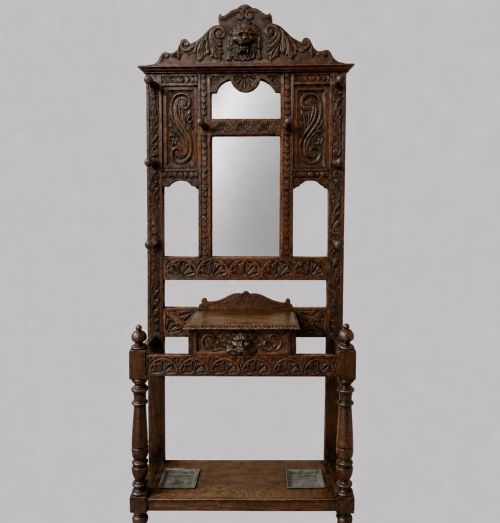
Oak and mahogany predominate, often enhanced with carved detailing such as Green Man masks or geometric patterns. These items reflect the domestic routines of their era, designed to hold walking sticks, canes, and wet umbrellas near the front door.
What varies in quality
The distinction between standard utility items and finer pieces lies in the depth and execution of the woodwork. Crisp, high relief carving on structural panels separates superior examples from plainer production.
Material selection also dictates distinction, with dense golden oak or figured walnut commanding attention. The inclusion of original drip pans, mirrors, or combined seating elevates the status of the piece.
Listings feature oak, walnut, mahogany, brass, cast iron, and glass across Victorian, Edwardian, and Arts and Crafts styles.
Shoolbred and Co·J Parker of Woodstock
The Edwardian Carved Stick Stand Glossary
- Stick stand
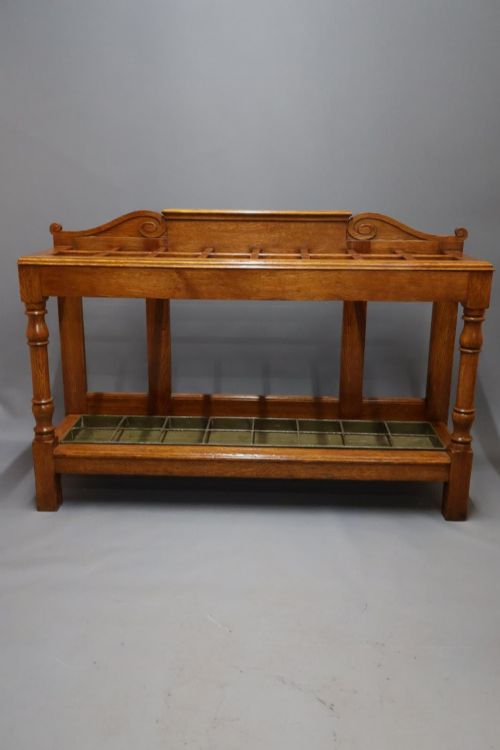
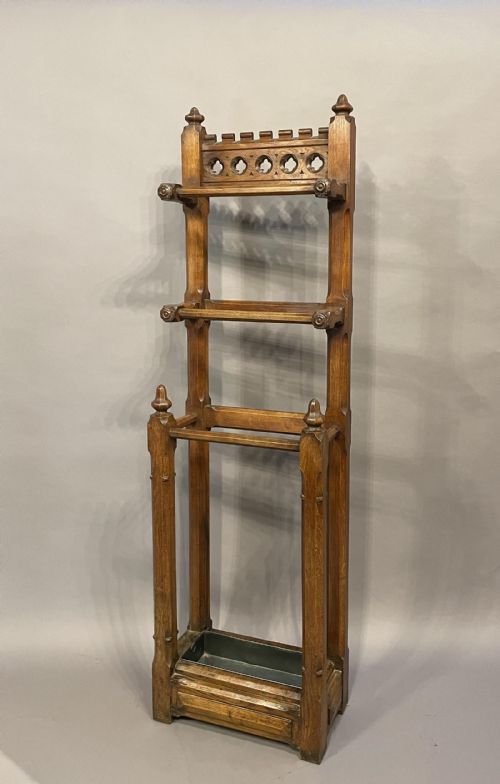
- A piece of furniture designed specifically for holding walking sticks and umbrellas upright. These usually feature partitioned upper rings and a waterproof base tray.
- Hall stand
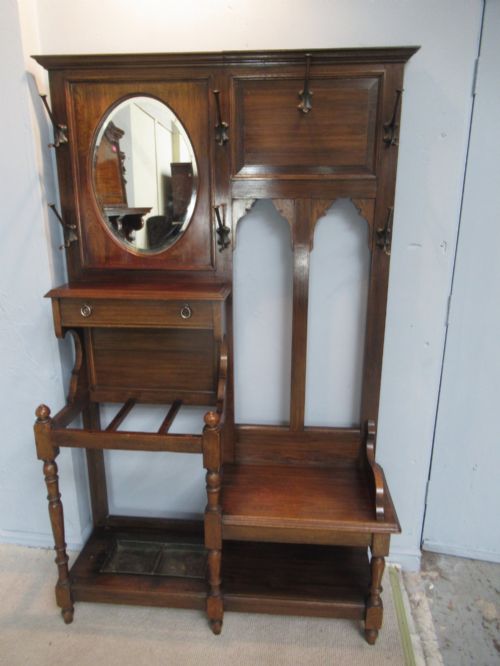
- A larger item of hallway furniture combining stick storage with coat hooks, hat pegs, and frequently a central mirror. Some examples incorporate small drawers or glove boxes.
- Green Man
- A decorative architectural motif depicting a human face disgorged from foliage. This carving style appears frequently on nineteenth and early twentieth century oak hall furniture.
- Arts and Crafts
- A design movement prioritising traditional craftsmanship and simple, honest construction. Pieces from this aesthetic often display exposed joinery and minimal ornamentation.
- Demi-lune
- A half moon shape used for furniture designed to sit flat against a hallway wall. This profile allows larger stands to occupy narrow passages without obstructing movement.
Edwardian Carved Stick Stand: Frequently Asked Questions
Where should I place a stick stand?
These stands suit entrance halls, vestibules, or corridors near an exterior door. Their narrow footprint allows them to occupy hallway spaces without restricting movement.
Positioning them on hard flooring protects surrounding timber from any moisture dripping off wet umbrellas or walking sticks.
How do I care for oak hall furniture?
Dust the timber regularly with a dry cloth and apply a quality beeswax periodically to nourish the wood. Avoid placing the piece directly beside heat sources that might dry out the grain.
Empty and dry metal drip trays frequently to prevent moisture accumulation from damaging the lower wooden frame.
What is the difference between a hall stand and a stick stand?
A stick stand focuses purely on storing canes, umbrellas, and occasionally cues in a compact footprint. It holds only lower vertical items.
A hall stand serves a broader function by adding hat pegs, coat hooks, a mirror, and sometimes a bench seat alongside the umbrella wells.
How can I date an Edwardian hall stand?
Examine the timber, hardware, and decorative motifs to establish the period. Edwardian pieces often display lighter oak tones and simplified carving compared to heavily ornamented Victorian work.
Construction methods such as machine sawn elements or patent registration numbers stamped into the metal parts also offer clues to the exact manufacturing era.