

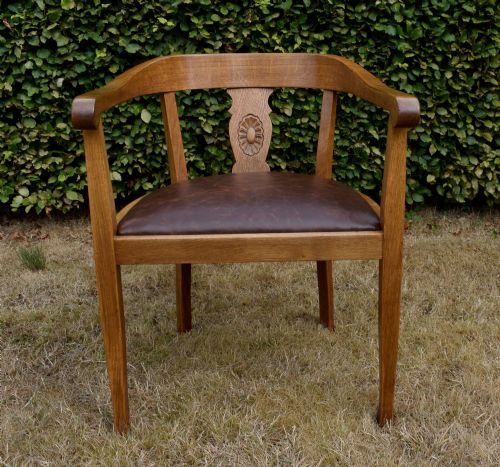
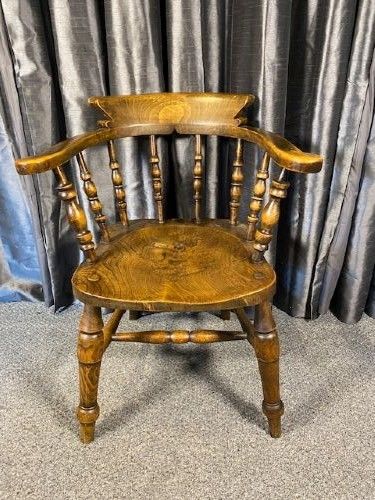
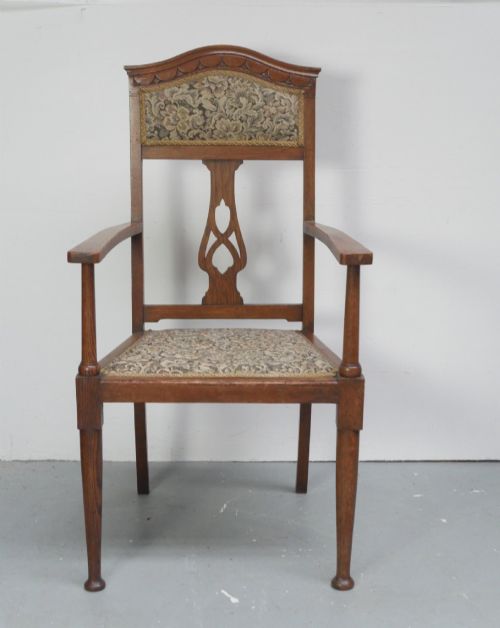
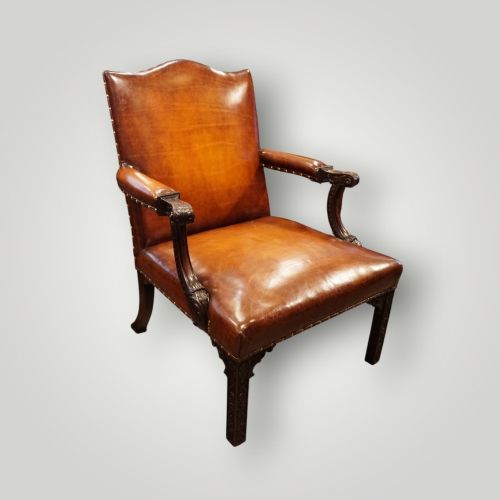

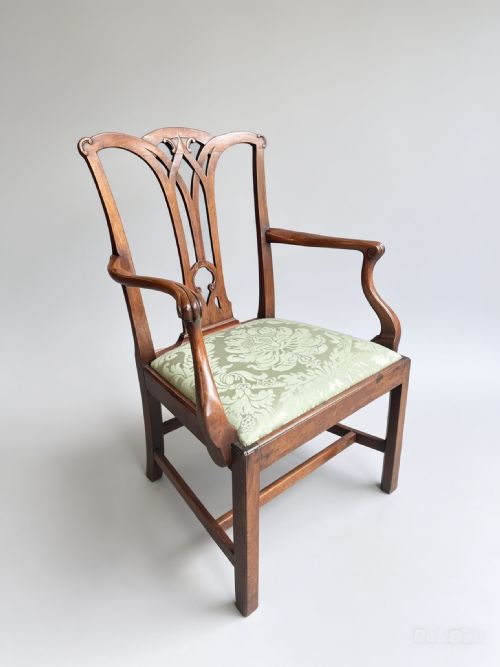
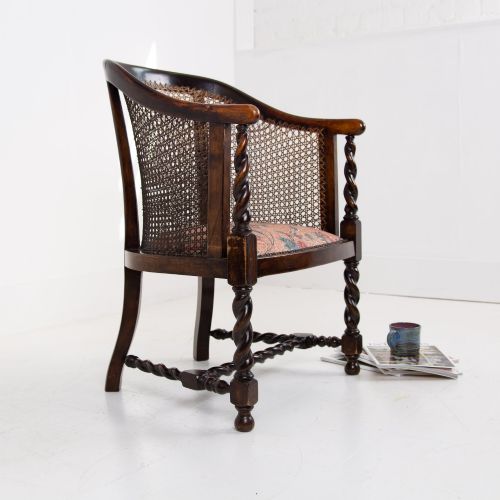
Edwardian Carved Desk Chair
An Edwardian carved desk chair brings period presence to a study, combining practical timber frames with classical carving.
Edwardian Carved Desk Chair
An edwardian carved desk chair brings together early twentieth-century seating forms and traditional woodworking motifs such as Chippendale and Sheraton revivals.
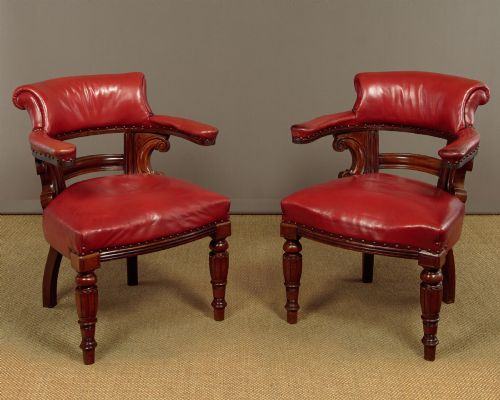
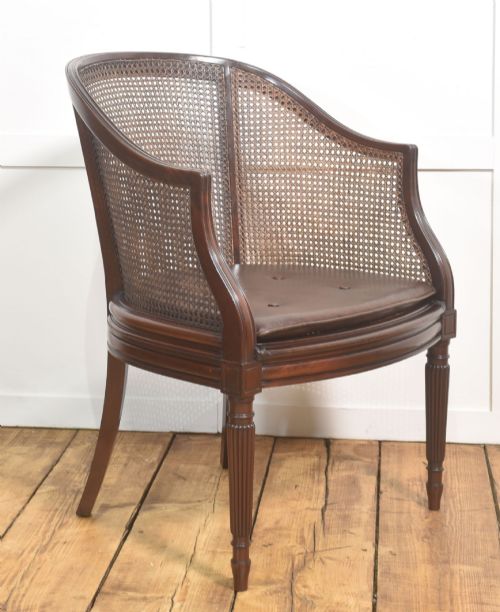
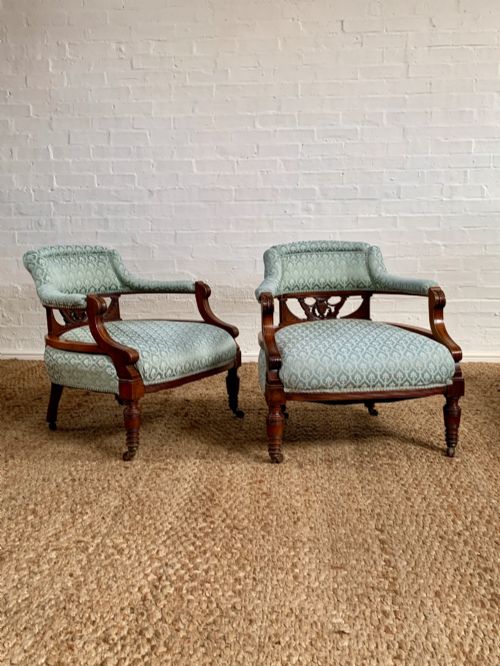
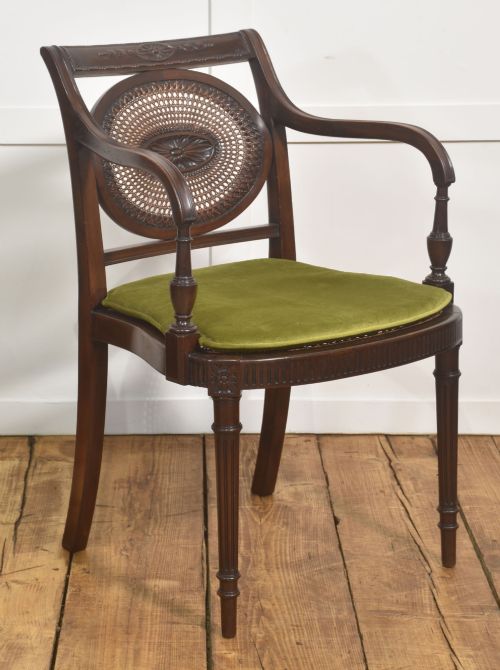
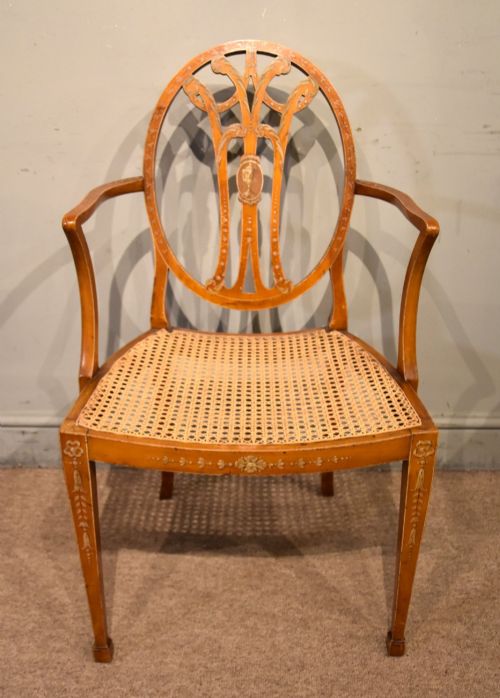
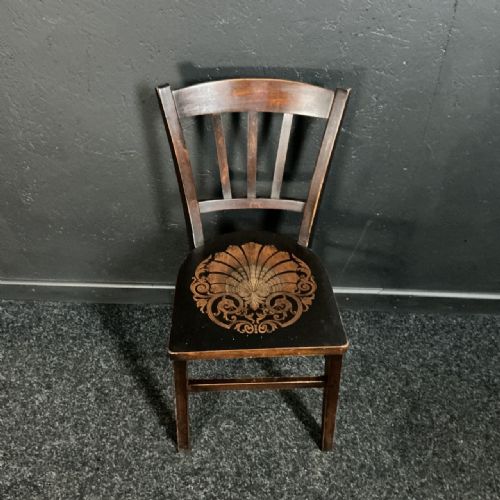
Buyers searching for an edwardian carved desk chair most frequently encounter mahogany and oak frames, often featuring cane panels or upholstered leather seats.
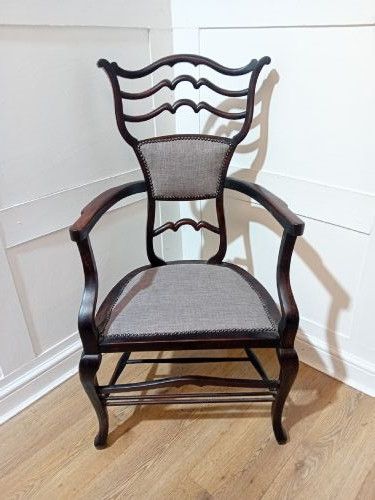
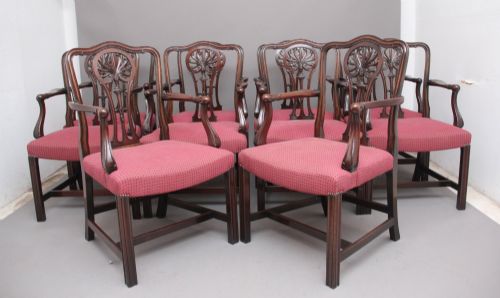
The selection ranges from simple swivel office models to open armchairs and tub designs produced during the Edwardian period and the early twentieth century.
Materials and Construction
Timbers such as mahogany, oak, walnut and satinwood form the structural framework, shaped through traditional joinery and steam bending.
Surface details frequently incorporate brass hardware, hand-dyed leather, woven cane and woven fabric upholstery secured with metal studs.
Some Edwardian desk chairs included hidden swivel mechanisms so gentlemen could pivot between writing desks and smoking cabinets without moving their feet.
Distinctions in Quality
The crispness and depth of the timber carving separate standard production pieces from finer workshop examples.
The choice of primary wood, the integrity of the frame joints and the quality of secondary materials like leather and cane define the standard.
Charles Tozer·Alfred Allen of Birmingham·Hindley & Sons
The Edwardian Carved Desk Chair Glossary
- Tub Armchair
- A comfortable seating form with a rounded, enclosing back that sweeps down into low arms. This shape offers supportive lumbar contact for prolonged desk use.
- Cane
- Woven rattan material used for chair seats and back panels. It provides a flexible, lightweight surface that requires careful handling to prevent splitting.
- Gainsborough Chair
- A wide, upholstered armchair with open padded arms, designed originally in the eighteenth century for writing or reading. It typically stands on straight or cabriole legs.
Edwardian Carved Desk Chair: Frequently Asked Questions
Are these chairs comfortable for daily work?
Many Edwardian designs feature supportive curved backs and upholstered leather pads suited for regular seating at a writing table.
Selecting a model with arms or a padded seat ensures better support during longer working hours.
How do I identify an Edwardian piece?
Look for characteristic Edwardian timber treatments like satinwood inlay, lighter mahogany frames, and revival styles that blend Georgian motifs with early twentieth-century manufacturing methods.
Construction techniques and wood ageing also help distinguish these pieces from later reproductions.
Can I use a swivel office chair in a modern study?
Aesthetic Movement and early twentieth-century swivel models integrate mechanical height adjustments with traditional timber construction.
They offer functional mobility while maintaining a period appearance in a contemporary workspace.
What is the difference between an armchair and a desk chair?
Desk chairs typically offer specific ergonomic adjustments or compact proportions designed to fit neatly beneath a writing table.
Standard armchairs focus more on general parlor or library seating rather than task-oriented workspace use.