


Edwardian Cane Top
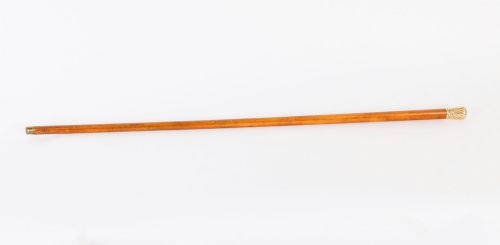
These Edwardian cane top pieces combine solid shafts of malacca, bamboo, or wood with fitted metal mounts, offering practical support and period elegance.
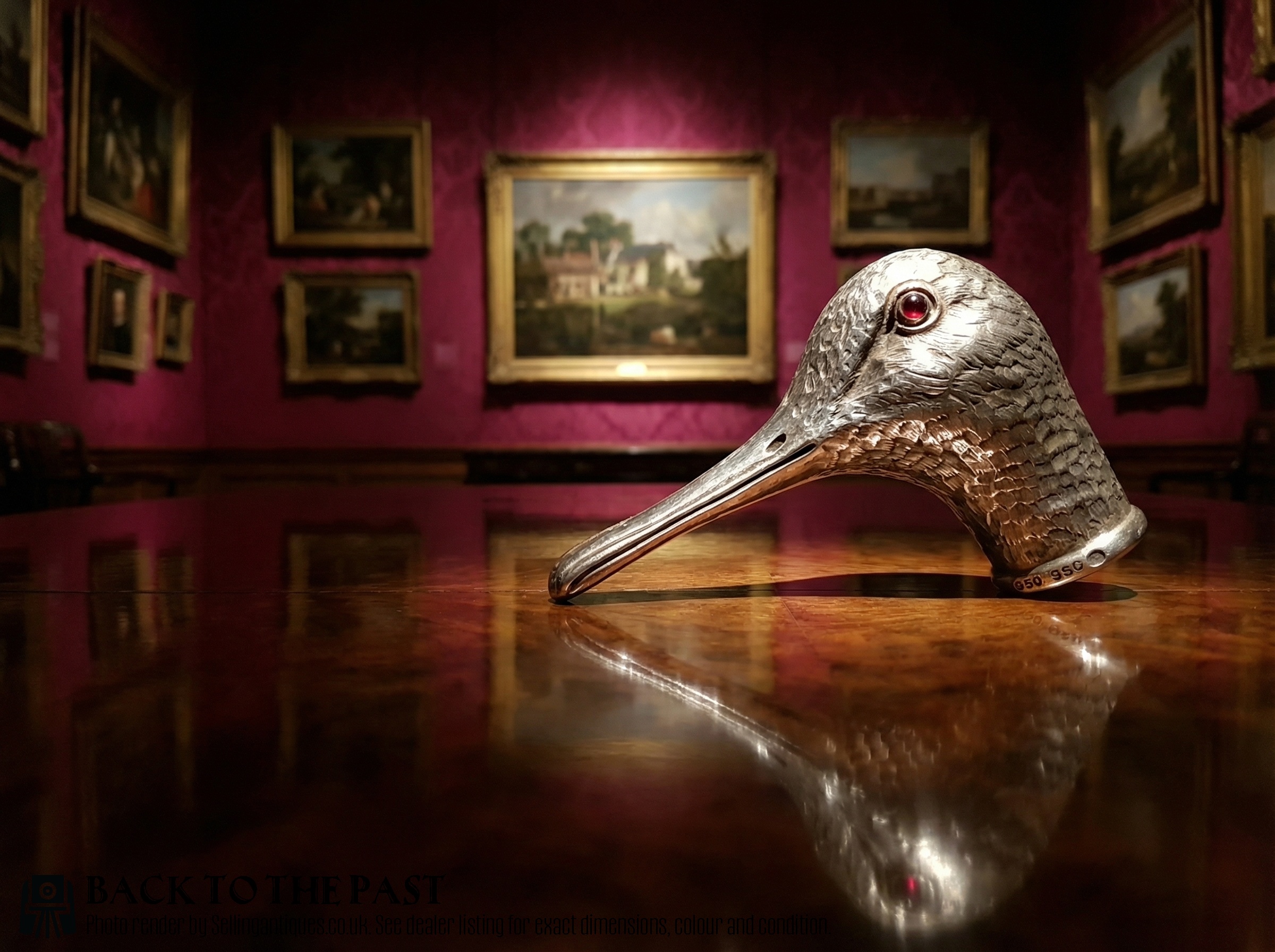
Edwardian Cane Top
An edwardian cane top search reveals walking sticks, swords sticks, and parasol handles originating from the Edwardian era through to the early decades of the twentieth century. The inventory on this page centres primarily on walking sticks and swagger sticks equipped with metal or organic grips.
Makers and retailers of the period produced functional walking canes alongside military swagger sticks and parasol handles. Examples frequently pair shafts of malacca, bamboo, palm wood, or ebonised oak with pommels of silver, gold, horn, or antler.
How they were made
Craftsmen shaped natural materials like bamboo, malacca wood, and palm wood to form the main shafts of the sticks. These were paired with handles cast from silver, brass, steel, and gold, or carved from horn and antler.
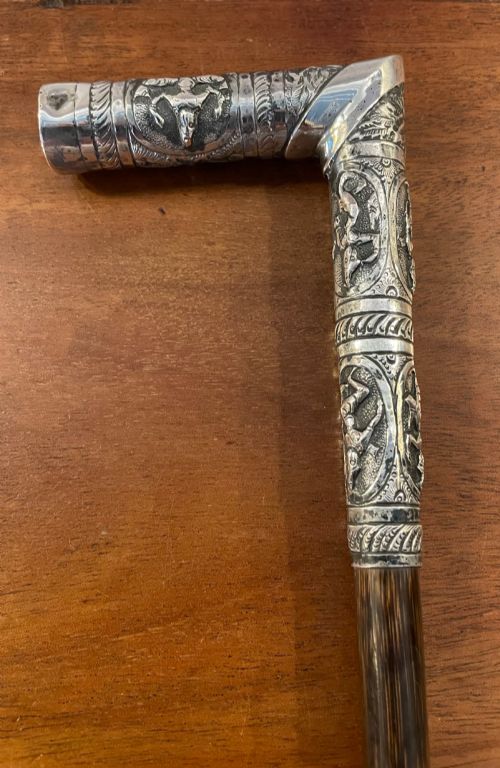
Metal mounts and pommels were securely fastened to wooden shafts, often incorporating concealed blades within sword sticks or delicate repoussé decoration on silver handles.
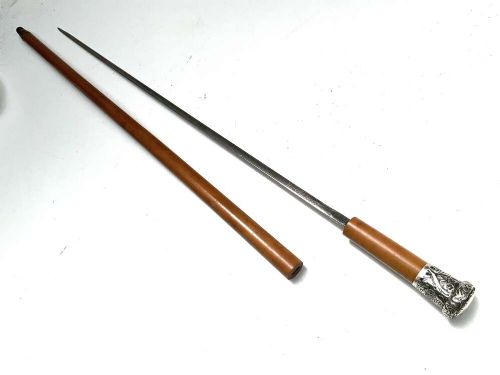
Several walking sticks double as covert sword sticks, hiding a sharp blade beneath an unassuming silver or horn handle.
What varies in quality
The choice of materials dictates the standing of a piece, with solid gold or substantial silver pommels sitting above plated mounts and basic woods. The density and finish of the underlying shaft, whether malacca or ebonised oak, also define the standard.
Finer examples display careful balance and crisp detailing on the handle, alongside integrated craftsmanship such as properly fitted concealed blades in sword sticks or maker marks from retailers.
Asprey·Dryad Leicester
The Edwardian Cane Top Glossary
- Pommel
- The rounded knob or handle at the top of a walking stick or cane. It is often cast in silver or carved from horn.
- Swagger stick
- A short military cane carried by officers as a symbol of authority. These typically feature metal top mounts.
- Malacca
- A sturdy rattan cane imported from Southeast Asia, prized for its mottled brown finish and strength as a walking stick shaft.
- Sword stick
- A walking cane containing a concealed blade within the shaft. It is accessed by releasing a locking mechanism near the handle.
Edwardian Cane Top: Frequently Asked Questions
What is an edwardian cane top?
An edwardian cane top refers to the handle or pommel mounted on walking sticks, canes, and parasols from the early twentieth century. These grips were fashioned from silver, gold, horn, and various metals.
Such pieces served both practical walking support and as fashionable accessories for gentlemen and military officers during the period.
How were sword sticks used?
Sword sticks combine a functional walking cane with a concealed steel blade housed inside the wooden shaft. They provided personal protection for travellers and gentlemen navigating urban streets.
Owners could unscrew or unlatch the top mount to draw the hidden blade when needed.
What materials make up the shafts?
Shafts are constructed from natural timbers and plant stems such as malacca, bamboo, palm wood, and ebonised oak. Some examples also incorporate rattan and simple hardwoods.
These materials were chosen for their flexibility, durability, and straight grain.
How do I date these items?
Dating relies on hallmarks stamped on silver and gold pommels, alongside stylistic clues from military associations or manufacturing techniques. Pieces often reflect the fashion of the Edwardian era and the early twentieth century.
Makers' marks or retailer stamps can also narrow down the year of production.