
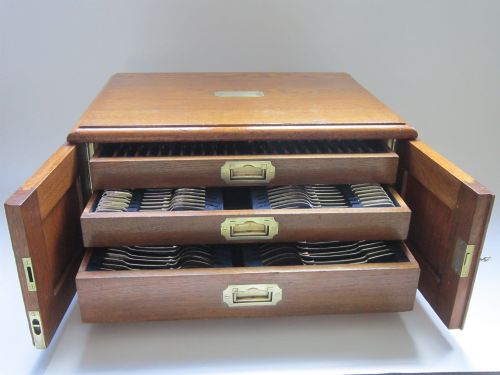
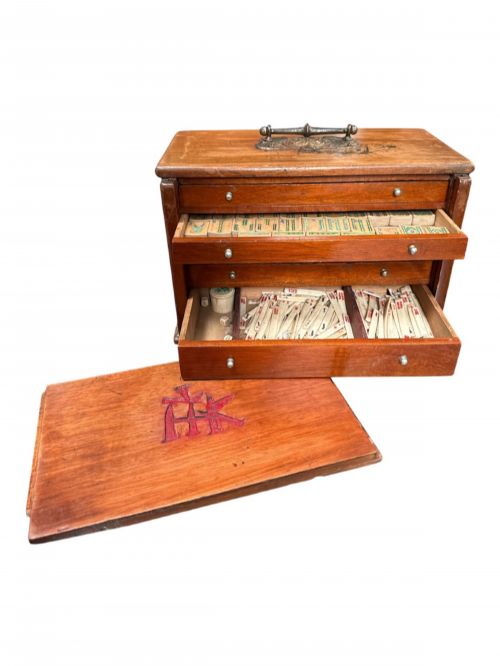


Fitted Box Handle
These pieces of fitted box handle hardware secure chests, canteens, and campaign trunks, offering a practical touch of period craftsmanship.
Fitted Box Handle
When searching for fitted box handle hardware, buyers encounter brass hardware designed to lift trunks, chests, and canteens from the Victorian and Edwardian periods.
The objects listed range from camphorwood campaign trunks and walnut sewing boxes to silver-fitted cutlery canteens and travelling boxes.
Victorian examples predominate, accompanied by Edwardian and nineteenth-century pieces reflecting campaign and colonial styles.
How They Were Made
Makers utilised brass for handles and fittings, pairing metalwork with woods such as mahogany, walnut, camphor wood, oak, and pine.
Craftsmen fitted interiors with velvet, bone, and mother of pearl, housing instruments, cutlery, and jewellery.
Even portable writing slopes required solid brass handles to survive nineteenth-century stagecoach journeys.
What Varies in Quality
The distinction between tiers rests upon the choice of timber figure, such as beautifully grained camphorwood or figured walnut, and the precision of the brass fittings.
Finer examples incorporate robust locking mechanisms, including Bramah locks, alongside comprehensive internal fittings for draughtsman tools or silver service.
The Fitted Box Handle Glossary
- Campaign trunk
- A portable chest built for travel, typically fitted with flush brass handles for stacking and transport. These trunks utilise durable woods like camphor wood.
- Canteen
- A fitted box or cabinet designed to hold a set of cutlery securely. Interiors often feature baize or velvet lining.
- Writing slope
- A portable desk with a slanted writing surface that folds flat, housing stationery compartments beneath. They date frequently to the nineteenth century.
- Bramah lock
- A high-security barrel lock patented in the eighteenth century. Collectors prize these mechanisms for their intricate cylindrical keys.
Fitted Box Handle: Frequently Asked Questions
What periods do these pieces date from?
The inventory spans the Victorian and Edwardian eras, with examples ranging from the nineteenth century into the early twentieth century.
Most items reflect nineteenth-century campaign and colonial styles.
Which woods appear most frequently?
Makers utilised woods such as camphor wood, walnut, mahogany, oak, and pine across various boxes and trunks.
Selected pieces also incorporate exotic materials like Hongmu or crocodile hide.
How were these boxes used originally?
They served diverse domestic and travel functions, from housing jewellery and sewing equipment to carrying silver cutlery and draughtsman tools.
Campaign trunks and travelling boxes transported personal possessions securely during journeys.
What distinguishes campaign furniture?
Campaign pieces feature modular construction and recessed brass handles to prevent damage during transit.
Woods like camphor wood provided durability and insect resistance in colonial climates.