


Edwardian Candle Sticks
Edwardian candle sticks bring proportion and refined detail to a room, ranging from classical silver columns to sturdy domestic brass.
Edwardian Candle Sticks
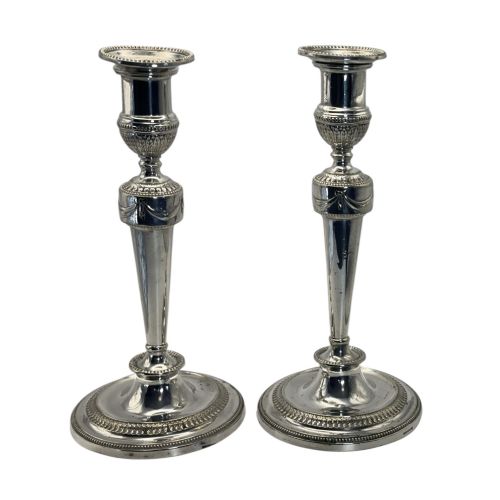
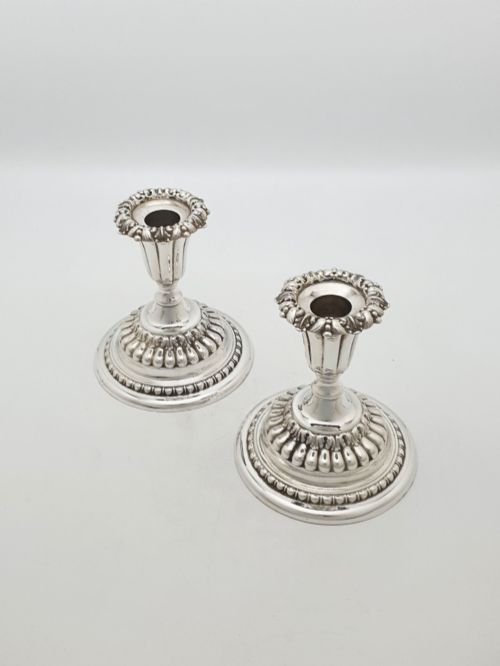
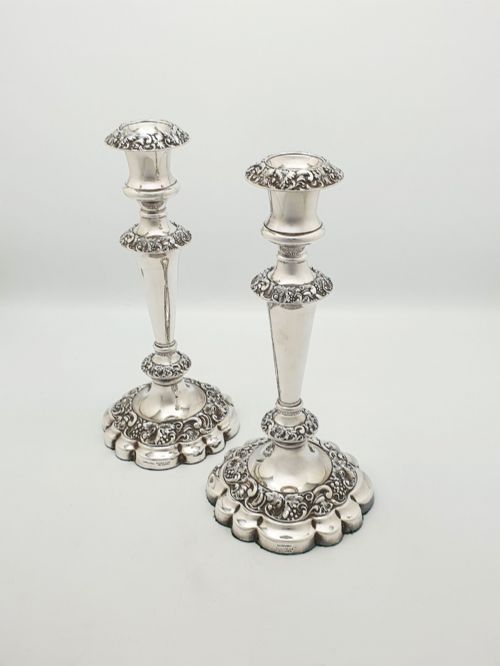
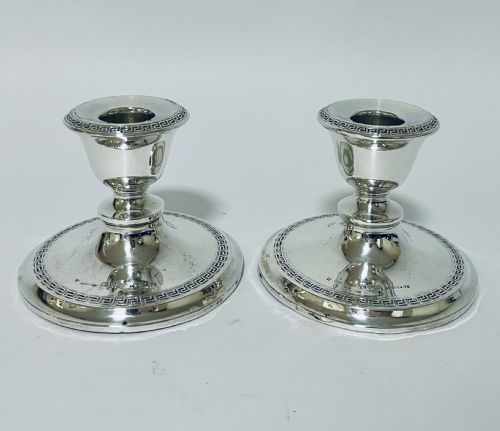
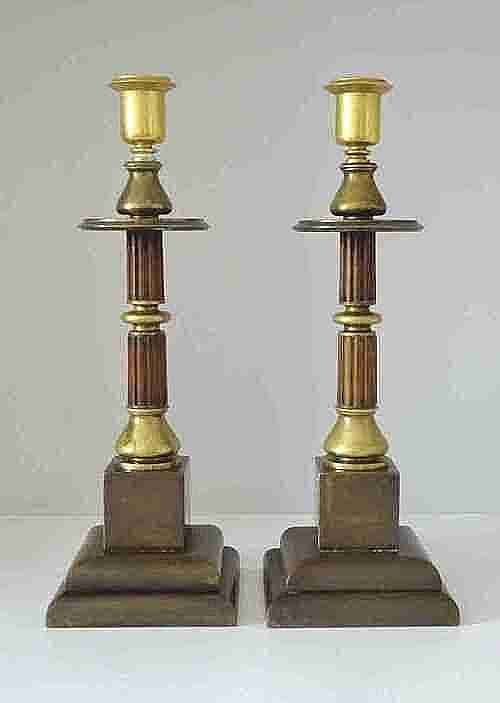
Edwardian candle sticks encompass domestic lighting forms produced around the turn of the twentieth century, bridging late Victorian mass production and early twentieth-century design movements. The most common examples met on this page are matched pairs in sterling silver, silver plate, and warm brass, often standing on stepped or square bases. Alongside standard sticks, the category includes functional chambersticks, tall candelabra, and occasional novelty variants.
The aesthetic leans heavily on classical revival styles such as Neoclassical columns alongside Arts and Crafts simplicity and flowing Art Nouveau lines. Forms range from low desk sticks to tall barley twist designs, reflecting both formal dining table illumination and practical bedroom use. While many pieces date strictly from the Edwardian period, surrounding examples stretch from the late nineteenth century into the interwar decades.
Materials and Construction
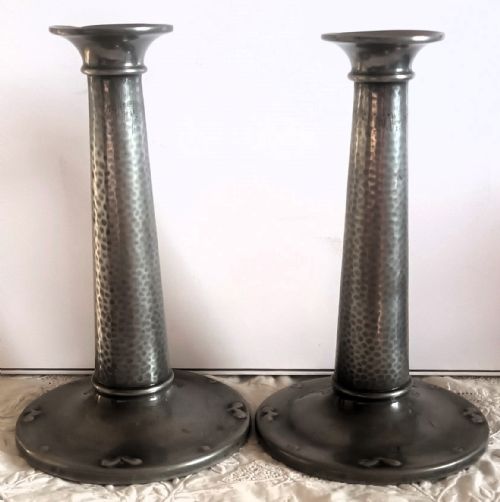
Metalworking dominates production, utilising spun or cast brass, solid sterling silver, and electroplated nickel silver over base metals. Silver pieces often carry weighted bases filled with resin or plaster to ensure stability, while pewter and bronze appear in distinct Arts and Crafts and Art Nouveau interpretations.
Alternative media introduce organic warmth and texture, with turned mahogany and walnut woods shaping slender shafts, and heavy cut-glass or crystal forming faceted shafts and drip pans. Glazed stoneware and ceramic bodies occasionally provide a ceramic base for specialised chambersticks.
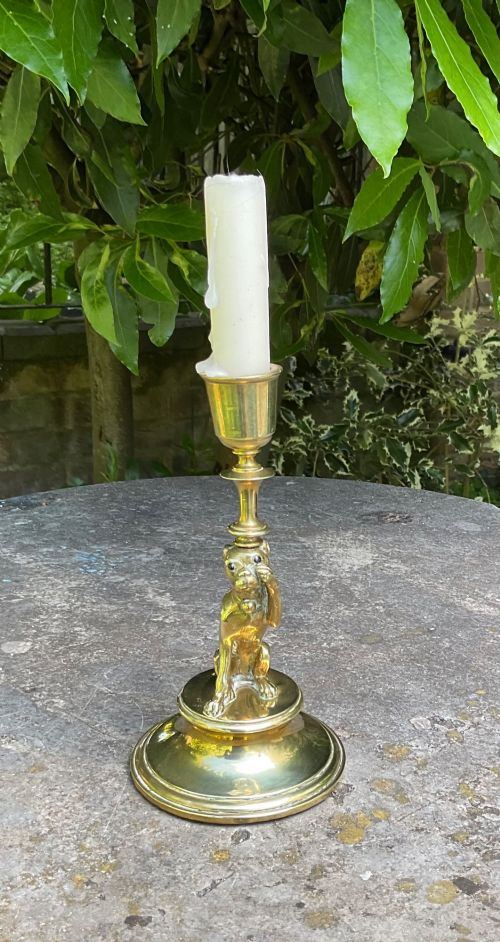
An unusual pug dog candlestick from eighteen-eighty proves that domestic pets charmed Victorian and Edwardian interiors just as thoroughly as classical columns.
Factors of Quality
Quality rests primarily on the crispness of casting detail and the integrity of the materials, where sharp fluting on a Corinthian column or deep hand-beating on pewter distinguishes superior execution. Maker marks from established silversmiths or workshops provide a reliable indicator of high-standard fabrication.
Proportion and structural balance also separate standard utilitarian items from finer examples, ensuring that shafts sit plumb on their bases without wobble or distortion. The retention of original components, such as matching sconces or detachable drip pans, preserves the integrity of the piece.
Mappin & Webb·John Pound & Co·WMF·T Thomason & Co
The Edwardian Candle Sticks Glossary
- Chamberstick
- A low portable candlestick fitted with a saucer base and a loop handle for carrying through a house at night. These often include a small conical snuffer resting in the tray.
- Corinthian Column
- A classical architectural shaft design featuring ornate acanthus leaf capitals, frequently utilised on formal silver and brass candlesticks.
- Candelabra
- A branched lighting fixture holding multiple candles on a single central stem, often supplied as part of a grand dining table suite.
- Electroplated Nickel Silver
- A base metal alloy of copper, nickel, and zinc coated with a layer of pure silver through electrolysis.
- Sconce
- The socket at the top of a candlestick designed to catch dripping wax and hold the candle firmly in place.
Edwardian Candle Sticks: Frequently Asked Questions
How do I clean tarnished silver candlesticks?
Use a soft microfiber cloth and a mild, non-abrasive silver polish formulated specifically for plated or solid surfaces. Avoid harsh scrubbing that can wear away thin silver plate on nineteenth-century pieces.
Work gently around engraved details and maker marks, then rinse with warm water and dry thoroughly to prevent moisture spots.
Were these used for dining tables?
Yes, matched pairs and larger suites provided ambient illumination for evening meals before electric lighting became universal in domestic homes. Tall columns and multi-branched candelabra were placed centrally or along the length of the table.
Shorter desk candlesticks and chambersticks remained in studies and bedrooms for personal tasks and navigating hallways.
How do I spot weighted silver bases?
Solid sterling silver candlesticks are typically heavy at the base because manufacturers filled the interior with a dense composition of resin, pitch, or plaster to provide stability. This technique prevents the slender shaft from tipping over easily under the weight of a burning candle.
Inspect the underside of the base, where a green baize or felt covering usually conceals the filling material and any assay office stamps.
What is the difference between brass and bronze?
Brass is an alloy composed primarily of copper and zinc, yielding a bright yellow or golden metallic appearance that responds well to polishing. Bronze consists of copper combined with tin, resulting in a darker, denser material with a deeper brownish patina.
Arts and Crafts pieces frequently utilise bronze or copper oxide finishes for a muted, earthy tone.