



Edwardian Brass Weights
Edwardian brass weights are functional pieces of the early twentieth century designed for everyday utility in offices, shops, and administrative buildings.
Edwardian Brass Weights
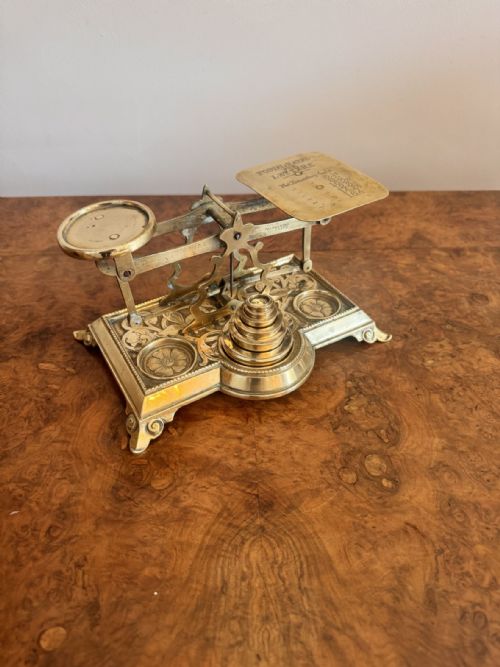
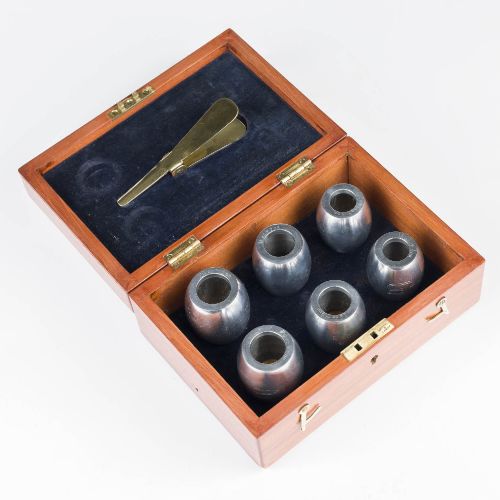
Edwardian brass weights encompass standard measurement sets produced during the opening decades of the twentieth century. These items include postal scales, commercial balances, and governmental standard sets used for accurate weighing in trade and administration.
The objects on this page reflect both utilitarian office equipment and more decorative household or commercial apparatuses. Buyers seeking edwardian brass weights will find pieces ranging from small domestic postal sets to large institutional standard weight collections.
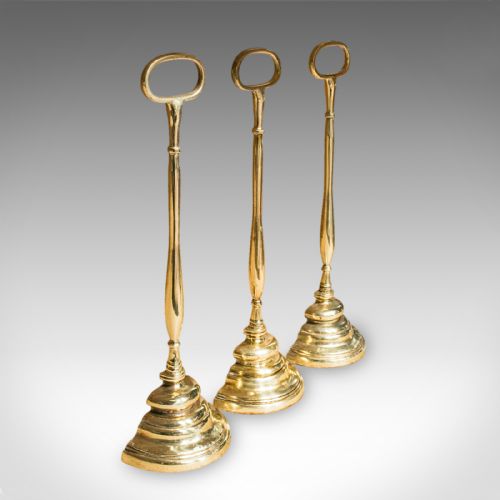
Most examples originate from the early nineteen hundreds, maintaining the robust build quality characteristic of the period. They frequently appear paired with wooden bases in mahogany or oak, alongside brass scale pans and indicator arms.
Materials and construction
Brass serves as the primary material for the construction of these weights and their accompanying scale bodies. Manufacturers utilised cast and turned brass to achieve the precise mass required for official standard measurements.
Additional components incorporate cast iron, steel, and glass for structural stability and functional visibility. Metal elements are often shaped by specialised firms to meet strict commercial and governmental regulations.
Listings feature brass weights combined with mahogany, oak, and walnut bases, alongside related scientific instruments and postal scales.
Evaluating the standard of manufacture
Quality in these instruments is determined by the precision of the engineering and the integrity of the materials. Superior examples display crisp stampings, official verification marks, and uncompromised brass surfaces without excessive wear.
The craftsmanship of the housing and auxiliary mountings distinguishes standard commercial items from high-grade institutional pieces. Finely finished wooden bases and complex mechanical linkages indicate a higher tier of production by established makers.
Tonks·Gillett & Johnston·De Grave Short & Co.·Elliott·Lenzkirch·W&T Avery·William Tonks·De Grave·Lister & Sons·De Grave & Co
The Edwardian Brass Weights Glossary
- Avoirdupois
- A system of weights based on a pound of sixteen ounces. This system was standard for everyday commercial transactions during the period.
- Standard weights
- Official masses certified for accuracy by governmental authorities. They were utilised by inspectors to verify commercial scales.
- Postal scales
- Specialised weighing devices designed for letters and parcels. They typically feature calibrated brass platforms and graduated indicator arms.
- Balance scales
- Instruments that determine weight by comparing an object against known masses on opposing pans. They represent the standard mechanism for precision measuring.
Edwardian Brass Weights: Frequently Asked Questions
What were edwardian brass weights used for?
These weights served primarily in commerce, postal sorting, and administrative offices to measure goods and correspondence accurately. They ensured consistency in trade and maintained official standards of measurement.
Government inspectors and merchants relied on these calibrated sets daily. Their precision was vital for shipping, retail pricing, and legal compliance.
How do I identify edwardian pieces?
Identification relies on examining maker stamps, governmental verification marks, and stylistic indicators typical of the early twentieth century. Materials such as solid brass and polished mahogany frequently point to this era.
Many sets retain original engraved inscriptions denoting the administrative county or specific institution they served. These markings provide clear documentation of their period of origin.
How should I clean brass weights?
Cleaning should be approached with caution to preserve the historical surface and natural oxidation accumulated over the decades. Gentle dusting with a soft cloth is usually sufficient for routine maintenance.
Harsh metal polishes can remove desirable patination and alter the surface finish. Preservation of the original metal character remains a priority for collectors.
Are these weights still accurate?
While many retain their precise mass, small variations can occur due to surface wear, cleaning, or environmental exposure over time. They are primarily collected for display and historical interest rather than modern trade.
Verification against certified modern standards is necessary if precise measurement is required. Most owners choose to exhibit them as decorative antiques.