



Brass Balance Weights
Brass balance weights are the solid, calibrated objects used across centuries to measure everything from letters to apothecary powders with absolute precision.
Brass Balance Weights
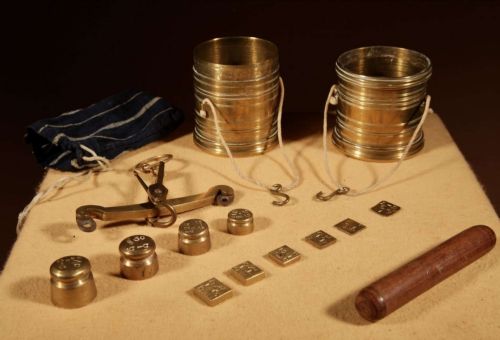
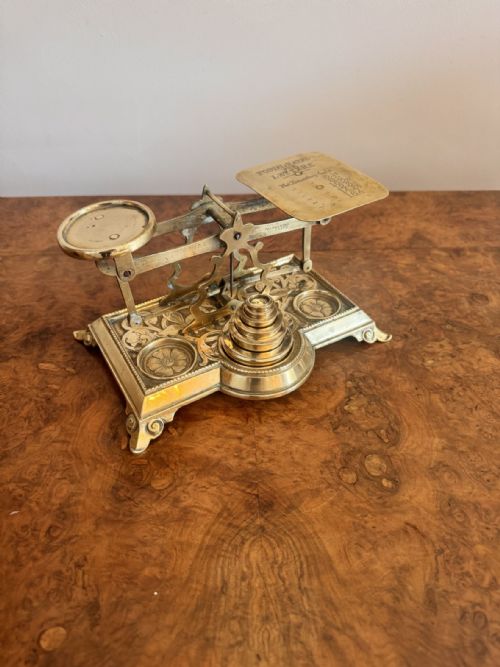
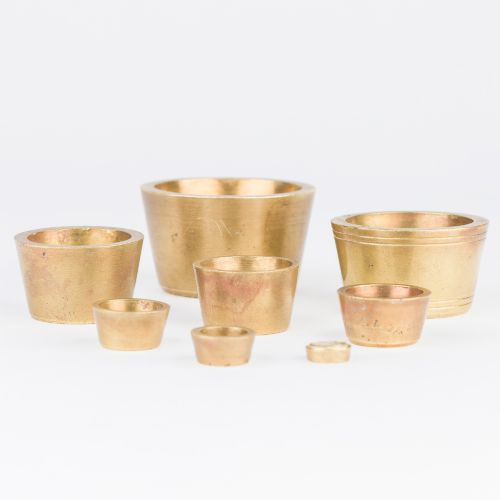
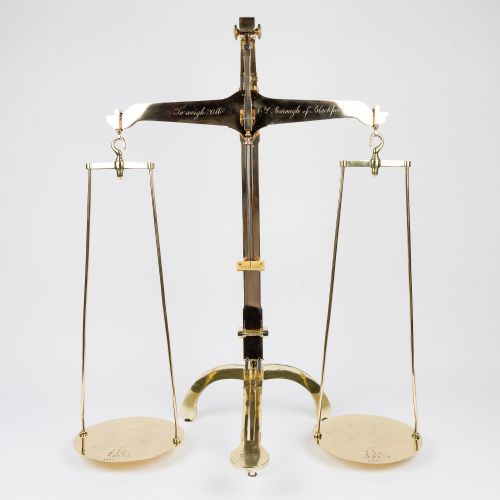
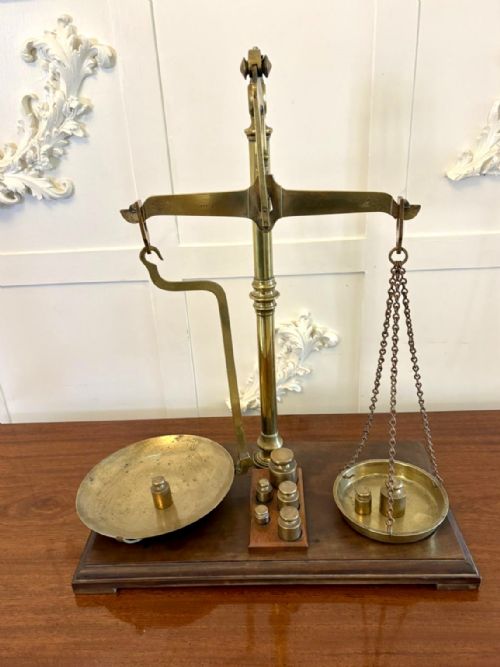
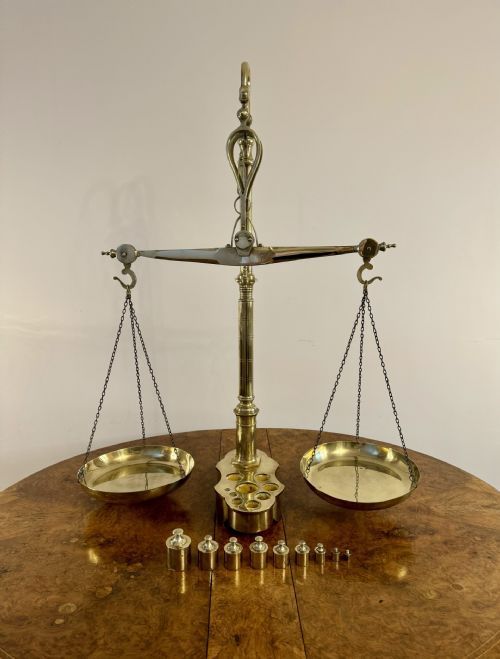
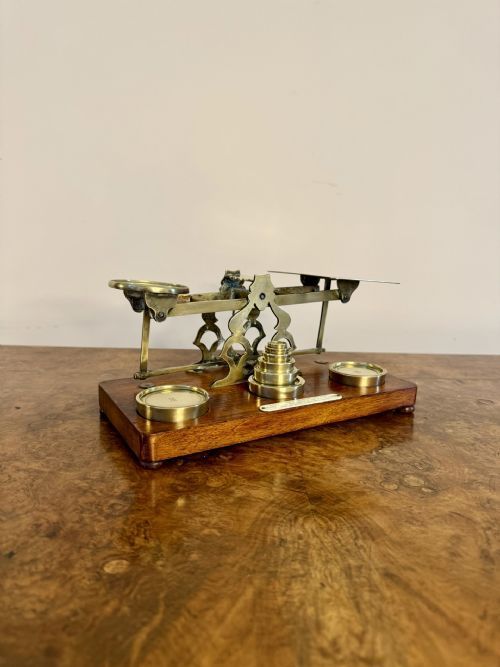
When searching for brass balance weights, collectors encounter various forms ranging from individual Troy ounce and avoirdupois pieces to complete sets housed in original block stands or wooden boxes. Many examples emerge alongside postal scales, grocers scales, and apothecary balances from the Victorian and Edwardian periods.
The assortment includes specialised items such as bell weights accompanying butcher and dairy balances, alongside official verification sets produced for city boroughs and counties. These objects reflect the rigorous standards required for trade and science during the nineteenth and early twentieth centuries.
Materials and construction
Individual pieces feature cast or turned construction, frequently bearing stamped markings indicating weight standards, makers' names, or geographical verification stamps from local authorities.
Listings feature brass balance weights produced alongside postal scales, apothecary balances, and grocers scales across the Victorian and Edwardian eras.
Assessing quality and completeness
The distinction between standard utility items and superior examples lies in the completeness of the set and the presence of original fitted housing, such as dedicated block stands or mahogany boxes. Sets retaining clear, crisp stamps from notable makers or official inspectors command greater interest.
Surface preservation also dictates worth, with untampered patination and legible verification marks outperforming pieces that have suffered aggressive polishing or wear that obscures their original calibration stamps.
De Grave Short & Co·Robert Brettell Bate·Day & Millward·S Mordan & Co·Hunt & Co
The Brass Balance Weights Glossary
- Troy ounce
- A system of units of mass used for precious metals and pharmaceuticals. This standard has governed apothecary and bullion weights for centuries.
- Avoirdupois
- A system of weights based on a pound of sixteen ounces. This system dominated everyday retail and postal weighing.
- Chondrometer
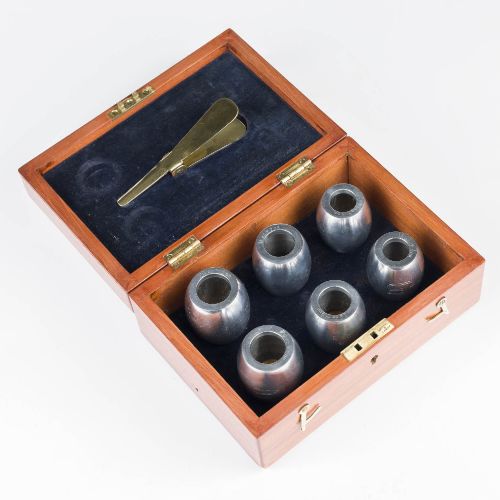
- A specialised instrument used to measure the specific weight or quality of grain. These devices often include precision brass components and fitted wooden cases.
- Verification balance
- A high-precision scale utilised by local government inspectors to check commercial weights and measures. These pieces represent the pinnacle of calibration accuracy.
- Bell weight
- A distinctively shaped counterweight resembling a small bell with a loop handle. They are commonly found paired with large trade and shop scales.
Brass Balance Weights: Frequently Asked Questions
What are brass balance weights?
Brass balance weights are calibrated masses designed for use with mechanical scales in trade, offices, and scientific settings. They ensure accurate measurement for goods ranging from letters to apothecary medicines.
Most examples date from the nineteenth and early twentieth centuries, constructed to comply with strict official standards of the period.
How were brass balance weights used?
Users placed these calibrated pieces onto scale pans to counterbalance items being weighed, such as mail, groceries, or medical ingredients. Complete sets allowed merchants and officials to measure varying quantities precisely.
Many sets stayed in commercial shops, post offices, or inspectors' offices for daily verification tasks.
How should I display them at home?
These pieces look best arranged in their original wooden block stands or grouped alongside compatible postal and shop scales. Their warm metallic finish complements both traditional and industrial interiors.
Keep them away from damp environments to preserve the natural brass surface and any fitted timber enclosures.
How do I identify different periods?
Victorian and Edwardian examples often feature stamped verification ciphers, maker marks, and specific regional assay stamps. The style of the accompanying wooden storage blocks and the typography of the stamped numbers also indicate the era of manufacture.
Earlier nineteenth-century sets tend to display heavier cast construction and simpler, hand-stamped markings.