


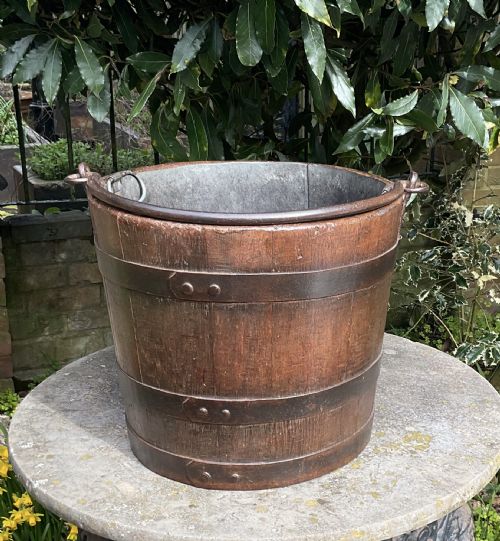


Edwardian Brass Vessel
An edwardian brass vessel brings functional warmth and polished metalwork to a fireside or hallway, prized for its robust construction and decorative presence.
Edwardian Brass Vessel
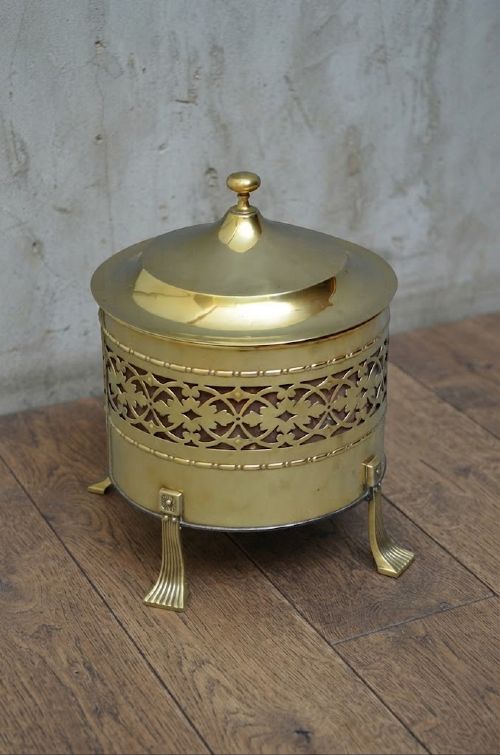
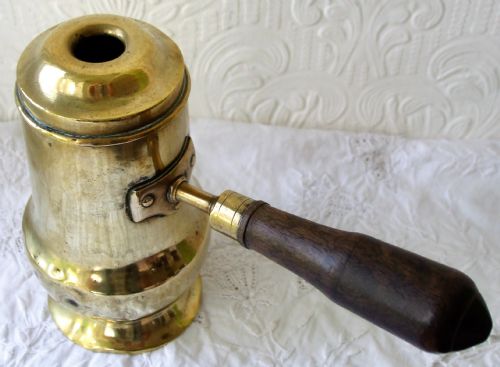
When you search for an edwardian brass vessel, you encounter domestic metalwork designed for daily utility in the home, spanning coal buckets, planters, kettles, and jugs. The typical form encountered here is the jardiniere or fireside bucket, dating from the Edwardian era around 1900.
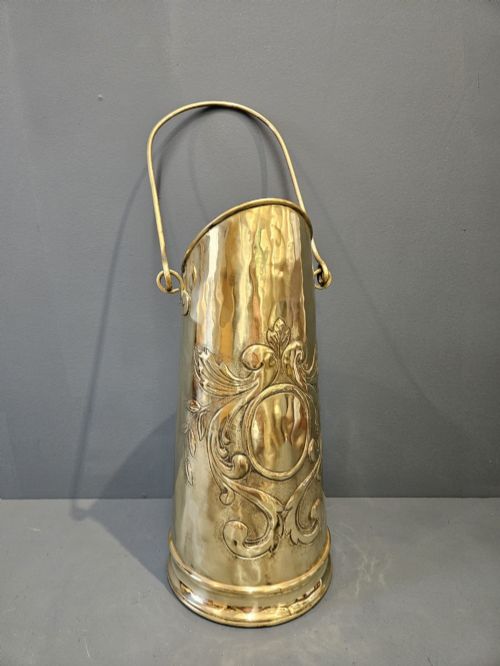
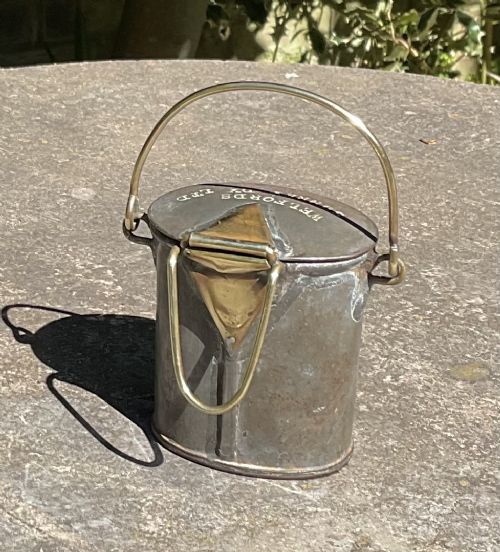
Makers of the period also produced umbrella stands, watering cans, and coal scuttles, often combining brass with complementary materials like copper or oak. These objects reflect the domestic habits of the early twentieth century, where durable metal containers served both practical storage and decorative interior roles.
How they were made
These vessels utilise sheet brass and copper, frequently joined with riveted seams or paired with coopered oak staves and iron fittings. Metal components were shaped through spinning, beating, or casting, creating smooth bodies or fluted surfaces.
Artisans applied chased floral decoration or fretwork designs to the metal panels, while handles often featured swing bails or fixed mounts secured by heavy rivets.
Styles represented across the inventory include Art Nouveau, Arts and Crafts, and nautical maritime designs.
What varies in quality
Quality in these vessels rests upon the thickness of the metal sheet, the crispness of any chased or fretwork detailing, and the integrity of structural joints. Substantial gauge brass resists dents and maintains structural form under heavy contents like coal or water.
The finesse of the handles, the tightness of coopered wooden staves, and the presence of makers' marks or specific stylistic flourishes such as Art Nouveau motifs separate standard utility items from finer examples.
Orme Evans And Co
The Edwardian Brass Vessel Glossary
- Jardiniere
- An ornamental pot or stand for holding plants or flowers. These vessels often feature fluted or fretwork brass bodies.
- Coopered
- Made with staves of wood fitted together side by side and bound with metal hoops, as seen in oak buckets and barrels.
- Chased
- Decorated by indenting or embossing metal with a hammer and punch from the exterior.
- Fretwork
- Ornamental work consisting of interlaced or perforated patterns cut from sheet metal or wood.
Edwardian Brass Vessel: Frequently Asked Questions
How were these brass vessels originally used?
These items served practical household tasks such as holding coal by the hearth, storing umbrellas in the hallway, or carrying water and milk.
Many also functioned as decorative planters or jardiniere containers for interior greenery during the Edwardian period.
How do I distinguish Edwardian pieces from Victorian ones?
Edwardian vessels often display lighter, cleaner lines influenced by Art Nouveau or Arts and Crafts movements, compared to heavier Victorian counterparts.
Victorian items frequently exhibit more ornate, dense ornamentation and darker patination developed over decades of earlier use.
How do I clean an antique brass vessel?
Maintenance typically requires only gentle dusting or wiping with a soft, dry cloth to preserve the historic surface and patina.
Harsh metal polishes should be avoided because they strip away the aged coloration that collectors value.
Can these metal vessels still hold water?
Many solid brass and copper vessels retain their watertight integrity, though some older items with riveted or coopered seams may require liners.
Checking the interior base for historical repairs or modern inserts ensures safe usage for fresh plants or cut flowers.