


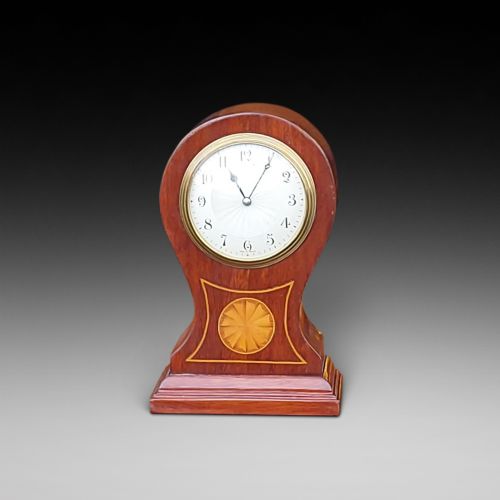


Edwardian Brass Timekeeper
These edwardian brass timekeeper pieces are portable and stationary horological instruments that bring period mechanical precision and historic materials into a room.
Edwardian Brass Timekeeper
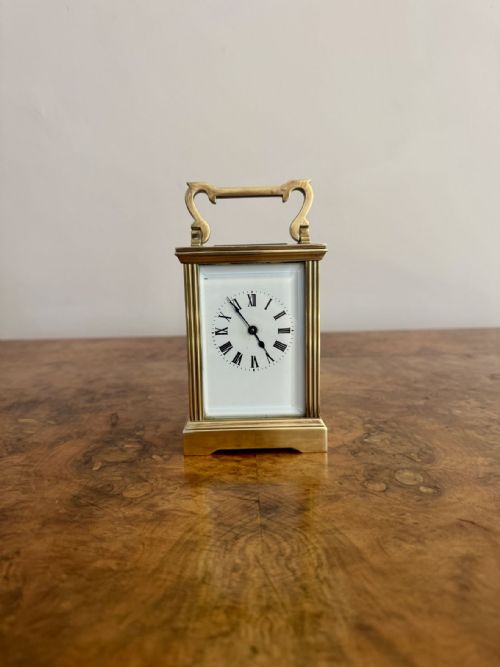
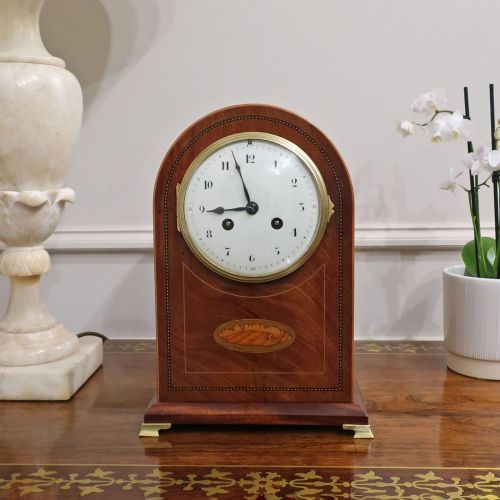
An edwardian brass timekeeper covers various portable and mantel designs from the early twentieth century and surrounding periods. The selection includes carriage clocks, mantel clocks, and wall clocks spanning several decades.
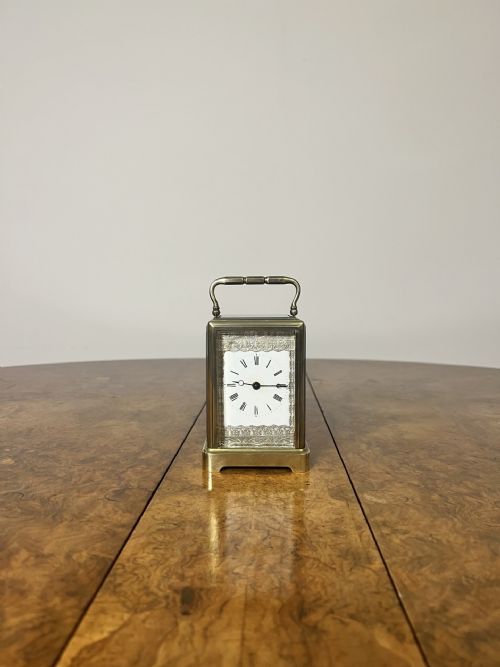
Carriage clocks in brass cases appear frequently alongside wooden mantel clocks in mahogany and satinwood. Many examples originate from the Edwardian era and Victorian periods, incorporating dial variations and repeating mechanisms.
Buyers encounter different formats, from miniature carriage clocks to larger single fusee dial clocks. The range includes French carriage clocks with enamel bandings as well as British mahogany mantel designs.
How they were made
Construction relies heavily on brass for the cases and mechanical movements of carriage clocks, whilst wooden timekeepers utilise mahogany and satinwood for bodies and dial surrounds. Enamel and silvered metal form the clock faces, often featuring painted or inlaid details.
Craftsmen applied techniques such as brass inlay, filigree decoration, and floral marquetry to the wooden cases. Movements incorporate mechanisms like fusee gearings, repeaters, and eight-day trains housed within glazed brass frames.
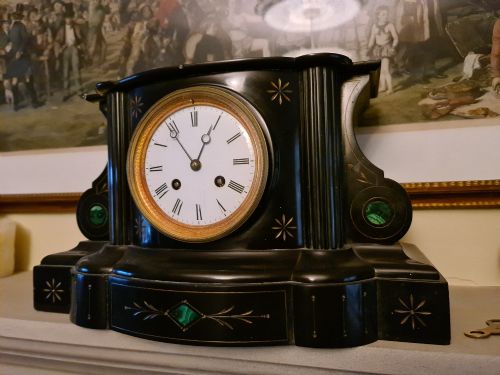
Listings feature brass, mahogany, satinwood, and black slate across periods ranging from the mid-nineteenth century to the 1930s.
What varies in quality
Quality separates through the refinement of the brass casting, the precision of the dial work, and the execution of cabinetmaking on the wooden cases. Finely worked enamel bandings and detailed filigree decoration distinguish superior examples.
The sophistication of the internal movement, such as repeating complications or fusee setups, sets apart standard production from higher grade workshop output. Original finishing on both the metalwork and wood surfaces dictates the standing of each piece.
W. Burton·Dent of London·Goldsmiths
The Edwardian Brass Timekeeper Glossary
- Carriage clock
- A portable spring-driven timepiece originally designed for travellers, featuring a brass frame glazed on the sides to view the movement. These clocks often possess a swinging handle on top.
- Fusee
- A conical pulley used in clock movements to maintain an equal pull as the mainspring unwinds. This mechanism helps ensure steady timekeeping accuracy across the power reserve.
- Mantel clock
- A clock designed to sit upon the shelf or mantelpiece above a fireplace. They appear in wood cases such as mahogany and black slate.
- Repeating clock
- A mechanical timekeeper that strikes the hours and quarters upon demand when a lever or cord is activated. This complication required high skill from the maker.
- Dial clock
- A wall-mounted clock featuring a prominent circular face beneath glass, driven by a weight or spring movement. These pieces served practical timekeeping duties in public and domestic spaces.
Edwardian Brass Timekeeper: Frequently Asked Questions
How do I wind a carriage clock?
Wind the mainspring using the specific key inserted into the winding arbor at the back of the movement. Care must be taken not to overwind the mechanism.
Ensure you turn the key in the correct direction corresponding to the specific gear train for timekeeping or striking.
What is a fusee movement?
A fusee movement uses a conical pulley and a chain to regulate the power delivered from the mainspring to the gear train. This design compensates for the decreasing torque of a relaxing spring.
Such mechanisms appear frequently in better quality British clocks from the nineteenth and early twentieth centuries.
How do I date a brass carriage clock?
Examine the style of the brass case, the shape of the handle, and the type of escapement visible through the glass panels. Makers often inscribed signatures or patent marks on the backplate.
Period characteristics such as enamel dials and decorative brass masking help narrow down the decade of production.
Where should I place a mantel clock?
Position the clock on a stable, level surface away from direct sunlight, drafts, and sources of excessive moisture. Wooden cases respond poorly to rapid temperature fluctuations.
Mantel clocks look best on sturdy shelves, sideboards, or mantels where the pendulum or balance wheel can operate without disturbance.