

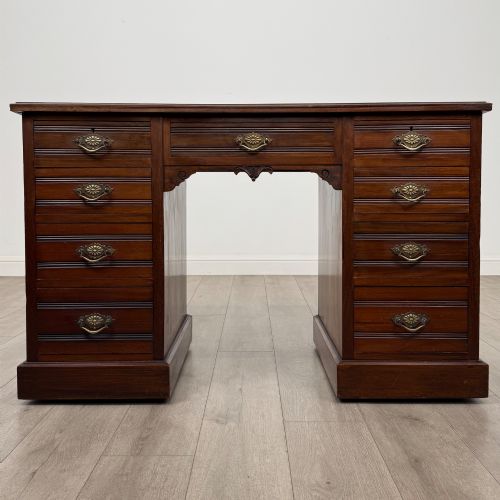
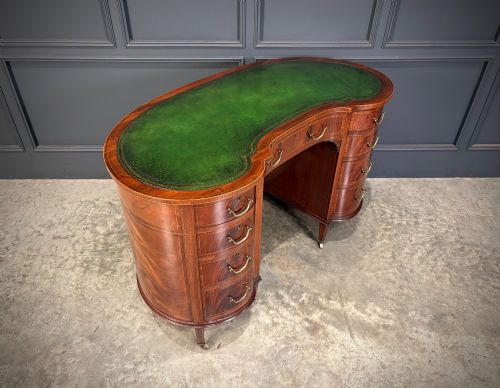
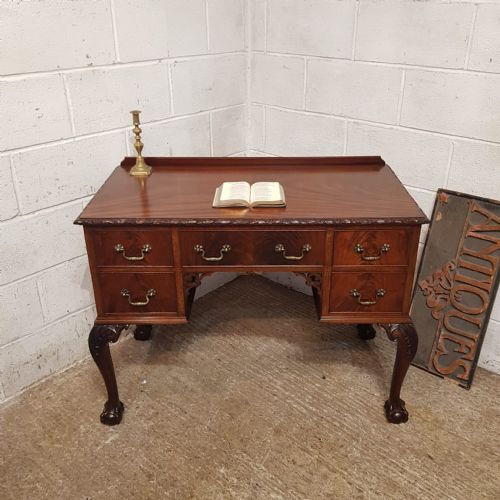
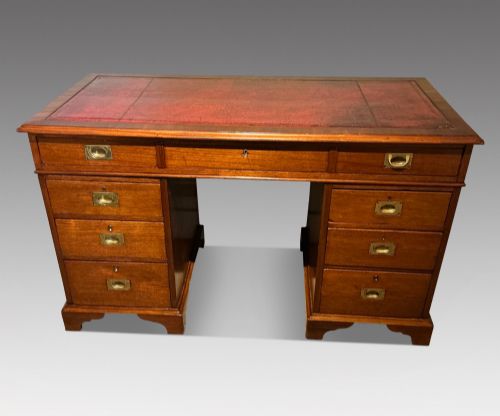
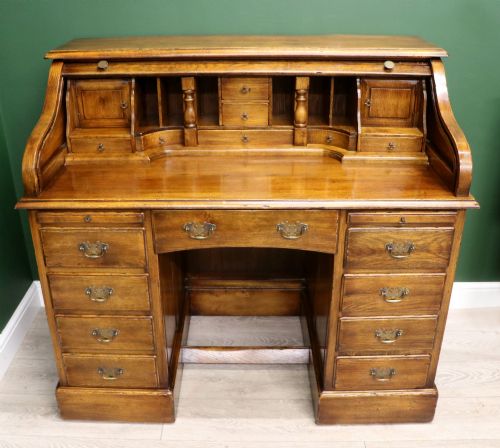
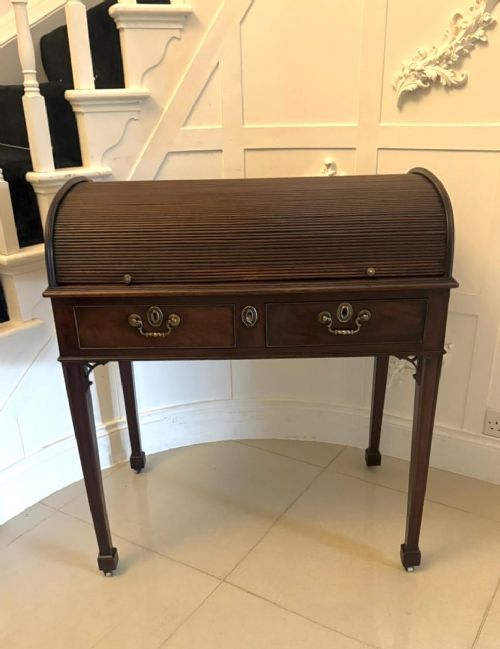
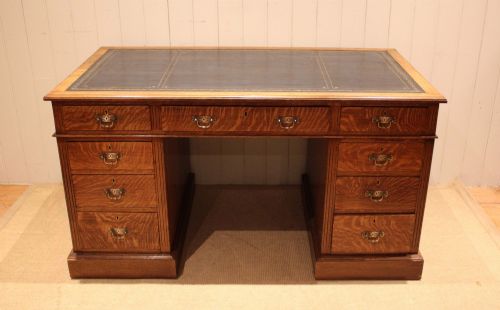
Edwardian Brass Handle Desk
An Edwardian brass handle desk offers sturdy mahogany or walnut construction complemented by period metalwork, providing a reliable workspace with traditional character.
Edwardian Brass Handle Desk
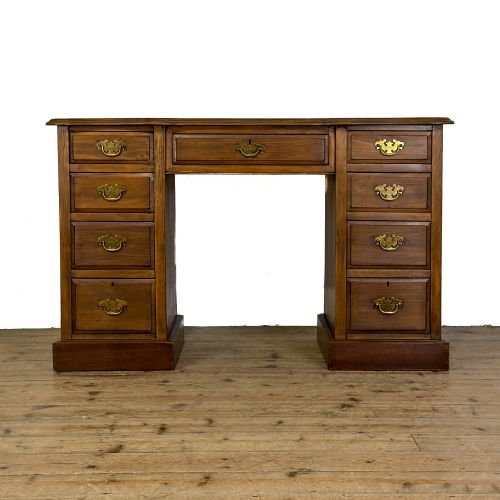
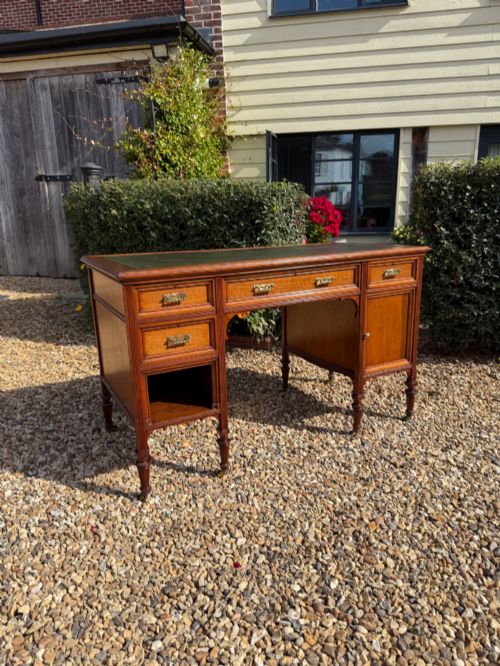
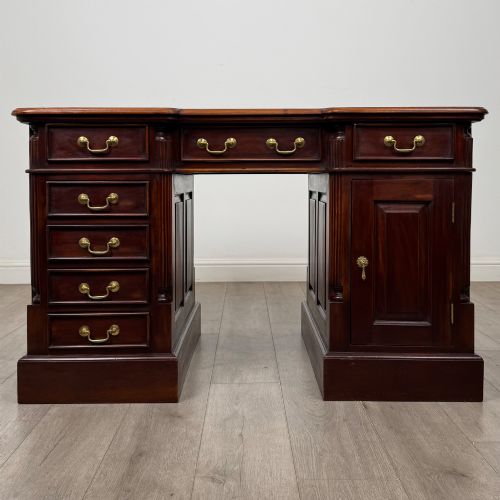
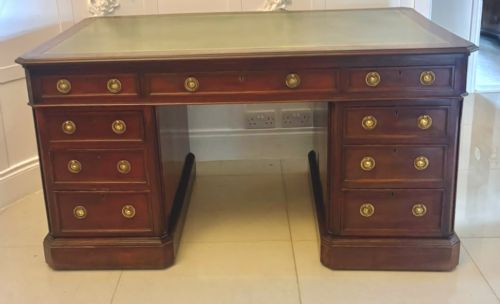
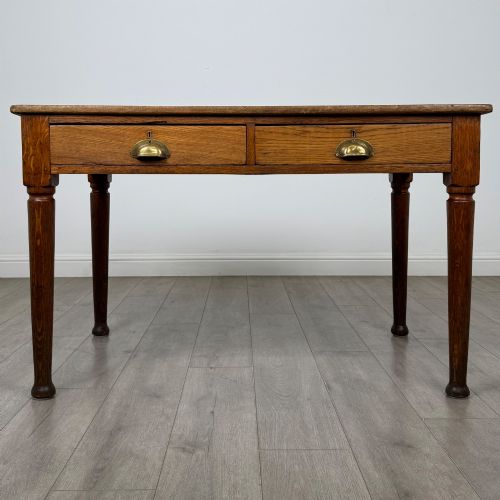
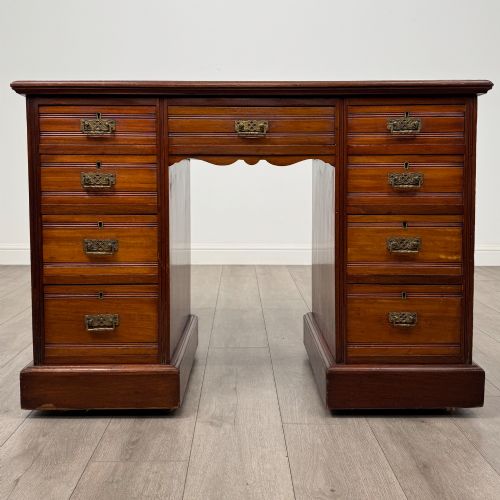
An edwardian brass handle desk brings together the practical forms of early twentieth-century working furniture and the warm tones of traditional timber. Buyers seeking an edwardian brass handle desk will most commonly encounter twin pedestal writing tables and compact kneehole desks produced around the turn of the century.
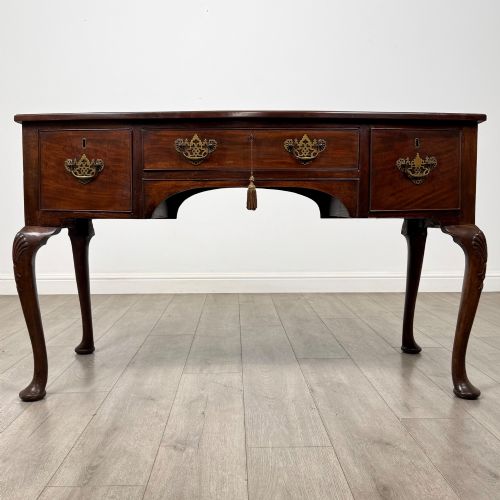
The evidence shows these pieces appearing in solid mahogany, walnut, and oak, frequently fitted with inset leather writing surfaces and original metal hardware. Alongside standard pedestal forms, the selection includes writing tables and bureaus that reflect both Edwardian utility and earlier revival styles.
How They Were Made
Cabinet makers constructed these desks using dense timbers such as mahogany, oak, and walnut, often applying veneers and crossbanding to enhance the grain figures. Drawers were typically fashioned with traditional joinery, while surfaces received leather inserts and polished finishes.
Brass was utilised for the drop handles, ring pulls, and swan neck fixtures that adorned the drawer fronts, secured with original fixings. Structural framing relied on solid plinth bases, fluted edges, and panelled sides to ensure durability.
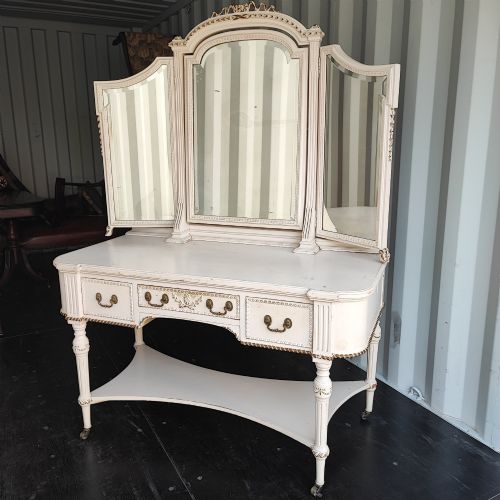
Form variations on this page include pedestal desks, writing tables, bureaus, and dressing tables.
What Varies in Quality
The distinction between standard output and finer workshop production rests upon timber selection and the retention of original hardware. Desks featuring figured mahogany, burr walnut, or detailed crossbanding demonstrate greater care in material pairing by the maker.
Trollope & Sons·Maples of London·Jenners
The Edwardian Brass Handle Desk Glossary
- Pedestal desk
- A heavy freestanding writing table supported by two banks of drawers flanking a central kneehole space. This form provides substantial storage beneath the main writing surface.
- Crossbanding
- A decorative border of veneer laid around the perimeter of a drawer front or tabletop so the grain runs perpendicular to the central panel. It frames the primary wood with a contrasting stripe.
- Kneehole desk
- A compact writing desk featuring a recessed central space for the user's legs, flanked by single or multiple vertical columns of drawers. They offer efficient storage within a smaller footprint.
- Swan neck handle
- A metal pull shaped like the graceful curve of a swan's neck, fastened to backplates on a drawer front. This hardware style is commonly found on traditional period cabinetry.
Edwardian Brass Handle Desk: Frequently Asked Questions
What defines an Edwardian desk?
An Edwardian desk is typically characterised by its construction during the early twentieth century, combining traditional timber frames with functional workspace designs. These pieces often draw stylistic inspiration from earlier Georgian and Sheraton revivals.
Makers utilised woods like mahogany and walnut, frequently incorporating brass handles and leather writing surfaces. Their proportions balance domestic utility with the formal cabinetry standards of the period.
Are these desks suitable for daily use?
These desks are built from solid timbers and sturdy veneers, making them well-suited for everyday modern work.
Their substantial construction and functional drawer arrangements provide practical storage alongside a generous writing area. Careful placement away from direct heat sources helps preserve the polished wood and leather surfaces.
How can I identify the timber?
Mahogany typically displays a reddish-brown tone with a straight or ribbon-like grain pattern. Walnut offers darker, highly figured patterns that sometimes include burr variations.
Oak is recognised by its pronounced open grain and pale golden or brown hue. Examining the drawer linings and panel interiors helps confirm the primary wood used in construction.
What is a twin pedestal desk?
A twin pedestal desk is a large freestanding writing table supported by two separate columns of drawers. The user sits in the open kneehole space situated centrally between the two pedestals.
This format allows for extensive storage capacity within the drawer stacks while maintaining a balanced, symmetrical appearance.