





Edwardian Brass Fire Companion
These edwardian brass fire companion sets bring warmth and utility to a hearth, offering functional tools housed in polished metal.
Edwardian Brass Fire Companion
An edwardian brass fire companion consists of matching fireplace accessories and tools designed to tend an open coal or wood fire while standing tidily on the hearth. Buyers seek these pieces to complete a period fireplace with authentic hearth furniture that combines practical utility with decorative metalwork.
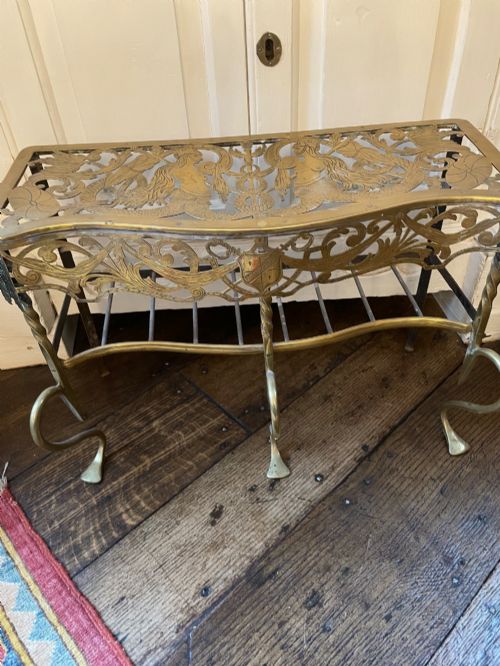
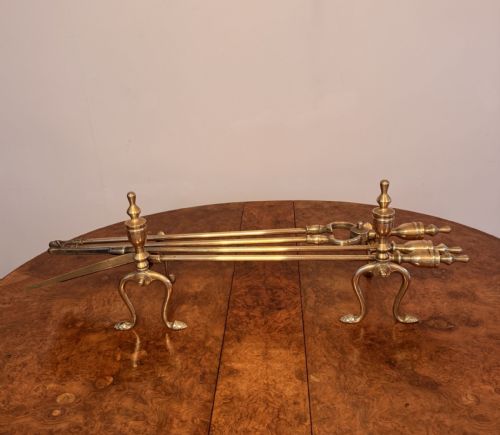
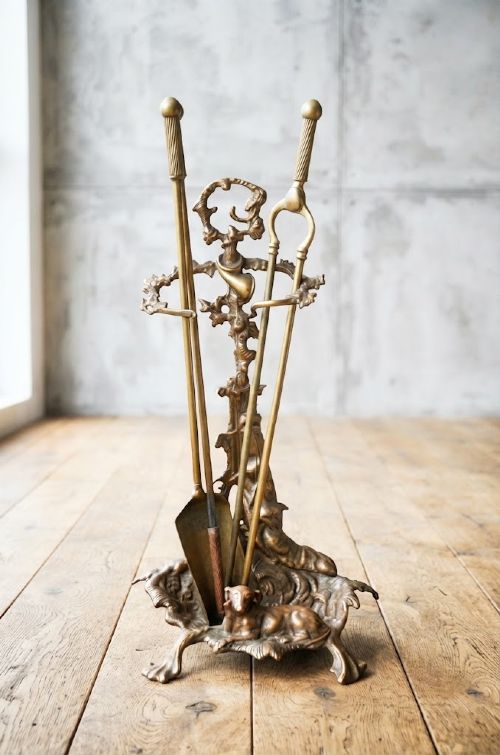
The most common versions on this page are sets of fire irons comprising a shovel, poker, and tongs, frequently accompanied by dedicated companion stands, fire dogs, or coal bins. Dating spans from the Victorian era into the early twentieth century, capturing the transition from ornate nineteenth-century designs to cleaner Arts and Crafts or Art Nouveau styles.
Materials and construction
Makers utilised cast brass, sheet brass, and solid copper alongside supporting elements of iron and steel for functional strength. Tools often feature shaped or rope twist handles attached to sturdy shafts designed to withstand regular heat and use.
Construction techniques include sand casting for heavy components like fire dogs and companion stands, paired with hand-finished polishing and detailing such as claw and ball feet or embossed hunting scenes.
Edwardian Brass Fire Companion Retail Price Guide 2026
Typical asking prices for edwardian brass fire companion among the pieces listed under this phrase on Sellingantiques today, from the lower quarter to the upper quarter. They describe what is for sale here now, not the wider market.
Object forms include coal bins, umbrella stands, fire dogs, and fender sets alongside traditional companion tools.
Markers of quality
Quality rests in the weight of the metal and the crispness of decorative detailing, where heavier cast brass and substantial steel components outlast thinner, lighter alternatives. Superior sets display careful finishing on handles, such as well-defined rope twists or integrated decorative motifs rather than plain, mass-produced mouldings.
The integrity of the complete suite matters greatly, as surviving groups that retain their original companion stand, matching fire dogs, and full trio of tools command higher regard than assembled or incomplete sets.
The Edwardian Brass Fire Companion Glossary
- Companion set
- A matched group of fireplace tools, usually including a shovel, poker, and tongs, held together on a dedicated stand or rack.
- Fire irons
- The individual poker, shovel, and tongs used to manage burning fuel and ash within an open fireplace.
- Andirons
- Heavy metal supports placed on either side of a hearth to hold logs above the base of the fireplace, also known as fire dogs.
- Fender
- A low metal guard placed around the hearth to keep embers contained and protect the surrounding floor.
- Rope twist
- A decorative spiral pattern carved or cast into the metal handles of fire tools to resemble twisted cord.
Edwardian Brass Fire Companion: Frequently Asked Questions
What tools come in a standard set?
A standard set generally includes a shovel for clearing ash, a poker for adjusting fuel, and tongs for moving logs or coal safely.
These three implements usually hang from or rest within a matched companion stand placed beside the hearth.
How do I clean polished brass?
Polished brass requires gentle cleaning with a soft cloth and a proprietary metal polish to maintain its shine without removing the underlying finish.
Avoid abrasive pads or harsh chemical cleaners that can scratch the metal or strip away aged patination.
Can these tools be used daily?
Most pieces are robustly constructed from solid brass, iron, and steel, making them entirely suitable for tending a working fireplace.
Users should check that handles and joints remain secure before handling hot fuel or heavy logs.
How do I date an edwardian set?
Dating relies on stylistic clues, such as the flowing organic lines typical of Art Nouveau or the simpler, honest construction methods of the Arts and Crafts movement.
Maker's marks, registration numbers, or the specific casting weight and handle design also help pinpoint the era of manufacture.