




Edwardian Brass Coal Scuttle
An edwardian brass coal scuttle brings bright metallic sheen and practical hearth storage to a fireplace, shaped by the needs of period domestic life.
Edwardian Brass Coal Scuttle
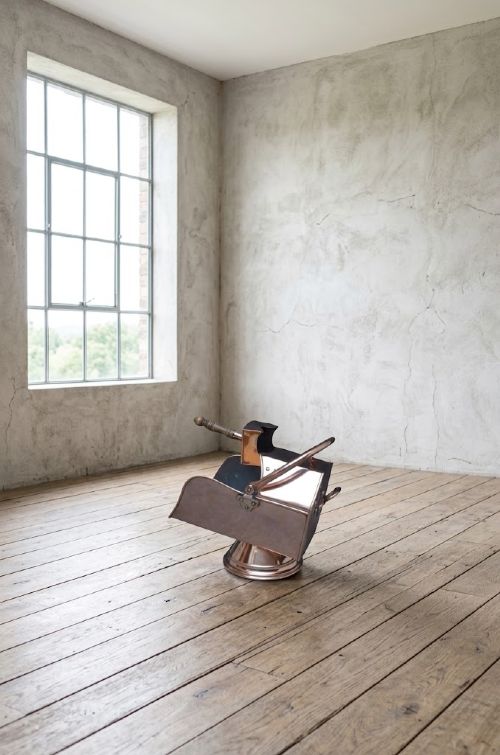
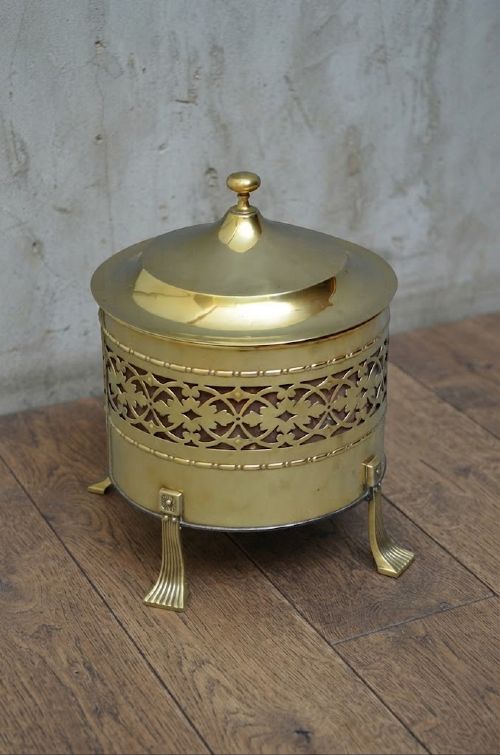
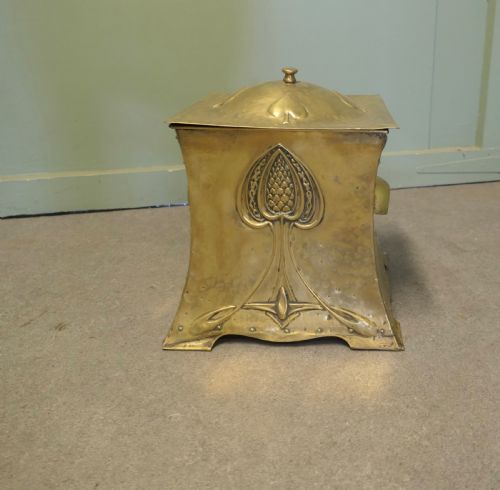
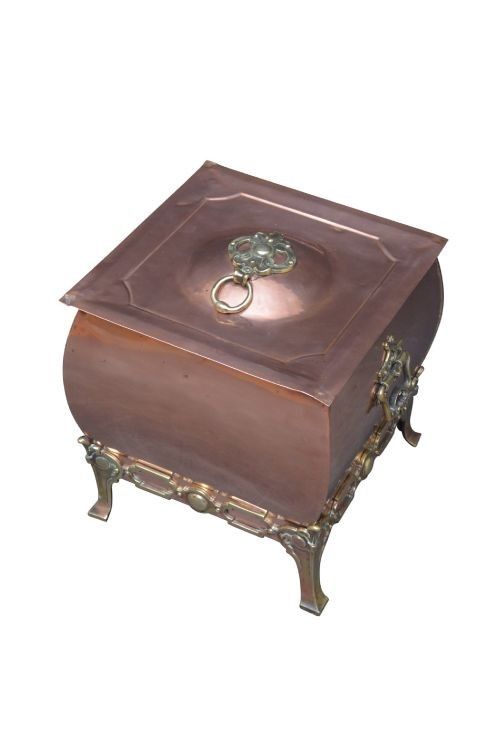
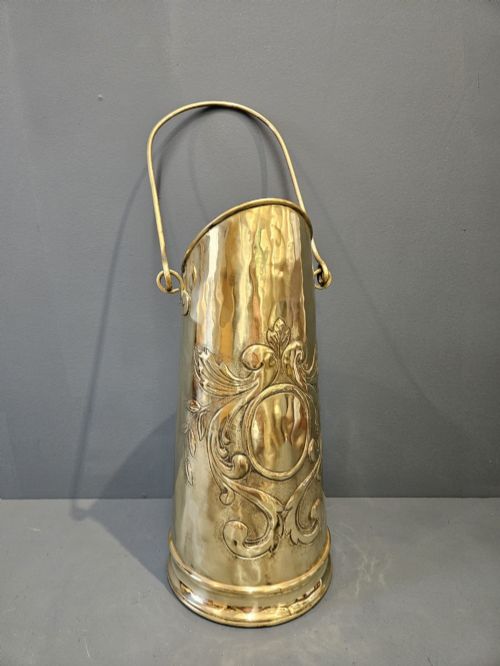
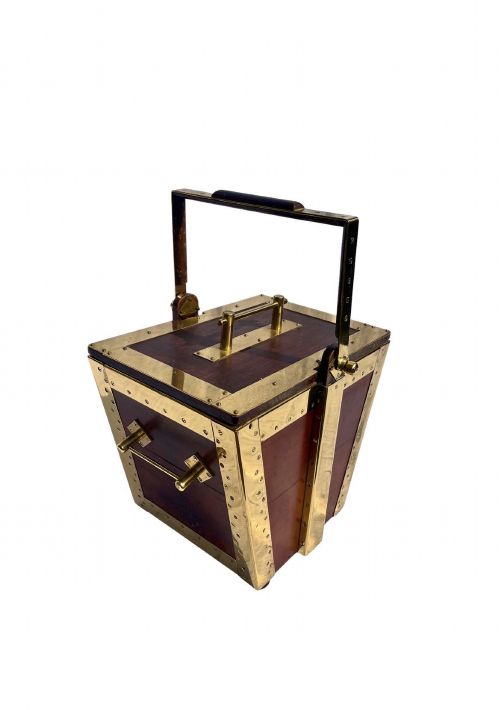
An edwardian brass coal scuttle is a fireside accessory designed to hold solid fuel for domestic hearths. The pieces on this page span several decades around the turn of the twentieth century, incorporating related forms like copper buckets, helmet scuttles, and purdonium cabinets.
Makers of this era utilised various metals and woods, producing items that functioned as both utility containers and decorative interior furnishings. Alongside brass, you will find pieces fashioned from copper, oak, mahogany, and iron, often displaying Arts and Crafts or Art Nouveau stylistic influences.
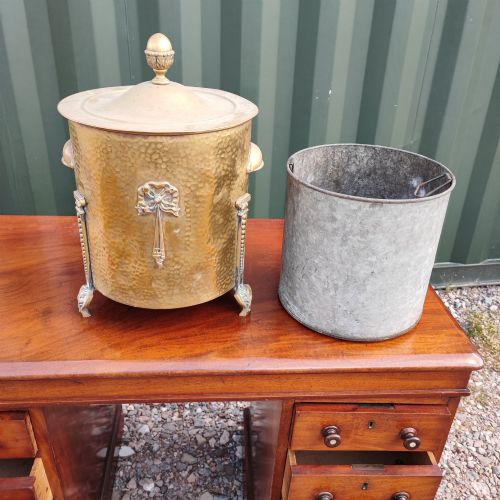
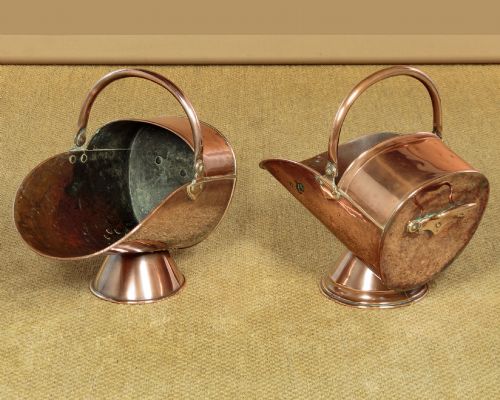
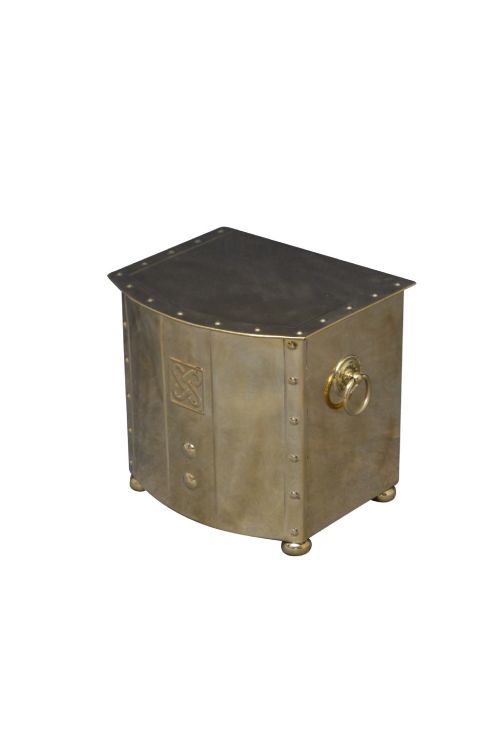
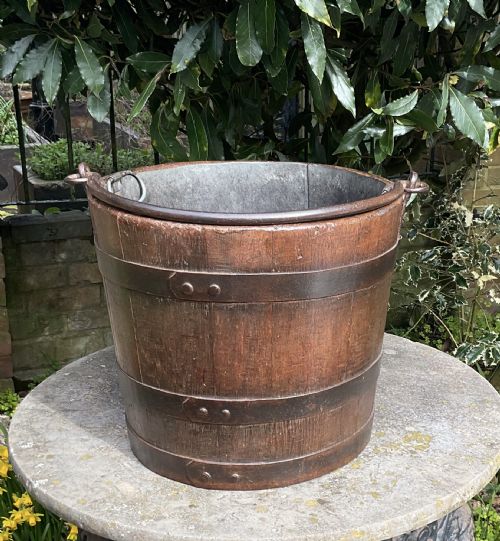
Buyers encounter diverse configurations, from traditional helmet shapes with matching shovels to lidded boxes, coopered barrels, and upright purdoniums. Many examples include internal metal liners designed to contain coal dust and simplify fuel loading.
Materials and Construction
Metal vessels rely heavily on sheet brass and copper, frequently joined by visible riveting or shaped through panel beating. Handles, swing bails, and feet are often cast in brass and attached securely to the main body.
Wooden examples employ traditional joinery techniques, including coopered stave construction for barrels and fine cabinetmaking for inlaid mahogany or carved oak purdoniums. Metal liners and decorative mounts of brass, ormolu, or marquetry inlay complete the construction.
Listings demonstrate a strong presence of Edwardian and Victorian designs, where brass and copper frequently combine with oak and mahogany timber bodies.
Judging Quality and Execution
The distinction between standard utility items and superior examples lies in the weight of the metal and the crispness of any embossed or fretwork decoration. Heavier gauge brass and copper resist denting and maintain structural integrity around the rim and base.
Finishing details separate ordinary production from finer workshop output, particularly in the tightness of coopered staves, the alignment of marquetry inlay, and the retention of original internal liners and matching shovels.
Benham and Froud
The Edwardian Brass Coal Scuttle Glossary
- Purdonium
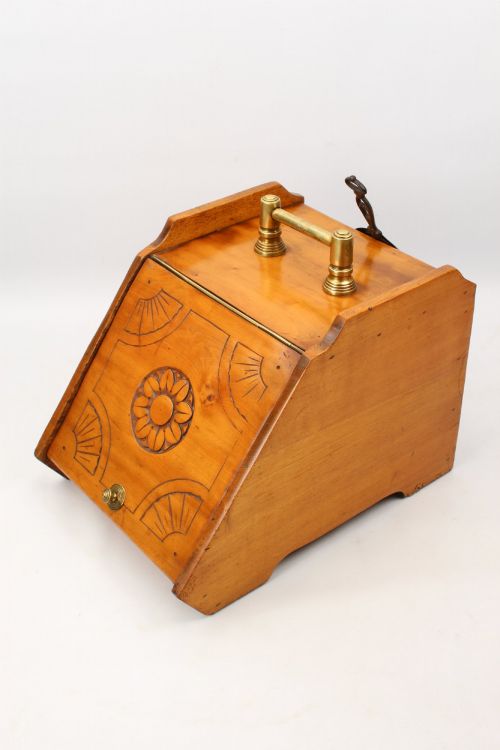
- A specialised coal cabinet featuring a sloping drop-front door designed to conceal the fuel container within a wooden housing. These often incorporate a small interior compartment for the coal shovel.
- Helmet scuttle
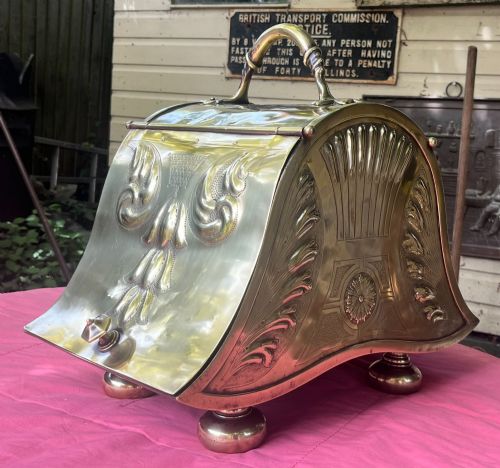
- A traditional metal bucket featuring an outwardly flared rim and a raised back, designed to resemble a classic helmet for easy pouring. They usually feature a fixed arched handle overhead and a smaller grip at the rear.
- Coopered
- A method of construction where narrow wooden staves are joined tightly side by side and bound with metal hoops, traditionally used for barrels and buckets. This technique allows wood to hold dry fuel or act as a planter with a watertight liner.
- Fretwork
- An ornamental design created by piercing patterns through sheet metal or wood, allowing light through decorative motifs. This technique frequently appears on Edwardian brass bandings and gallery rails.
- Jardiniere
- An ornamental pot or container originally intended for holding plants or flowers. Many surviving metal and ceramic pieces from this era double as coal bins or log buckets.
Edwardian Brass Coal Scuttle: Frequently Asked Questions
What is the difference between a coal scuttle and a purdonium?
A coal scuttle is typically an open or lidded bucket with a carrying handle, designed for easy transport of fuel from an outside store to the hearth. These often take helmet or cylindrical shapes.
A purdonium is a piece of cabinet furniture, usually made of oak, mahogany, or walnut, housing a metal liner behind a hinged front door. They remain stationary by the fireside as integrated storage units.
Did these pieces always come with shovels?
Many Edwardian and Victorian coal scuttles originally included a matching metal shovel designed to hang from a side bracket or fit into a dedicated compartment. Over decades of use, these small accessories were frequently separated from the main bucket.
Finding a complete set with its original shovel and liner adds significantly to the historical integrity of the piece.
How do I care for antique brass and copper?
Metal fireside pieces accumulate dust, soot, and natural oxidation over time. Gentle dusting with a dry cloth preserves the aged patina that collectors value on nineteenth and early twentieth-century metalwork.
Avoid harsh chemical cleaning agents or abrasive scouring pads, which strip away the surface character and modernise the antique appearance of the brass.
Can these containers still be used for real fires?
Solid brass and copper buckets with intact metal liners remain structurally capable of holding coal, logs, or kindling for an active fireplace. The internal liners protect the outer metal and wooden components from direct abrasion and moisture.
Inspect the base and liner for historical wear to ensure the vessel remains suitable for functional duty rather than purely decorative display.