


Edwardian Biscuit Jar
An edwardian biscuit jar brings the structured hospitality of the early twentieth century directly to the dining table.
Edwardian Biscuit Jar
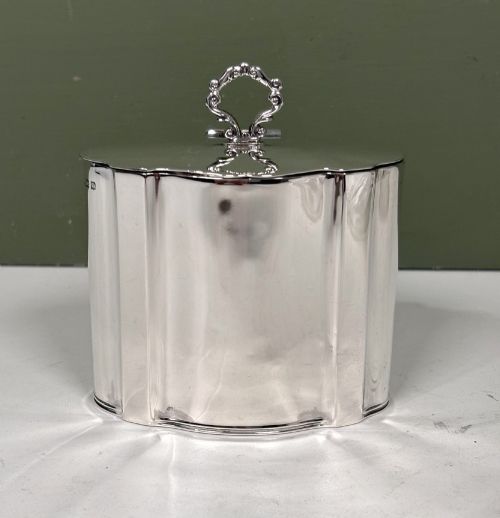
An edwardian biscuit jar is a container designed for storing and presenting biscuits, featuring prominently in domestic entertaining from the turn of the twentieth century. These vessels appear frequently as cylindrical or drum-formed pieces from the Edwardian period, alongside related examples from Victorian and George V years.
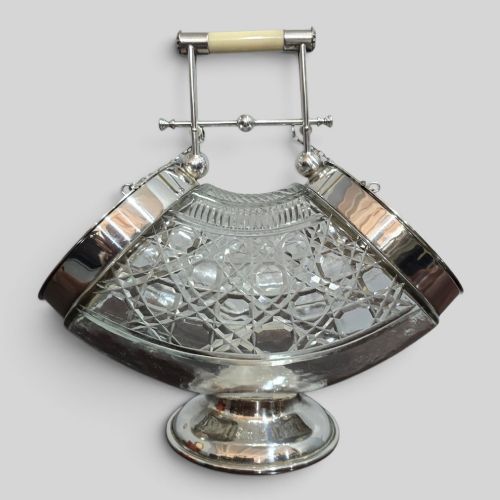
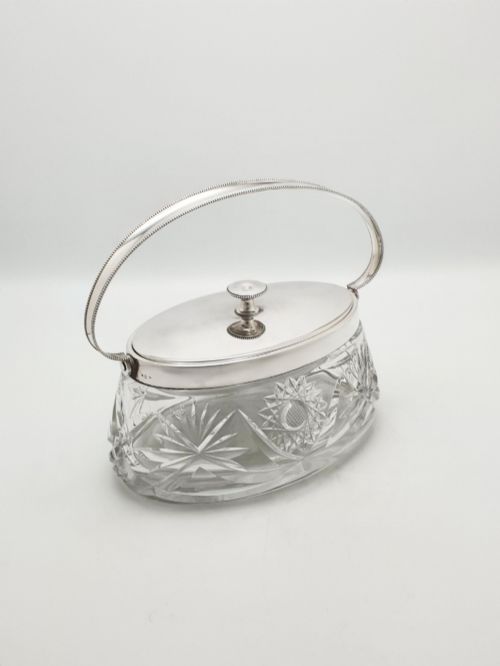
The pieces on this page span several forms, including cut glass bodies, oak barrels, ceramic containers in flow blue and earthenware, and novelty designs shaped like hats or weights. Most sit on a matched or fitted base with a hinged lid and a carrying handle for passing round the table.
While the core of the selection dates strictly to the Edwardian era and surrounding decades, related items reach back to the late nineteenth century and forward into the 1920s and 1930s. The common thread is a functional vessel designed to keep dry baked goods fresh while presenting an ornamental surface.
How they were made
Makers relied on combinations of silver plate, sterling silver, and cut glass, often mounting heavy crystal bodies into pierced or solid metal frames. Oak and mahogany also featured extensively, turned into stave-built drum forms or solid boxes fitted with metal bands and swing handles.
Surface decoration on the glass and ceramic versions involved hobnail cutting, faceting, enamel painting, and transfer printing in styles like flow blue. Metal mounts received careful engraving, and some lids incorporated automated spring mechanisms or hinged closures attached to sturdy side handles.
Some makers turned biscuit storage into a joke by shaping containers precisely like a gentleman's top hat or a heavy gym weight.
What varies in quality
The calibre of an edwardian biscuit jar rests on the weight and clarity of the glass liner, the precision of the cut facets, and the substantial nature of the silver plate or sterling silver mounts. Heavy hobnail cutting and crisp moulding indicate superior workshops compared to thinner, simpler press-moulded vessels.
Design ambition also separates standard production from the upper tier, visible in novelty forms such as hat boxes or weights, and in pieces bearing identifiable maker marks. The integration between wooden staves or ceramic bodies and their metal hardware dictates the structural integrity of the surviving piece.
WMF·Thomas Bradbury·John Grinsell And Sons·James Dixon And Sons
The Edwardian Biscuit Jar Glossary
- Hobnail cut
- A decorative glass-cutting pattern consisting of rows of raised, pointed facets resembling the hobnails used in heavy boots. This technique catches the light and adds tactile grip to the body.
- Flow blue
- A cobalt blue transfer-printing style used on earthenware where the colouring blurred slightly into the white glaze during firing. This technique created a soft, hazy aesthetic popular in domestic ceramics.
- Silver plate
- A layer of silver fused to a base metal core, typically nickel silver or brass, providing the appearance of solid silver at a lower cost. Most Edwardian mountings and handles utilised this technique.
- Jugendstil
- The continental European counterpart to Art Nouveau, focusing on stylised organic forms and flowing lines. Pieces from this aesthetic occasionally appear among the continental imports.
- Drum form
- A cylindrical container shape resembling a musical drum, frequently constructed from wooden staves bound with metal hoops. This form was especially popular for oak and mahogany biscuit boxes.
Edwardian Biscuit Jar: Frequently Asked Questions
What was an edwardian biscuit jar used for?
These vessels were kept on the sideboard or dining table to hold sweet biscuits and crackers for afternoon tea or after-dinner hospitality.
Servants or hosts would use the swing handle to pass the container around the guests, keeping the contents protected from humidity by the fitted lid.
How do I tell an Edwardian jar from a Victorian one?
Edwardian examples tend to display lighter proportions and cleaner decorative lines influenced by the transition into the twentieth century. Victorian pieces often lean towards heavier, more ornate ornamentation and darker oak timber mounts.
Examining the registration marks, style cues, and associated metalwork helps pin down the exact decade of manufacture.
Are all biscuit jars made of glass?
While cut glass and cranberry glass form a large share of the listings, many examples are constructed from English oak, mahogany, or earthenware ceramics.
Metal components such as silver plate or sterling silver feature across nearly all material types to provide the rim, lid, and handle assembly.
How do I care for an antique biscuit jar?
Gentle cleaning with warm soapy water and a soft cloth preserves the silver plate or sterling silver mounts without stripping the patination. Wooden barrels require dry dusting and occasional treatment to keep the timber from drying out.
Harsh chemical dips should be avoided on plated surfaces to protect the underlying metal.