




Edwardian Bird Jewellery
Edwardian bird jewellery brings feathered motifs into delicate gold and enamel, offering collectors a charming glimpse into nature-inspired wearable art.
Edwardian Bird Jewellery
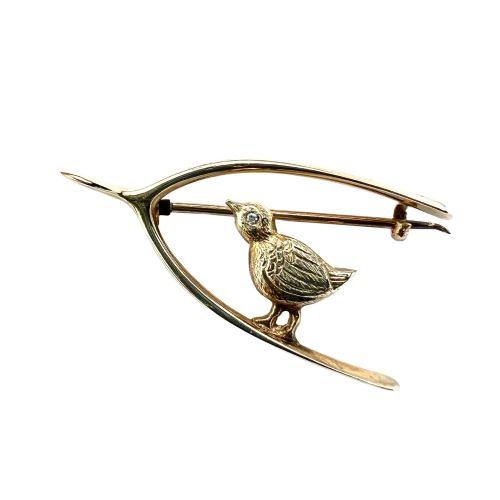
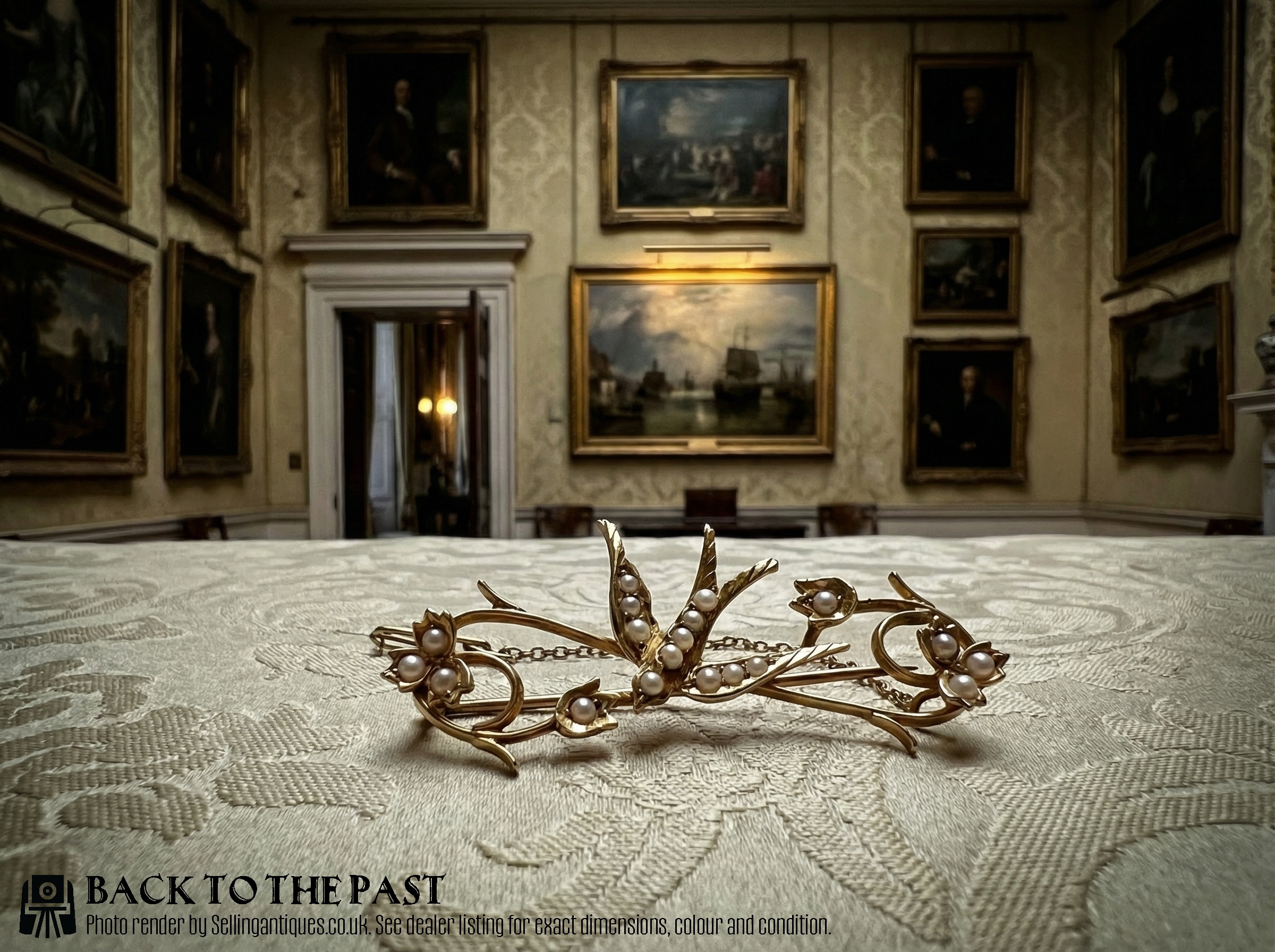
Edwardian bird jewellery captures the elegance of avian motifs through brooches, lockets, and pendants fashioned during the early twentieth century and the late Victorian era. These pieces frequently feature swallows, ducks, and cockerels rendered in fine precious metals with delicate gemstone embellishments.
You will most commonly encounter bar brooches and lockets on this page, often depicting swallows in flight or carrying symbolic elements like wishbones. The forms lean towards refined naturalism, capturing wingspan and posture with notable economy.
Origins stretch from the Edwardian period back to late Victorian workshops, bridging distinct aesthetic movements while maintaining a steady focus on bird life. The selection ranges from straightforward gold pins to complex compositions involving enamel and diamonds.
Materials and Construction
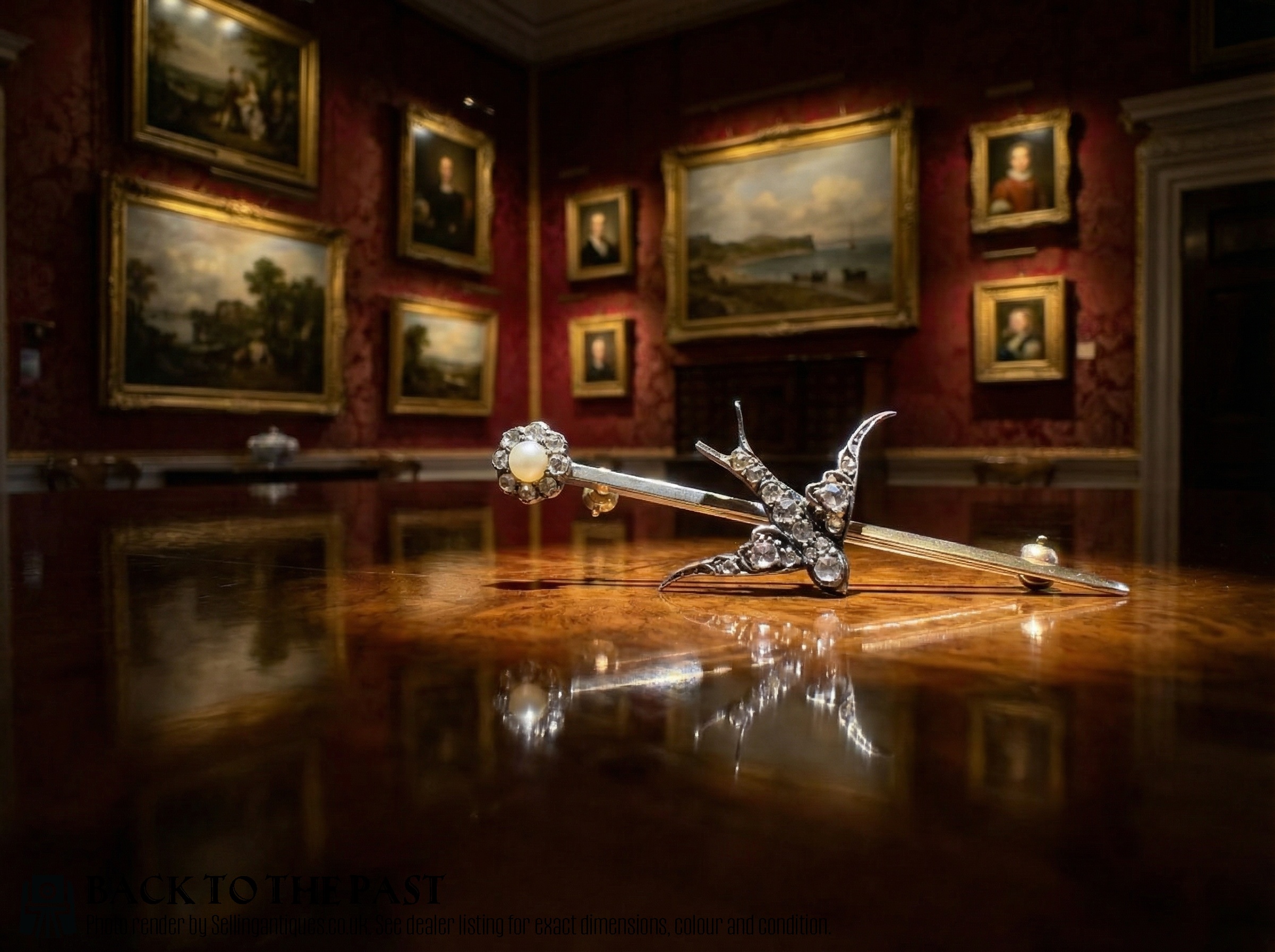
Goldsmiths utilised nine carat and fifteen carat gold alongside silver for the foundational structures of these pieces, shaping them into bar brooches, bracelets, and pendant mounts. Rose-cut diamonds and pearls were then set by hand to highlight plumage and accentuate focal points.
Vibrant enamel work brings colour to many designs, creating realistic plumage on ducks, cockerels, and hunting scenes. This glass-like coating was fused to metal bases through careful firing, capturing deep hues that contrast with surrounding gold.
Listings span the Edwardian and late Victorian periods, utilising yellow gold, silver, enamel, diamonds, and pearls across brooches, lockets, and bracelets.
Assessing Craftsmanship
The refinement of the engraving and the precision of the stone setting dictate the distinction between standard production and superior examples. Finer pieces display meticulous detail in feather texturing and secure, flush mountings for rose-cut diamonds.
The integration of enamel work separates basic items from exceptional creations, particularly where shading and multi-coloured application mimic actual bird plumage. Preservation of the enamel surface without chips or stress fractures elevates the standing of any brooch or pendant.
The Edwardian Bird Jewellery Glossary
- Bar brooch
- A slender horizontal pin frequently adorned with a central motif such as a swallow or cockerel. This form dominated the early twentieth century for everyday wear.
- Rose-cut diamond
- A gemstone cut with a flat base and a domed crown composed of triangular facets. It imparts a softer, candlelight sparkle distinct from modern brilliant cuts.
- Enamel
- A glassy substance fused to metal through high-temperature firing to add durable colour. It appears frequently on wings and bodies to simulate natural plumage.
- Back and front locket
- A hinged locket construction where the front and back covers are made of precious metal over a base metal or hollow core. This technique provided lightweight volume without excessive cost.
Edwardian Bird Jewellery: Frequently Asked Questions
What birds appear in this jewellery?
Swallows, ducks, cockerels, and birds of paradise form the primary subjects across these brooches and lockets. Swallows are especially common, often depicted in mid-flight or linked with symbolic details.
Other avian representations include specific waterfowl and game birds, sometimes paired with floral elements or hunting themes within the same composition.
How do I date these pieces?
Dating relies on hallmark evidence, metal purities like nine carat or fifteen carat gold, and stylistic markers tied to the Edwardian and late Victorian eras. Construction techniques such as pin fittings and hinge types also offer clear chronological clues.
Swallow and bird motifs saw peak popularity around nineteen hundred, aligning closely with the transition from Victorian sentimentality to Edwardian lightness.
Were these brooches worn daily?
Many bar brooches and pins were designed for everyday fastening on lapels, collars, or cravats during the early twentieth century. Their sturdy gold and silver construction suited regular social use.
More delicate iterations featuring extensive pearl work or fine enamel likely saw reserved wear for special occasions or afternoon visits.
How do silver and gold pieces differ?
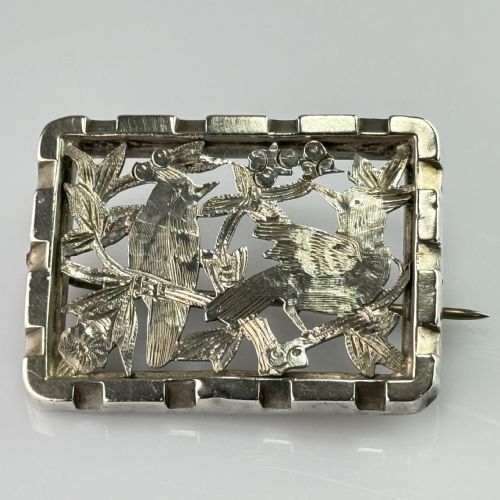
Silver examples, such as antique birds of paradise brooches, often lean towards distinct late-nineteenth-century aesthetic preferences and cooler metallic tones. They provide a different visual weight compared to yellow gold.
Gold versions, particularly in nine and fifteen carat variations, offer warm lustre and frequently incorporate diamonds or coloured enamel to enhance the bird motif.