




Edwardian Art Deco Bracelet
An edwardian art deco bracelet unites geometric sharpness with delicate metalwork, offering collectors a wearable piece of early twentieth-century design history.
Edwardian Art Deco Bracelet
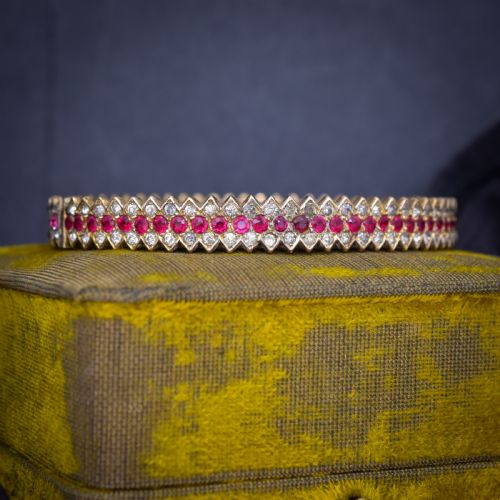
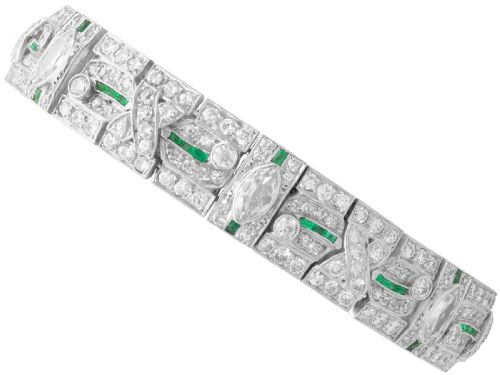
The version you are most likely to meet on this page pairs platinum or white gold with brilliant diamonds, often accented by calibre cut sapphires or emeralds. Such items reflect the transition from Edwardian Garland grace to the linear severity of the 1920s and 1930s.
Materials and Construction
Makers utilised platinum as the premier metal for diamond-set works, leveraging its strength to create paper-thin settings and knife-edge wire. Yellow and rose gold also appear, particularly in pieces retaining older 15ct and 18ct standards.
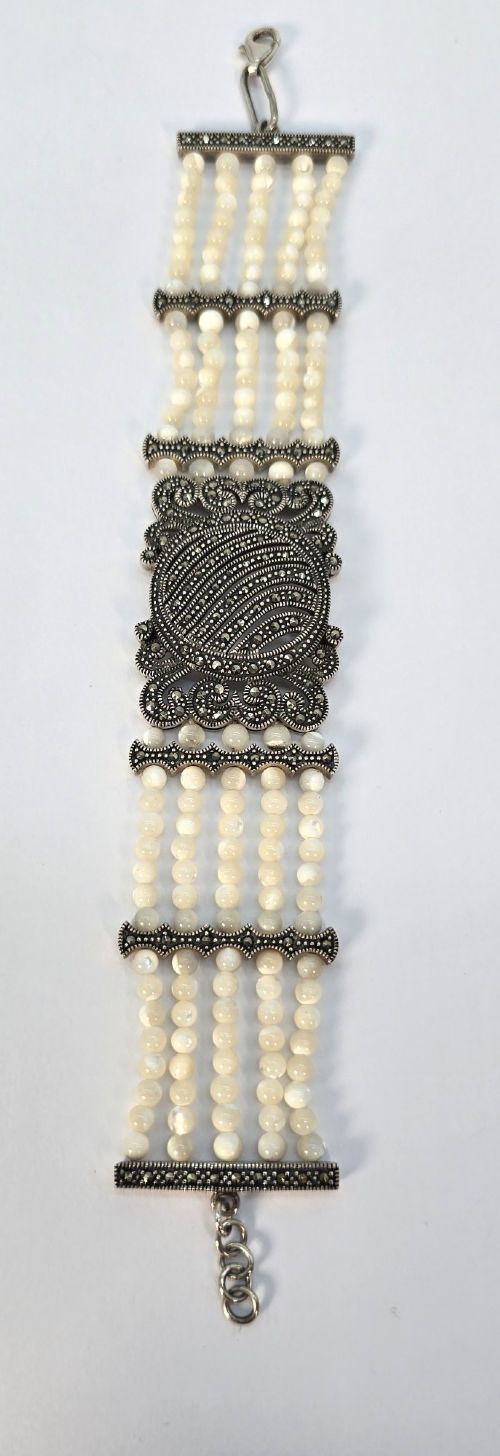
Gemstones underwent specific cutting techniques suited to the period, including old European cut diamonds and calibré sapphires or emeralds shaped to fit rigid geometric channels. Paste and marcasite serve as accessible alternatives in silver settings for similar geometric designs.
Current selections include pieces utilising platinum, 18ct yellow gold, silver, diamonds, sapphires, emeralds, pearls, and glass paste.
Quality and Execution
The distinction between ordinary and exceptional examples rests upon the precision of the metalwork and the integration of the stones. Finer items exhibit meticulous piercing and millegrain work that frames each diamond without excess bulk.
Gemstone selection dictates the upper tier of the range, where matched colour saturation in emeralds or sapphires meets clean, well-proportioned diamond carat weights. Lower tiers rely on heavier mounts or simpler paste substitutes that lack the crispness of platinum masterworks.
Asprey
The Edwardian Art Deco Bracelet Glossary
- Millegrain
- A decorative technique featuring a row of tiny raised metal beads along the edge of a setting. This softens the transition between metal and stone.
- Calibré cut
- Small gemstones cut specifically to fit a precise geometric channel in a mount. These are common in linear patterns.
- Line bracelet
- A flexible bracelet featuring a continuous symmetrical line of gemstones, typically diamonds. They are often mounted in platinum.
- Paste
- Hand-cut lead glass used as a substitute for gemstones in period jewellery. It offers brilliance without precious stone cost.
- Old European cut
- A diamond cut popular in the late nineteenth and early twentieth centuries featuring a small table and high crown.
Edwardian Art Deco Bracelet: Frequently Asked Questions
How do I wear a delicate line bracelet safely?
Pair your platinum and diamond piece with evening wear or tailored day attire where it faces minimal risk of heavy impact. Ensure the clasp and secondary safety chain are secure before fastening it around your wrist.
Store the item in a dedicated lined box away from other pieces to prevent scratching the platinum or softer gold links.
Can I tell an Edwardian piece from a 1920s one?
Edwardian items typically display flowing floral motifs, garland swags, and delicate openwork platinum resembling lace. In contrast, 1920s and 1930s creations embrace strict geometry, chevrons, and bold symmetry.
Examining the underlying structure reveals whether the maker favoured romantic curves or rigid architectural lines.
What is the difference between platinum and white gold in these bracelets?
Platinum offers greater tensile strength, allowing artisans to fashion exceptionally fine settings that hold diamonds securely with minimal visible metal. White gold provides a similar silvery appearance but requires a slightly heavier gauge for structural integrity.
Both metals dominate the aesthetic of this period, though platinum generally indicates a higher tier of manufacture.
How should I clean a vintage gemstone bracelet?
Clean your jewellery using warm water, mild soap, and a soft-bristled brush to remove dust settled beneath the stone settings. Avoid harsh chemical dips, particularly if the piece contains pearls or soft emeralds.
Allow the item to dry completely on a soft cloth before returning it to storage.