

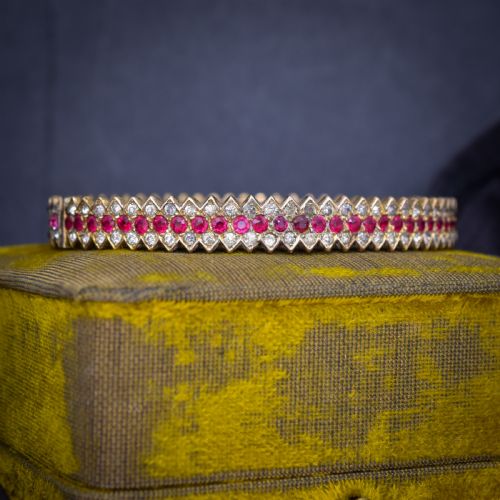


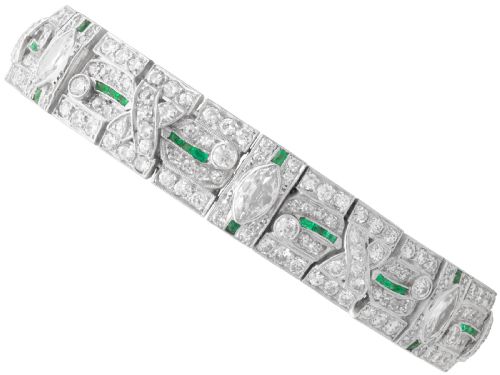


Art Deco Gemstone Bracelet
An art deco gemstone bracelet brings unmistakable geometric rhythm and brilliant coloured stones to the wrist, offering a lasting piece of 1920s and 1930s elegance.
Art Deco Gemstone Bracelet
An art deco gemstone bracelet combines the sharp lines and symmetrical motifs of the 1920s and 1930s with striking coloured stones and diamonds. You will frequently encounter platinum and gold settings showcasing sapphires, rubies, emeralds and paste.
The forms range from stiff bangles and pierced filigree settings to fluid tennis line bracelets and chevron designs. While the majority originate from the 1920s and 1930s, occasional 1940s retro and later mid century variations also appear.
Makers utilised contrasting materials such as onyx, chalcedony, enamel and marcasite alongside precious gems to create distinct visual depth. Each piece captures the architectural spirit of its period through meticulous arrangement of geometric stones.
Materials and construction
Jewellers constructed these bracelets using durable white metals like platinum alongside traditional yellow and rose gold alloys. These metals provided the necessary strength to hold intricate stone arrangements and pierced filigree work securely.
Gems including diamonds, sapphires, rubies and emeralds were meticulously cut and set to follow strict geometric patterns. Artisans also incorporated enamel, paste, chalcedony, onyx and marcasite to achieve varied textures and bold colour contrasts.
Art Deco Gemstone Bracelet Retail Price Guide 2026
Typical asking prices for art deco gemstone bracelet among the pieces listed under this phrase on Sellingantiques today, from the lower quarter to the upper quarter. They describe what is for sale here now, not the wider market.
Some bracelets hide their geometry behind playful rows of sparkling paste that catch the candlelight just as well as mined diamonds.
Assessing craftsmanship and design
The distinction between tiers rests upon the precision of the metalwork, particularly the complexity of pierced filigree settings and geometric symmetry. Superior examples display seamless integration between the stones and the structural mount.
Stone selection and carat weight significantly elevate a piece, with finer items featuring certified diamonds paired with substantial sapphires, rubies or emeralds. The crispness of the enamel work and the uniformity of smaller accent stones further distinguish the finer work.
The Art Deco Gemstone Bracelet Glossary
- Filigree
- Delicate metalwork formed with fine wire soldered into open lace-like patterns. This technique defines the intricate backing seen on many period bangles.
- Paste
- Hand-cut glass utilised to imitate precious gemstones with high clarity and brilliance. It was widely used in vintage and antique jewellery for vibrant decorative effect.
- Marcasite
- Small faceted polished pyrites traditionally set in silver to provide a sparkling, dark metallic border. It creates a striking contrast against brighter gems and enamel.
- Platinum
- A dense, strong and durable white metal favoured during the 1920s for secure gemstone settings. Its strength allowed jewellers to create ultra-fine lines without risking structural failure.
- Chevron
- A V-shaped pattern or motif characteristic of period geometric design. This layout directs the eye along the wrist through alternating rows of stones.
Art Deco Gemstone Bracelet: Frequently Asked Questions
How do I date an art deco gemstone bracelet?
Dating relies heavily on the stylistic hallmarks, metal choices and stone cuts typical of the 1920s and 1930s. Platinum settings and strict geometric filigree point firmly to the core art deco years.
Later variations from the 1940s often incorporate warmer rose gold and heavier forms, while mid century pieces introduce simpler pierced silver settings.
Are these bracelets suitable for daily wear?
Many sturdy platinum and gold designs can be worn regularly provided they receive appropriate care. Delicate filigree and stone settings require mindfulness to prevent snagging or impact damage.
Historic pieces with softer materials like paste or enamel benefit from occasional rather than constant daily use to preserve their condition.
What metals were commonly used?
Platinum was the preferred metal for high end pieces during the 1920s due to its strength and bright white finish. Yellow and rose gold also featured prominently across different periods.
Silver frequently supported alternative decorative elements like marcasite, chalcedony and enamel in more accessible designs.
How are different gemstone types integrated?
Gems are arranged in strict symmetrical layouts, often contrasting fiery rubies, deep sapphires or vibrant emeralds against clusters of diamonds. This technique creates a balanced interplay of colour and brilliance.
Alternative materials like onyx and chalcedony are introduced to block colour and emphasise the linear geometry of the mount.