


Yellow Gold Diamond Bangle
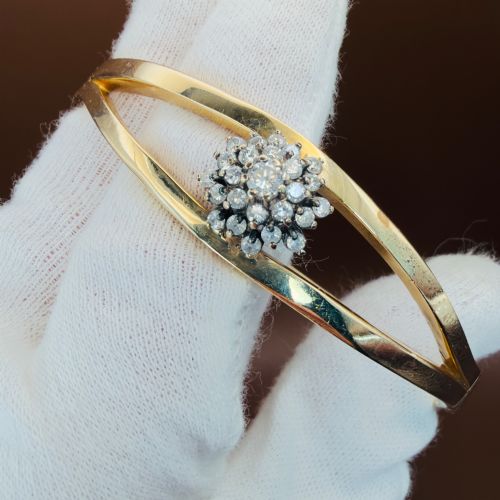
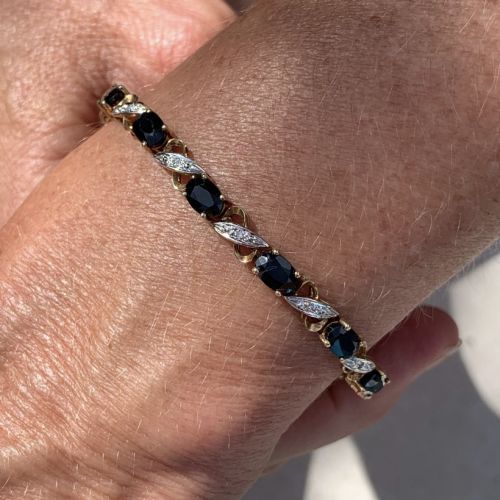
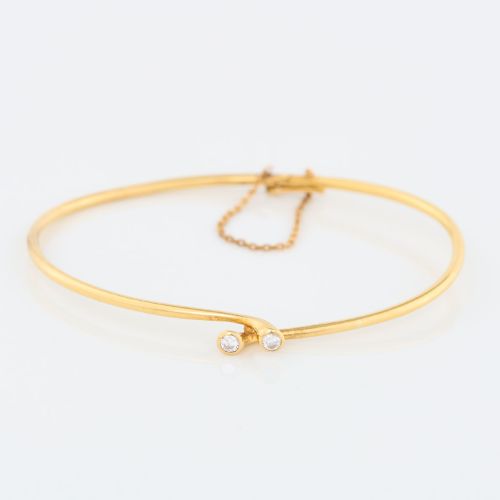
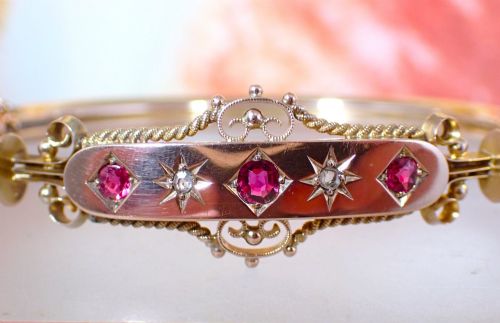
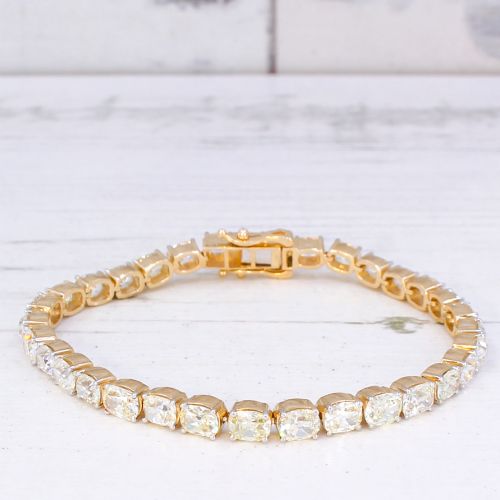
A yellow gold diamond bangle brings together warm metal and bright stones across styles from the Victorian era to the mid-twentieth century.
Yellow Gold Diamond Bangle
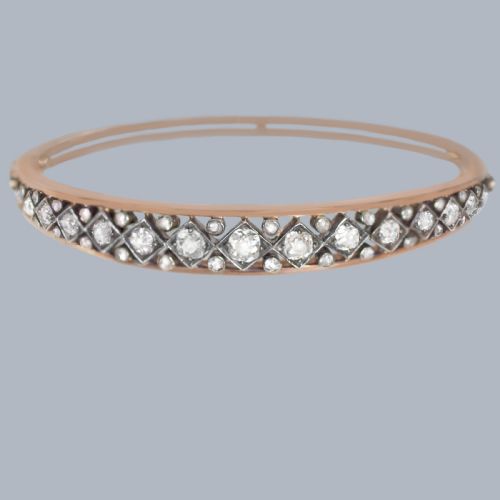
The selection ranges from robust Victorian cluster pieces and Edwardian openwork designs to geometric Art Deco creations and mid-century statements. Many pieces combine yellow gold settings with silver highlights or platinum details to enhance the brilliance of early diamond cuts.
Materials and construction
Goldsmiths utilised yellow gold in various purities, notably nine-carat, fifteen-carat, and eighteen-carat, often pairing it with silver to back stones in older Victorian and Edwardian items. Platinum also appears in later Edwardian settings to provide strength for delicate claw work without adding visual bulk.
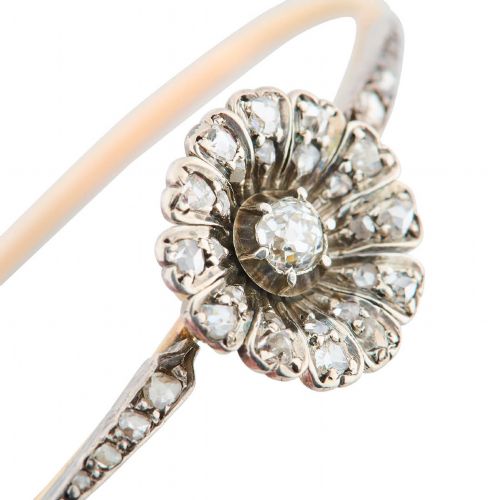
Stones are secured using a mix of collet settings, grain settings, and star settings, depending on the period style. Old mine cut and rose cut diamonds predominate in the nineteenth-century and Edwardian examples, while transitional and modern brilliant cuts emerge in the 1940s and 1960s.
Listings feature yellow gold diamond pieces spanning the Victorian, Edwardian, Art Deco, and mid-century eras, utilising platinum, silver, and gold up to eighteen carats.
What separates the tiers
Quality rests upon the harmony of the design, the integrity of the hinge and clasp mechanisms, and the matching of the stones. Pieces featuring well-matched old cut diamonds and substantial gold weight demonstrate superior craftsmanship compared to lighter, mass-produced counterparts.
The refinement of the metalwork, whether hand-carved floral motifs in Victorian bangles or precise geometric piercing in Art Deco bracelets, defines the upper echelon of these jewels.
Ilias Lalaounis
The Yellow Gold Diamond Bangle Glossary
- Old mine cut
- An early diamond cut characterised by a cushion shape, high crown, and large culet facet. It reflects candlelight warmly and appears frequently in nineteenth-century jewellery.
- Rose cut
- A diamond cut with a flat base and a domed top covered in triangular facets. This style resembles an unopened rosebud and offers a subtle, translucent shimmer.
- Collet setting
- A metal collar that wraps closely around the girdle of a gemstone to hold it securely in place. This technique is typical of antique and vintage mountings.
- Cluster bangle
- A bracelet featuring a central focal group of stones clustered tightly together. The arrangement maximises the visual impact of smaller diamonds and coloured gems.
- Chimera
- A mythical beast motif utilised in Art Nouveau and antique designs, often featuring winged or lion-like creature heads modelled in gold.
Yellow Gold Diamond Bangle: Frequently Asked Questions
How do I wear a antique bangle daily?
Antique bangles require mindful wear to protect older settings and delicate stones like pearls. It is sensible to remove them during physical tasks or sports.
Storing them individually in soft pouches prevents scratches from other items in your jewellery box.
What is the difference between a bangle and a bracelet?
A bangle is a rigid, solid hoop that slips over the hand or opens on a hinge with a clasp. This rigid structure distinguishes it from flexible link bracelets.
Many antique designs blur this line by combining hinged solid lower halves with articulated upper sections.
How can I tell a Victorian bangle from an Edwardian one?
Victorian bangles often feature heavier gold weights, warmer fifteen-carat alloys, and romantic motifs like flowers, stars, and chunky old mine cut diamonds. Silver toppings on gold are also common in this period.
Edwardian pieces tend to be lighter and more ethereal, favouring platinum, openwork lace patterns, pearls, and graceful millegrain detailing.
Do these bangles fit all wrist sizes?
Historic bangles were often made for smaller wrists than is typical today. It is essential to check the internal diameter and circumference given in the listing before purchase.
Hinged styles offer more leeway than solid closed hoops, but consulting the measurements prevents sizing disappointments.