





Edwardian 8 Day Clock
An Edwardian 8 day clock brings mechanical reliability and cabinet craftsmanship together in a single domestic object.
Edwardian 8 Day Clock
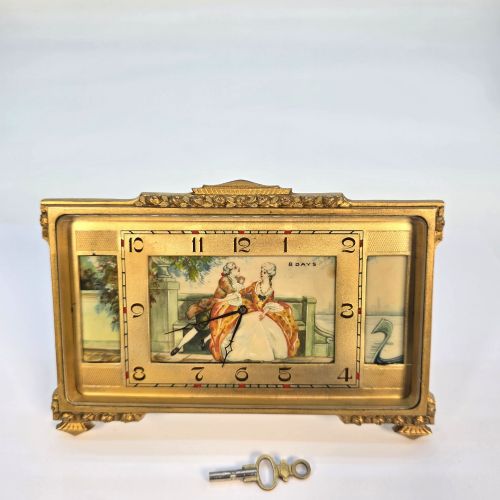
When you search for an edwardian 8 day clock, you encounter timepieces designed to run for over a week between winds, spanning mantel clocks, wall clocks, and longcase pieces. The selection includes mahogany and oak cases built around the turn of the twentieth century, alongside carriage clocks and pocket watch conversions.
The most common examples on this page are Edwardian mantel clocks featuring wood inlay, brass dials, and striking movements. These domestic pieces reflect the period preference for desk, shelf, and bracket placement, housed in rosewood, mahogany, or oak.
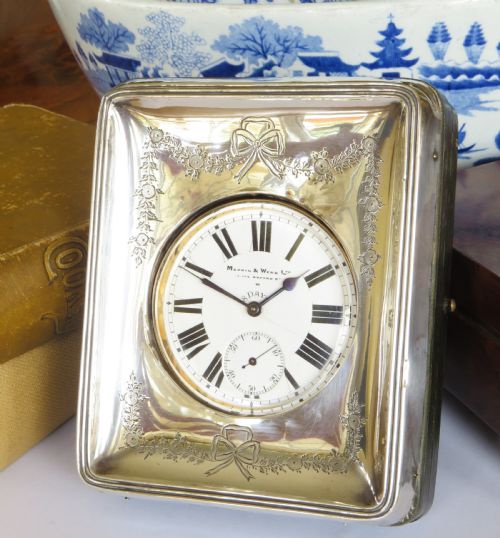
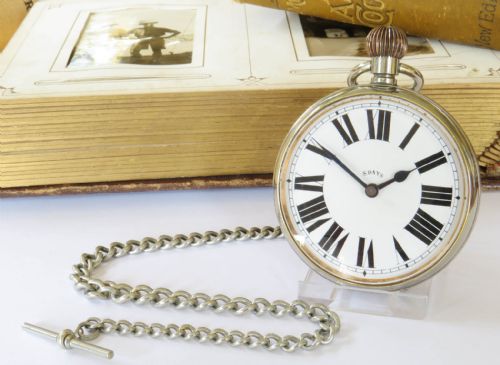
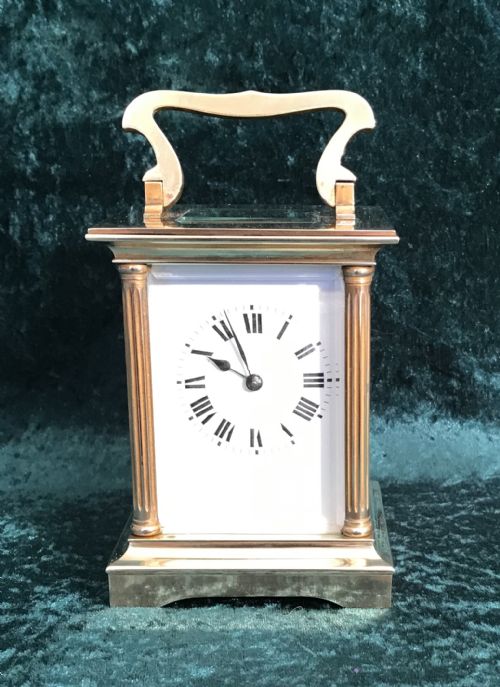
Grandmother and grandfather clocks also appear, offering taller proportions in mahogany cases with quarter chiming capabilities. Alongside these stand smaller silver pocket timepieces and brass carriage clocks intended for travel or bedside use.
Materials and Construction
Cabinetmakers utilised mahogany, oak, and walnut for the housings, frequently applying delicate wood inlay and brass numerals to the faces. Glass panels protect delicate enamel dials and expose the moving brass mechanisms within.
Movements rely on precision brass gear trains designed to maintain tension across an eight day period before requiring another wind via key or winder. Silver hallmarks, nickel plating, and brass carrying handles finish portable designs like carriage clocks and goliath pocket watches.
Edwardian 8 Day Clock Retail Price Guide 2026
Typical asking prices for edwardian 8 day clock among the pieces listed under this phrase on Sellingantiques today, from the lower quarter to the upper quarter. They describe what is for sale here now, not the wider market.
Some tiny travel clocks hid inside leather folding cases so travellers could check the hour while rattling across Europe by train.
Assessing the Standard
Quality rests in the harmony between the cabinetwork and the movement inside, where crisp wood inlay and substantial brass casting elevate a piece above standard production. Retailers such as Mappin and Webb or Harrods often denote high-grade finishing in both the timber cases and the internal striking mechanisms.
The sophistication of the chime or movement further distinguishes the range, moving from simple timepieces to quarter chiming mechanisms operating on gongs or bells. Heavy brass framing, clean enamel dials, and well-figured mahogany grain separate superior examples from simpler utilitarian models.
Edward Shepley·Mappin and Webb·Camerer Cuss and Co·Henry Matthews·Bernard Freres
The Edwardian 8 Day Clock Glossary
- Mantel clock
- A household timepiece designed to sit upon a fireplace mantelpiece or shelf. These typically feature wooden cases with striking or chiming movements.
- Carriage clock
- A small, portable spring-driven timepiece fitted with a carrying handle and glass panels. They were originally used by travellers during the nineteenth and twentieth centuries.
- Grandmother clock
- A slender, shorter version of the traditional longcase grandfather clock. They share the same eight day weight-driven or spring-driven mechanics in a compact floor-standing case.
- Goliath pocket watch
- An oversized pocket watch frequently housed in a dedicated travel case or wooden desk stand. They often contain eight day movements requiring infrequent winding.
- Torsion clock
- A timepiece regulated by a torsion pendulum that rotates back and forth rather than swinging. These are commonly known as anniversary clocks because many run for a full year on one wind.
Edwardian 8 Day Clock: Frequently Asked Questions
How do you wind an eight day clock?
An eight day clock requires a key inserted into the winding arbours on the dial face to tension the internal springs or lift the weights.
Care must be taken not to overwind the mechanism, stopping as soon as resistance is felt.
Where were Edwardian clocks typically placed?
Smaller models sat upon mantelpieces, desks, or bedside tables, while taller longcase and grandmother clocks stood in hallways and living rooms.
Carriage clocks and folding pocket watches were built for portability during travel.
What is the difference between a mantel clock and a bracket clock?
Bracket clocks historically featured a handle on top for carrying between rooms and often rested on a matching wall bracket.
Edwardian mantel clocks generally evolved into decorative shelf ornaments without the requirement for a wall support.
How do you tell an Edwardian clock from a Victorian one?
Edwardian clock cases tend to display lighter mahogany and oak timbers with refined satinwood or boxwood inlay.
Victorian pieces frequently lean towards heavier, darker woods, classical revival motifs, or substantial marble housings.