
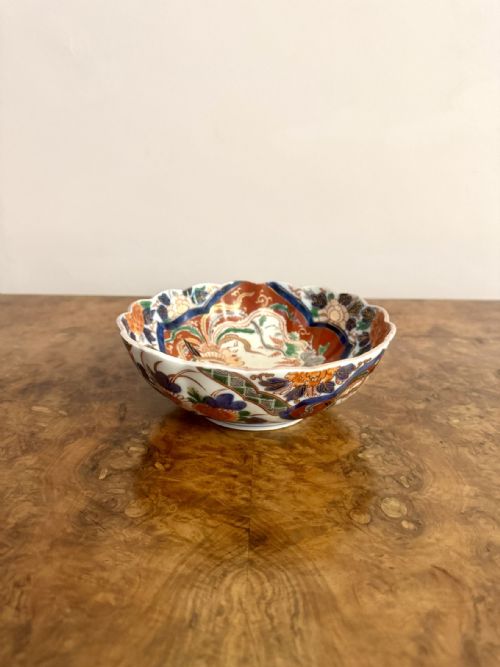
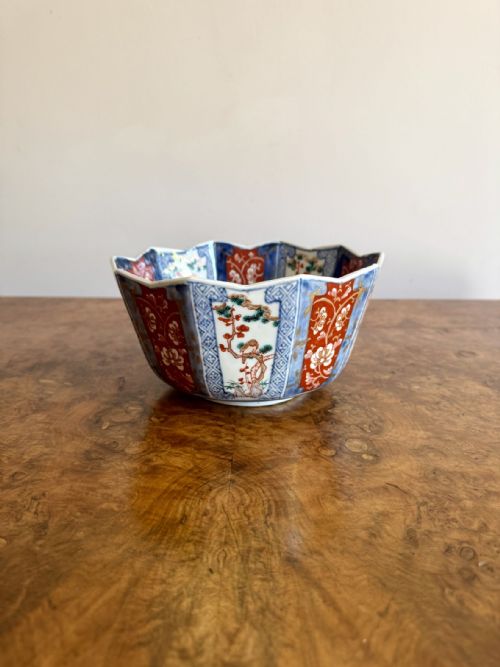

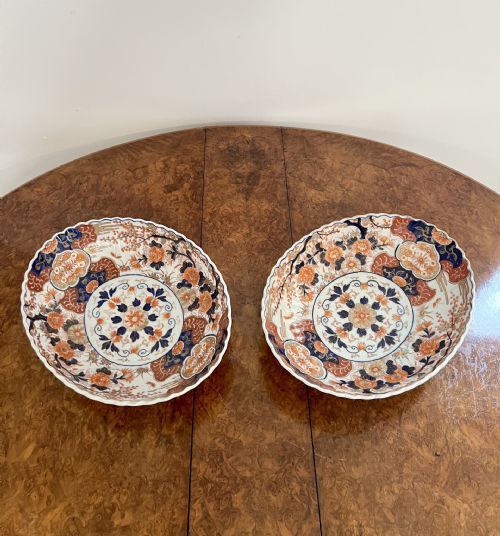


Edo Meiji Japanese Bowl
These edo meiji japanese bowl pieces are robust vessels spanning the Edo through Victorian eras, prized for their striking cobalt decoration and crisp porcelain bodies.
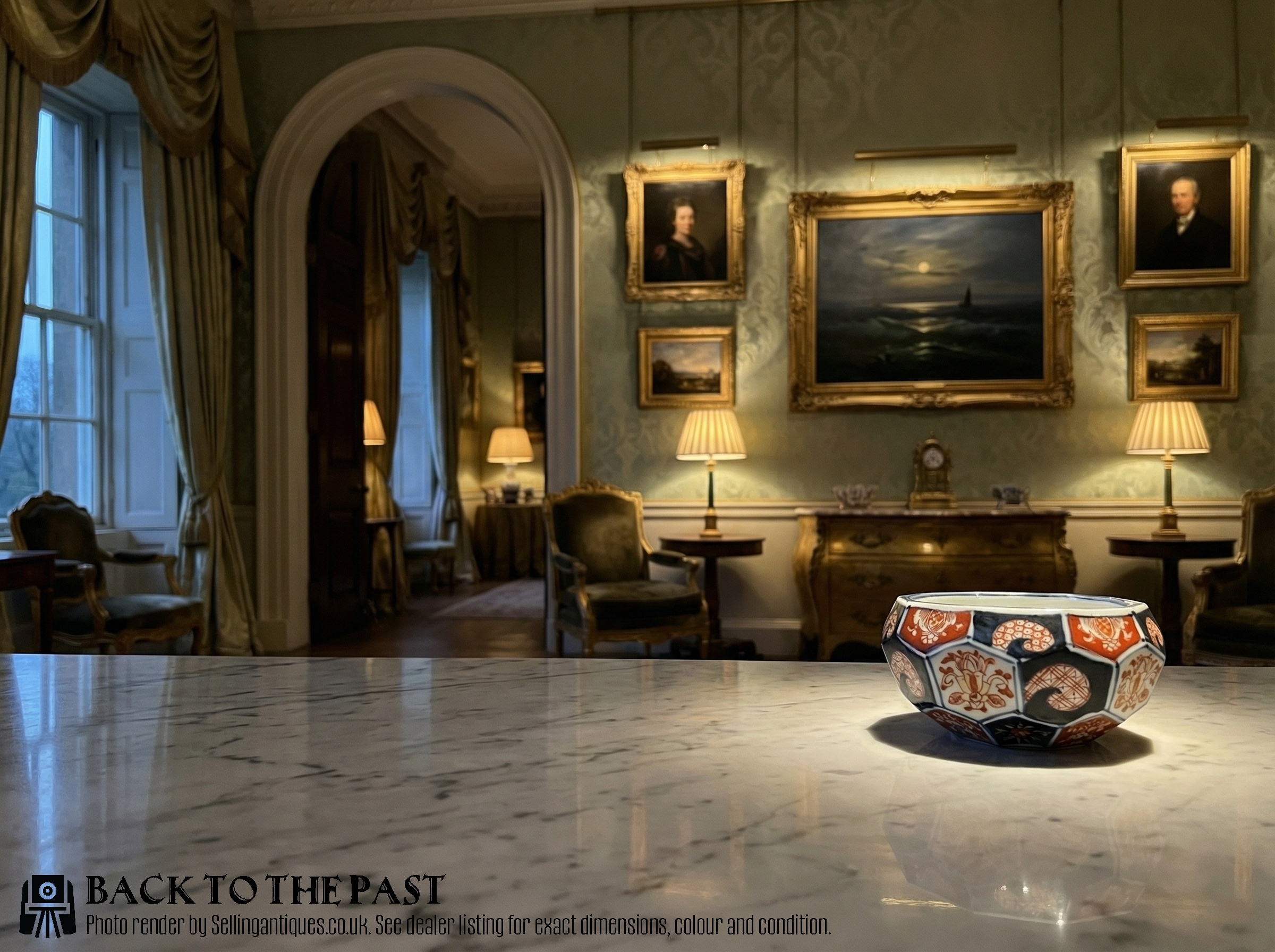
Edo Meiji Japanese Bowl
An edo meiji japanese bowl spans several distinct decorative forms, including deep bowls, scalloped plates, and large jardinieres. The listings show a strong concentration of Japanese Imari pieces alongside blue and white porcelain and bronze vessels.
Buyers encounter everything from delicate tableware dishes to heavy bronze incense burners and planters. These objects reflect both domestic utility and ornamental export traditions.
Materials and construction
The dominant material is porcelain, painted with cobalt blue and enriched with enamel colours and gold leaf overglaze. Bronze is also utilised for heavier censers and jardinieres.
Glazes provide a smooth protective surface over the ceramic body, while gilding and enamel add distinct decorative layers to Imari pieces.
Several fierce bronze dragons guard the edges of heavy incense burners, keeping watch over the collection.
Distinctions in craftsmanship
Quality rests upon the precision of the hand-painted cobalt blue decoration and the crispness of the porcelain or bronze moulding. Scallop-shaped edges and complex hexagonal forms require greater skill from the potter or metalworker.
The application of gold leaf and enamel details elevates standard ceramic vessels into highly decorative works. Pieces demonstrating clear control in the firing and glazing phases stand apart from simpler utilitarian wares.
The Edo Meiji Japanese Bowl Glossary
- Imari
- A style of Japanese porcelain exported from the port of Imari, typically featuring a palette of underglaze blue, iron red, and gold.
- Jardiniere
- A large ornamental bowl or planter used to hold growing plants or flowers.
- Cobalt Blue
- A deep blue pigment used beneath the glaze on porcelain to create permanent, sharp designs.
- Arita
- The Japanese town and surrounding region long known as the primary centre for Japanese porcelain production.
Edo Meiji Japanese Bowl: Frequently Asked Questions
What is an edo meiji japanese bowl?
It is a decorative or functional vessel originating from Japan, spanning the Edo and Meiji periods.
These pieces include Imari porcelain bowls, blue and white ceramics, and bronze planters.
How do I date these bowls?
Dating relies on stylistic markers, materials, and recorded period attributes within the listings.
Most examples date from the nineteenth century or around nineteen hundred, with earlier pieces originating from seventeen hundred.
Were bronze bowls used for incense?
Certain bronze examples function specifically as incense burners or censers.
These pieces often feature decorative elements such as dragons and heavy metal construction.
What does Imari mean?
Imari refers to Japanese porcelain decorated in cobalt blue, red, and gold, named after the shipping port.
This distinct style dominates the porcelain bowls found in the listings.
Are all these bowls made of porcelain?
Porcelain is the primary ceramic material, but other substances are represented.
Bronze also appears in the listings for heavier decorative jardinieres and censers.