


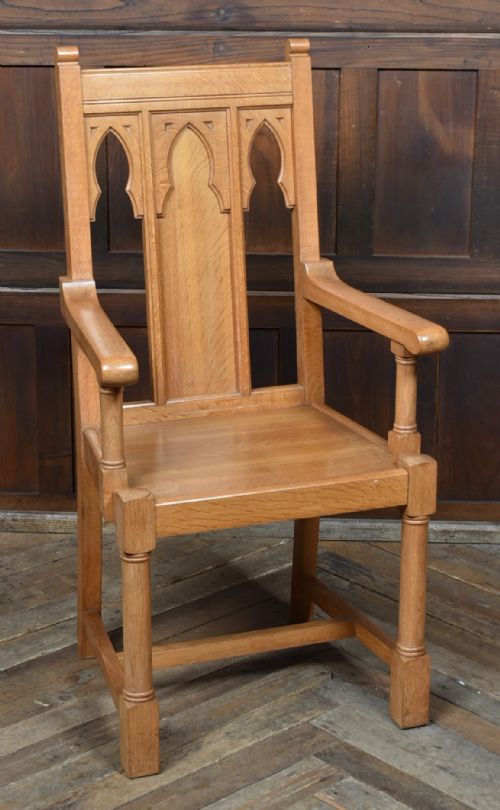


Ecclesiastical Seating
Ecclesiastical seating brings church furniture into domestic spaces, offering sturdy timber armchairs, pews, and thrones shaped by centuries of ritual design.
Ecclesiastical Seating
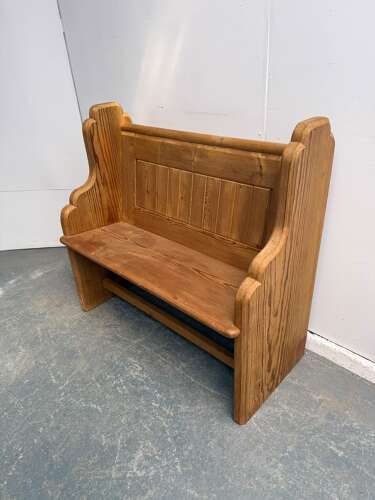
Ecclesiastical seating encompasses church pews, prayer chairs, thrones, and armchairs originating from monastic and parish settings. These pieces carry the distinct architecture of places of worship into domestic interiors.
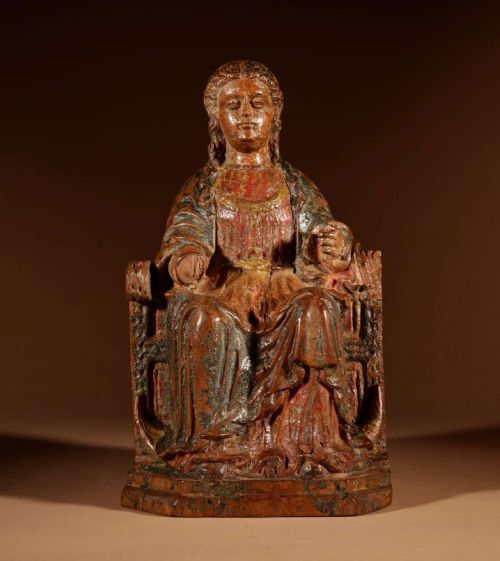
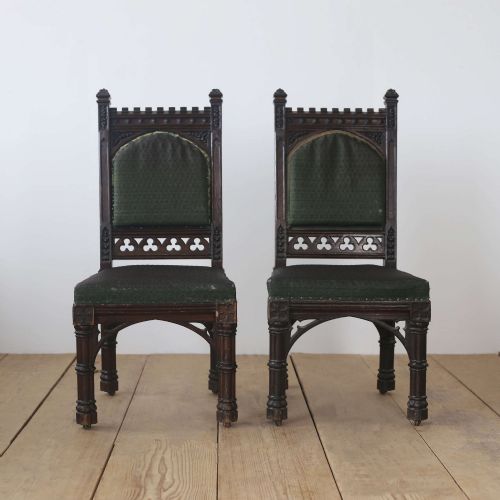
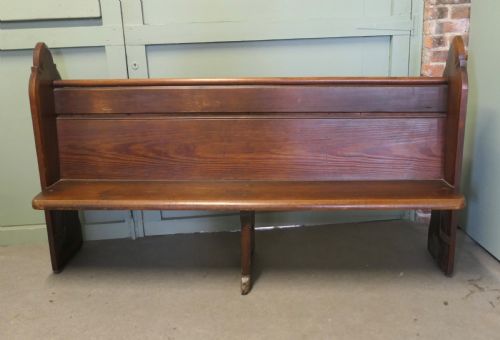
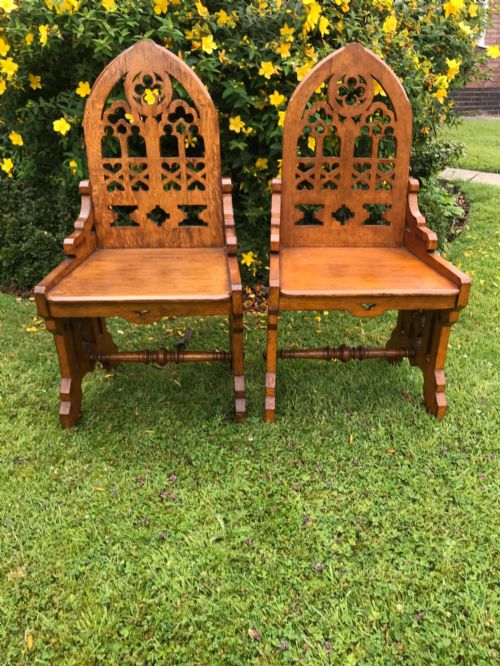
The selections span from pre-Reformation monastic thrones to Victorian Gothic revival pews and twentieth-century chapel chairs. Oak and pitch pine dominate the forms, frequently displaying architectural details such as trefoils and carved panels.
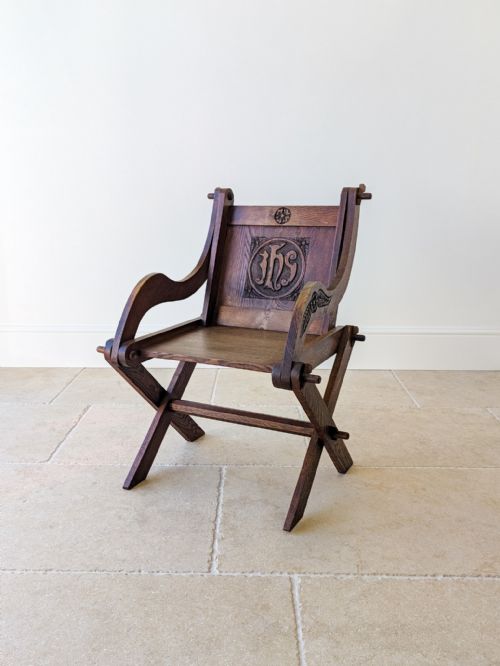
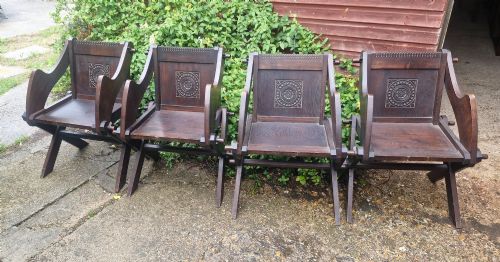
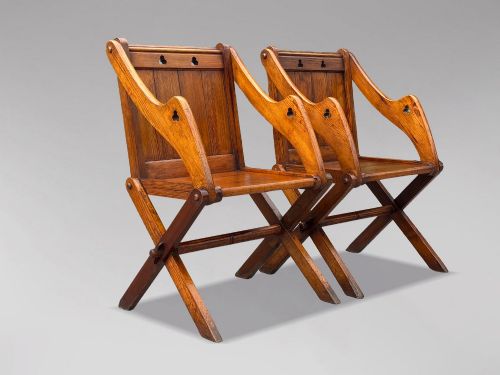
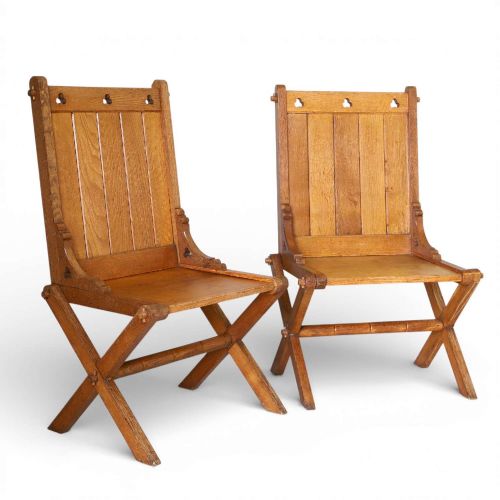
Glastonbury armchairs and high-backed prayer seats represent the most common domestic adaptations of church furniture. Their sturdy construction and upright proportions suit studies, halls, and dining spaces alike.
Materials and Construction
Makers relied primarily on native timbers such as oak, pitch pine, and walnut, selecting dense woods capable of withstanding heavy daily use in public buildings. Waxed finishes protect the grain while preserving the natural tone of the timber.
Joinery techniques follow traditional cabinet-making standards, utilising mortise and tenon joints to ensure rigidity across large pews and throne frames. Decorative elements incorporate carved gesso, polychrome highlights, and precise engraved plaques.
Ecclesiastical Seating Retail Price Guide 2026
Typical asking prices for ecclesiastical seating among the pieces listed under this phrase on Sellingantiques today, from the lower quarter to the upper quarter. They describe what is for sale here now, not the wider market.
Some church seats retain discreet wooden hooks once used by Victorian parishioners to hang heavy winter cloaks during long Sunday sermons.
Assessing Craftsmanship and Provenance
Quality rests in the integrity of the timber selection and the sharpness of carved architectural details. Fine examples retain their original structural timber without excessive modern replacement or unsympathetic re-polishing.
Documented provenance elevates certain pieces, particularly those bearing specific church markings, cathedral associations, or maker attribution. The depth of relief carving and the balance of proportions distinguish standard institutional pews from bespoke monastic thrones.
The Ecclesiastical Seating Glossary
- Glastonbury chair
- A sturdy wooden armchair with a sloping back and intersecting folding-style legs, popularised during the Gothic Revival. This form adapts traditional ecclesiastical seating designs for comfortable domestic use.
- Prie-dieu
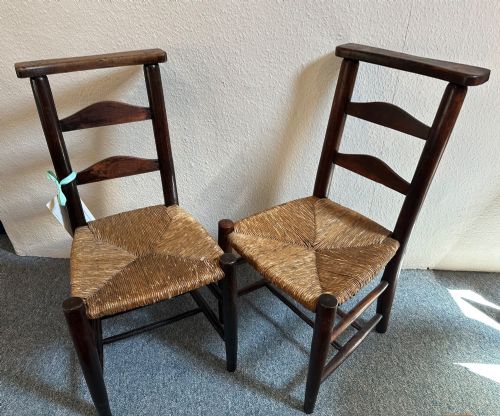
- A low devotional chair featuring an extended upper rail designed for kneeling and prayer. These prayer seats often include upholstered rests and compact writing ledges.
- Pew
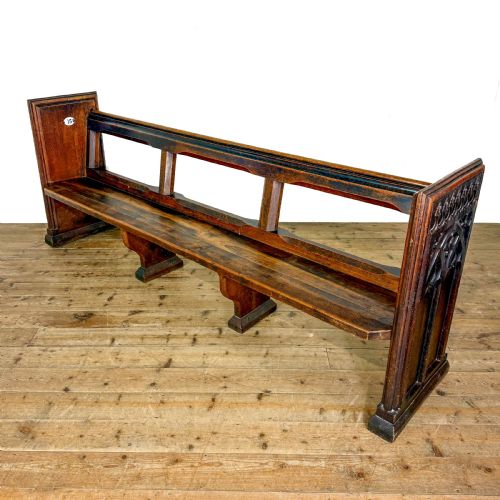
- A long wooden bench designed for congregational seating in churches and chapels. They are typically constructed from solid oak or pitch pine with high panelled backs.
- Gothic Revival
- An architectural and decorative style drawing inspiration from medieval ecclesiastical design. It is characterised by pointed arches, trefoil motifs, and heavy timber construction.
- Polychrome
- The practice of decorating timber or stone surfaces in multiple colours. This technique appears on medieval sculptures and select religious furnishings.
Ecclesiastical Seating: Frequently Asked Questions
How do I use church pews at home?
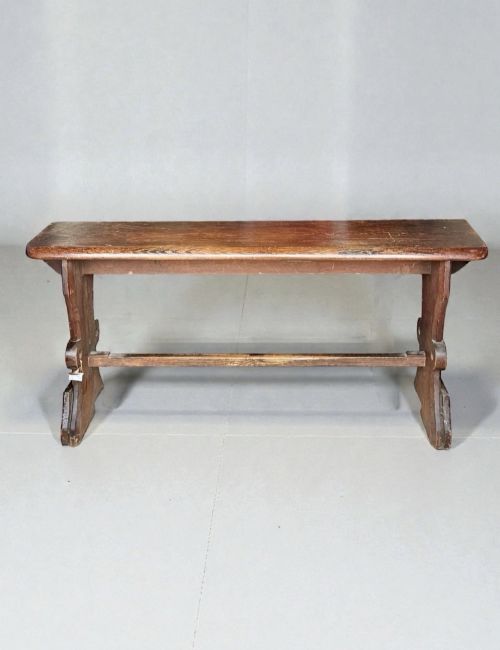
Church pews and benches fit neatly along dining tables, hallways, or narrow entryways where space is at a premium. Their high backs create a strong architectural anchor against plain walls.
Ensure you measure the depth and length carefully before placement, as institutional seating often runs deeper than standard domestic dining benches.
What is a Glastonbury chair?
A Glastonbury chair is an ecclesiastical armchair featuring distinct sloping armrests, an arched back, and intersecting framed legs. Originating from medieval designs, they became widely reproduced during the Victorian Gothic Revival.
These chairs offer a commanding silhouette and serve well as accent seating in studies or libraries.
How do I care for pitch pine furniture?
Pitch pine requires minimal maintenance beyond regular dusting with a soft, dry cloth. Periodic application of natural wax helps nourish the timber and protects the surface from drying out.
Keep these wooden pieces away from direct heat sources and strong sunlight to prevent the pitch from bleeding and the timber from splitting.
How can I tell the age of church chairs?
Dating ecclesiastical seating involves examining the tool marks, timber shrinkage, and joinery methods used in the frame. Hand-cut joints and dense, oxidised oak often indicate older, pre-Victorian origins.
Documented provenance, such as church stamps or engraved metal plaques, can also provide precise historical context for specific cathedral or chapel pieces.