




Black Forest Chair
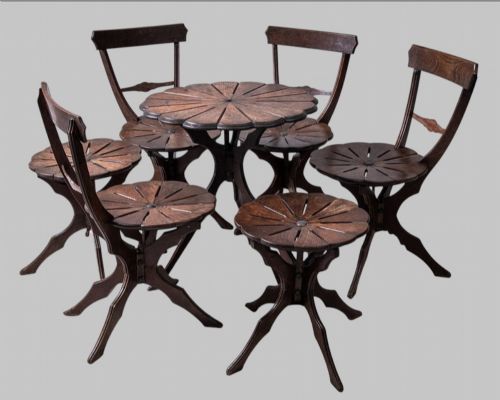
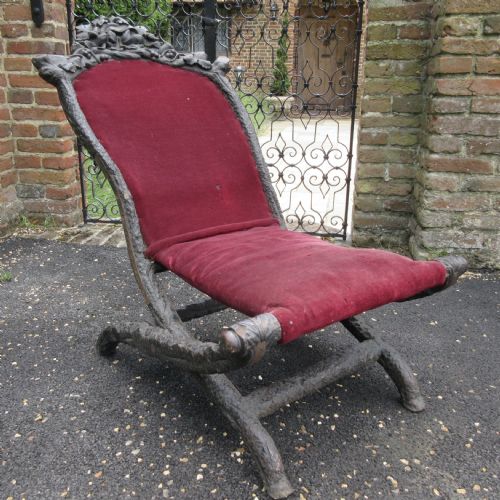
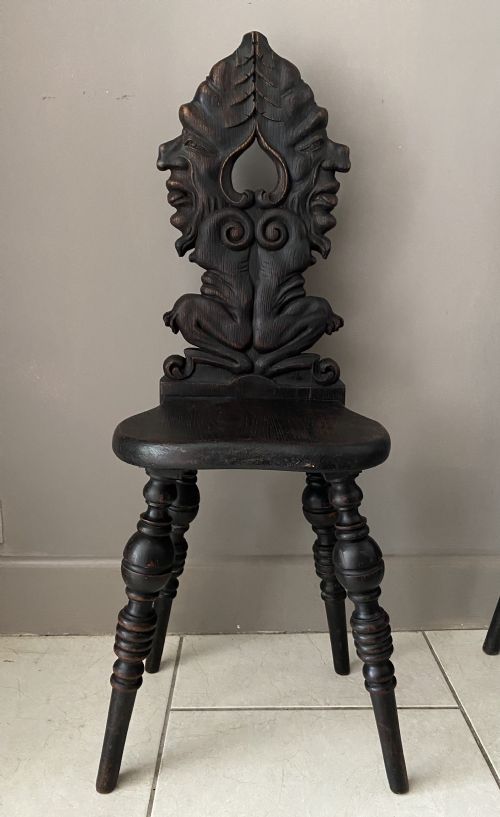
A black forest chair brings the deep woodland atmosphere of the nineteenth century into a room with striking carvings of bears, stags, and alpine foliage.
Black Forest Chair
Carvings frequently incorporate natural motifs and forest animals such as bears, stags, and griffins. Buyers encounter both singular throne chairs and matching pairs or parlour suites originating from Swiss and Victorian workshops.
How they were made
Carpenters shaped these chairs from solid hardwoods like oak and walnut, utilising hand-carving techniques to render intricate figures of animals and foliage in deep relief. Some examples incorporate natural elements such as stags' antlers, bone, and iron hardware.
Surface ornamentation often includes wood inlay and marquetry to create geometric or pictorial patterns on seats and backrests. Upholstered variants feature materials like velvet and hide secured to the wooden frames.
Black Forest Chair Retail Price Guide 2026
Typical asking prices for black forest chair among the pieces listed under this phrase on Sellingantiques today, from the lower quarter to the upper quarter. They describe what is for sale here now, not the wider market.
What varies in quality
Quality rests upon the depth, sharpness, and anatomical accuracy of the hand-carving on the backrest and arms. Master carvers rendered bears and foliage with lifelike musculature and clean undercut details rather than flat, repetitive scoring.
The complexity of the form dictates distinction, separating standard hall chairs from elaborate musical chairs with integrated mechanisms or figural throne chairs featuring griffins and gargoyles.
The Black Forest Chair Glossary
- Marquetry
- Wood inlay technique that creates pictorial designs on furniture surfaces using contrasting veneers. Craftsmen arranged different coloured timber sections to form intricate geometric or naturalistic scenes.
- Escabelle
- A traditional style of wooden chair with a high back and flat seat resting on trestle supports. These early forms influenced regional alpine seating designs.
- Folding chair
- A portable seat hinged to collapse flat for storage or transport. Nineteenth-century makers applied complex joinery to maintain structural stability in carved folding frames.
- Prayer chair
- A low-backed devotional seat often fitted with an upper ledge for kneeling or resting elbows during prayer. Carved oak examples frequently display solemn ecclesiastical motifs.
- Gargoyle
- A grotesque carved stone or wood figure traditionally used as a waterspout or architectural ornament. Victorian makers adapted these mythical beasts into dramatic chair crests.
Black Forest Chair: Frequently Asked Questions
Where were these chairs originally made?
Most pieces originate from Swiss and Victorian European workshops associated with the nineteenth-century alpine wood-carving trade.
Craftsmen in forest regions produced these works for Victorian hunting lodges and domestic parlours across Europe and America.
How do I care for carved wood?
Keep the wood away from direct heat sources and sudden temperature shifts to prevent the carved panels from splitting.
Dust the deep recesses regularly with a soft brush and nourish the timber occasionally with appropriate wax polish.
What is a musical chair?
A musical chair contains a concealed mechanical musical box inside the seat or base that plays a tune when triggered.
These functional novelty pieces date primarily to the nineteenth century and combine fine woodworking with micro-mechanical engineering.
How can I date a piece?
Examine the timber species, tool marks left by hand-carving, and the wear patterns on the seat and feet.
Nineteenth-century examples frequently display characteristic Victorian Gothic or alpine folk art motifs executed in solid oak or walnut.