





Ecclesiastical Oak Sculpture
Ecclesiastical oak sculpture brings centuries of devotion into a room, offering carved figures and panels shaped by hand for sacred spaces.
Ecclesiastical Oak Sculpture
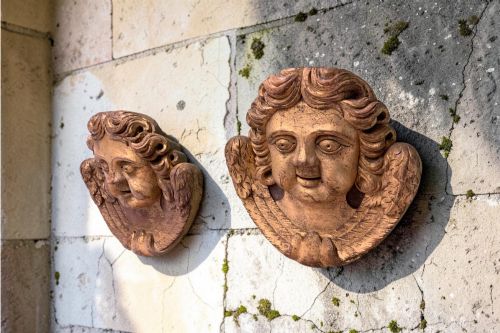
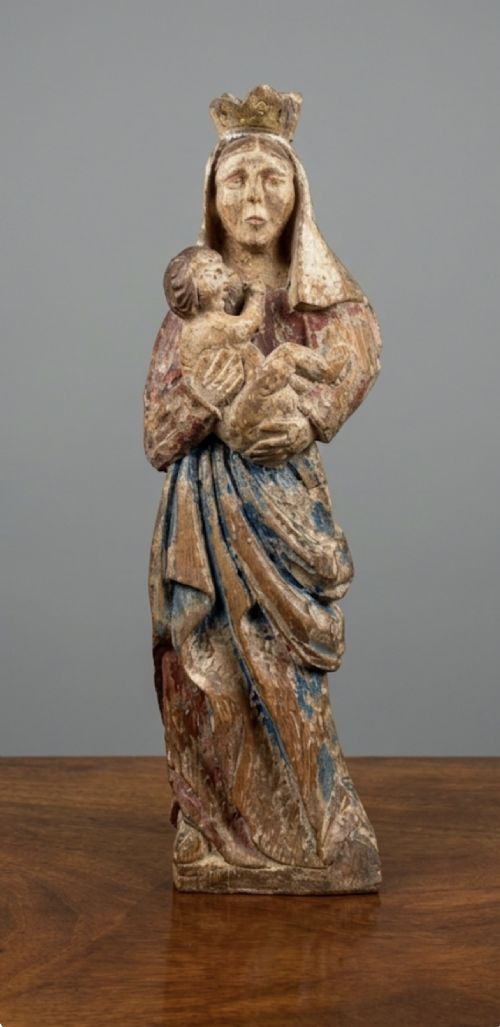
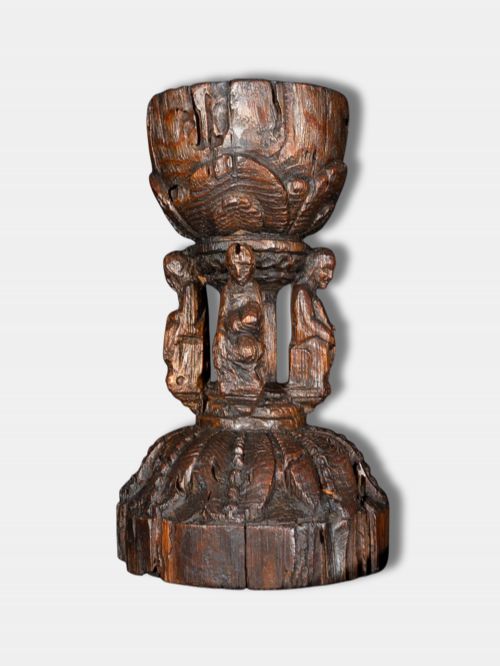
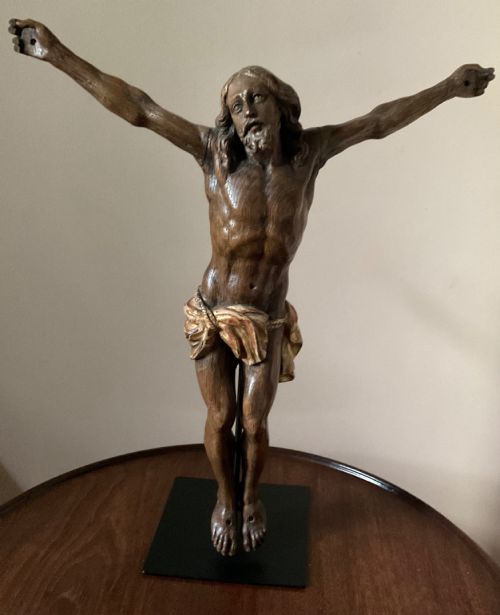
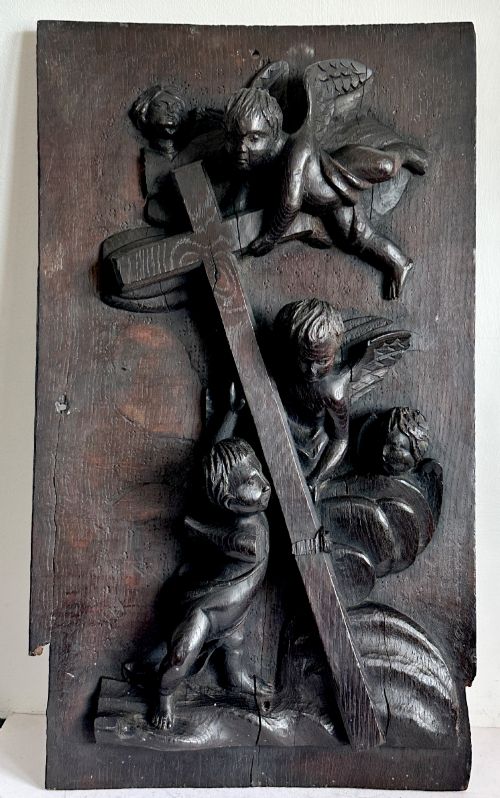
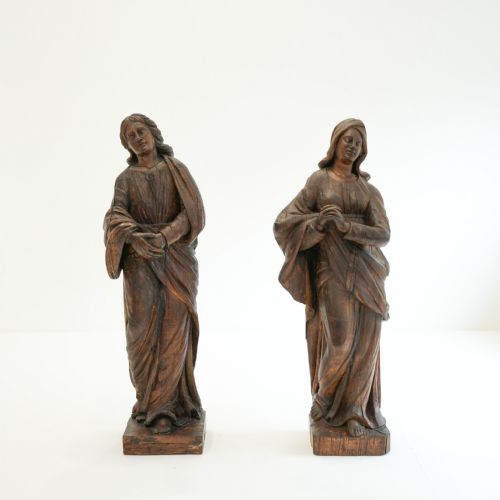
Ecclesiastical oak sculpture encompasses figures of saints, architectural fragments, and devotional panels created for churches and private chapels across Europe. These pieces range from medieval representations of the Madonna and Child to later Baroque cherubs and lecterns shaped as eagles.
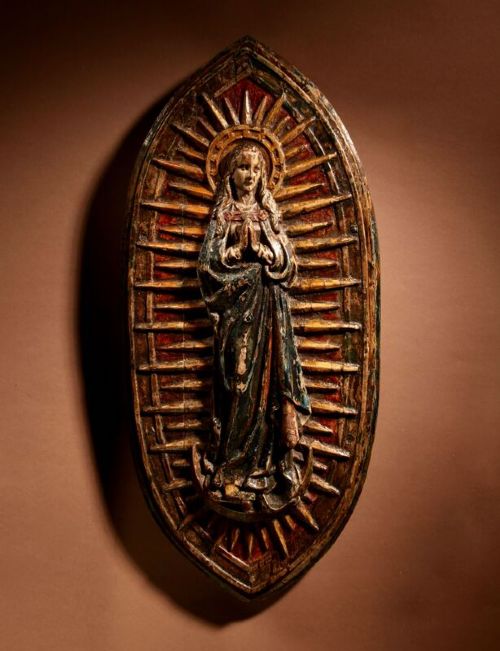
The selection here draws heavily from the sixteenth and seventeenth centuries, alongside nineteenth-century Gothic Revival interpretations. Buyers frequently encounter standing saints, wall reliefs depicting scenes like Calvary, and structural elements salvaged from altarpieces.
Materials and technique
Surviving polychrome paint, gesso, and traces of gold leaf occasionally coat the timber, revealing an original layer of bright colour applied to enhance realism. These pigments and metallic applications interact with the underlying wood grain as the centuries pass.
Ecclesiastical Oak Sculpture Retail Price Guide 2026
Typical asking prices for ecclesiastical oak sculpture among the pieces listed under this phrase on Sellingantiques today, from the lower quarter to the upper quarter. They describe what is for sale here now, not the wider market.
Listings feature centuries ranging from the medieval period through the nineteenth century, utilising oak alongside gold leaf and polychrome paint.
The standard of carving
The distinction between ordinary workshop output and master carving lies in the handling of anatomy, expression, and depth. Superior pieces display naturalistic movement in limbs and fabric, whereas lesser works remain stiff and blockish.
Proportion and the preservation of original surface detail dictate the standing of a piece. A sculpture retaining crisp chisel marks and expressive facial nuance commands greater attention than one worn down by heavy sanding or careless restoration.
The Ecclesiastical Oak Sculpture Glossary
- Polychrome paint
- Pigments applied to wood surfaces to add colour to religious figures. This coating frequently survives in fragments beneath later layers.
- Gesso
- A plaster-like mixture spread over wood as a smooth base for gilding or paint. It provides a bright foundation for gold leaf.
- Corpus Christi
- The body of Christ depicted upon a crucifix. These figures focus intensely on the anatomical suffering of the subject.
- Pieta
- A subject showing the Virgin Mary holding the dead body of Christ. It remains one of the most emotional motifs in religious art.
- Lectern
- A reading desk, frequently carved in the form of an eagle with outstretched wings. These stands held service books in ecclesiastical settings.
- Gothic Revival
- An architectural and artistic movement from the nineteenth century mimicking medieval forms. Makers recreated earlier styles with distinct Victorian interpretations.
Ecclesiastical Oak Sculpture: Frequently Asked Questions
Where were these sculptures originally placed?
These carvings occupied altarpieces, choir stalls, and walls within churches and monastic foundations across Europe. They served as focal points for prayer and instruction.
Over time, many pieces left their original ecclesiastical contexts during periods of religious reform or architectural reconfiguration, eventually entering private collections.
Should I clean a painted wooden sculpture?
Painted and gilded surfaces require minimal intervention to preserve remaining pigments and gesso layers. Dusting gently with a soft, dry brush prevents accumulation without risking the finish.
Water and chemical solvents must be avoided entirely, as moisture lifts fragile paint from the underlying oak and destroys historic surface patination.
Why is oak the primary wood used?
Oak was abundant across Northern Europe and favored by woodworkers for its strength, durability, and resistance to warping. It allowed carvers to work on a monumental scale while retaining fine structural detail.
The density of the timber enabled intricate undercutting for figures and reliefs destined for demanding church environments.