





Oak Religious Figures
Oak religious figures bring centuries of devotional art into your home, spanning medieval saints to nineteenth-century revival carvings.
Oak Religious Figures
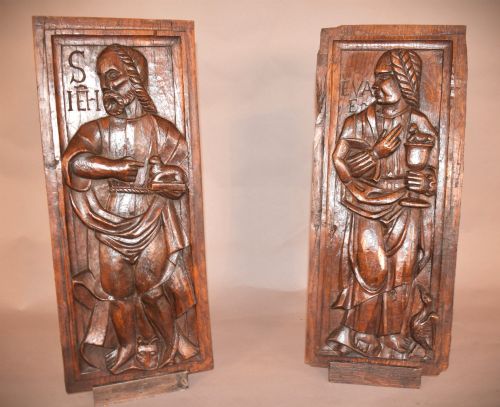
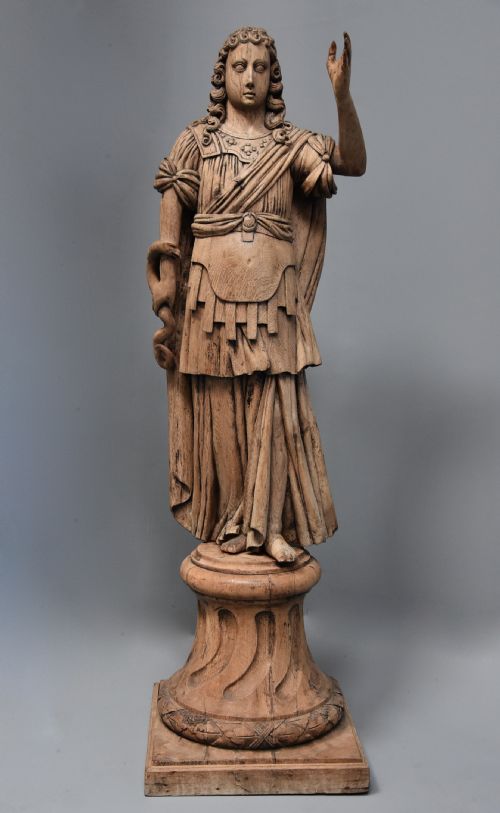
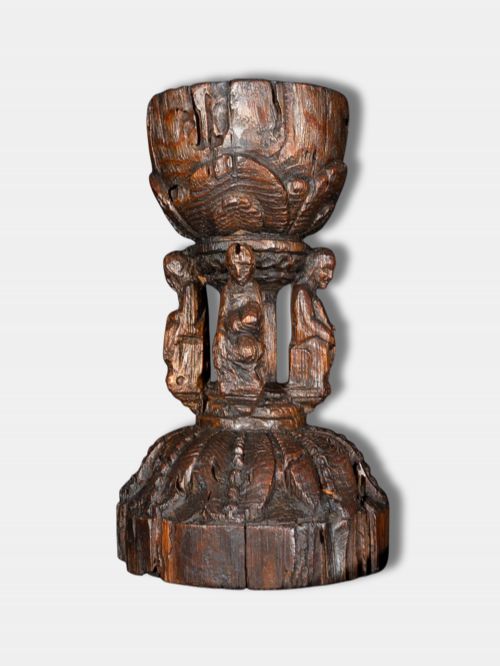
These pieces encompass freestanding statues, wall sculptures, and panels depicting saints, angels, and biblical scenes. Collectors encounter figures originating from German, French, Flemish, Italian, and British workshops.
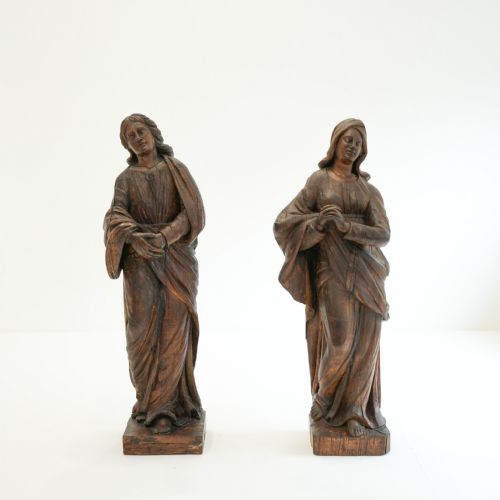
The selections range from pre-sixteenth-century Gothic carvings and Renaissance fragments to eighteenth-century Continental sculptures and nineteenth-century Gothic Revival pieces. Forms include full-size statues, pairs of saints, and detailed busts.
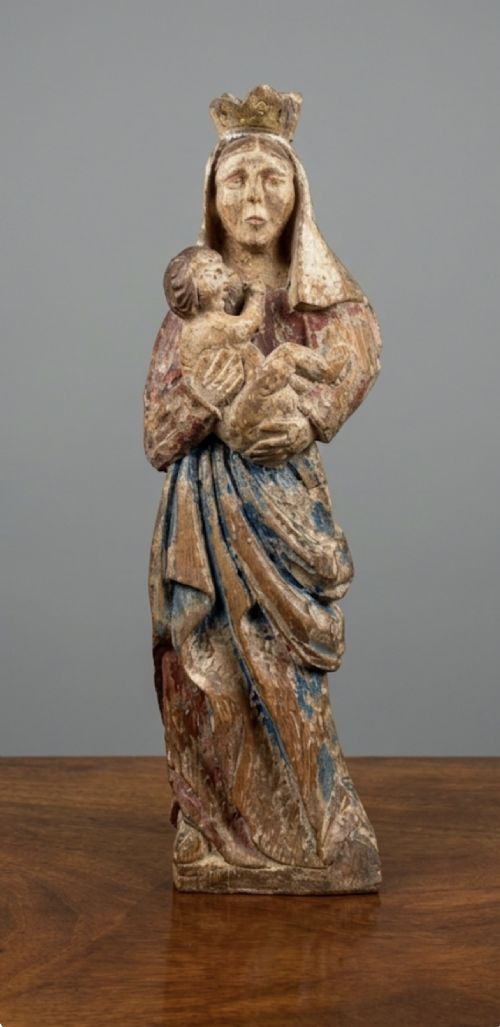
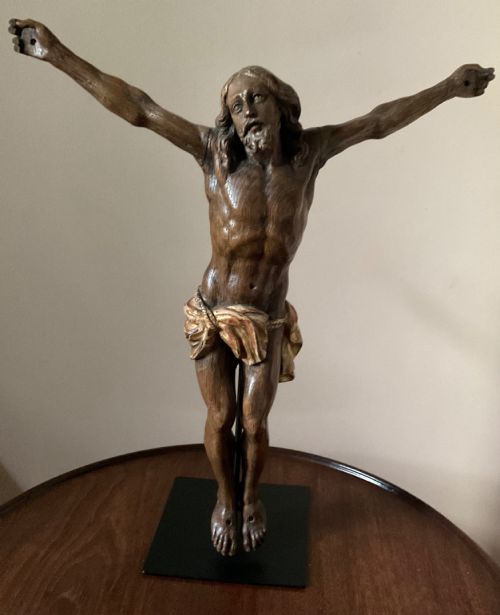
Subjects frequently depict the Madonna and child, the Pieta, crucifixion scenes, and specific figures such as Saint Jerome, Saint Paul, and Saint Catherine. Many retain traces of original pigment or surface treatments.
Materials and technique
Carvers shaped these works primarily from solid oak and carved wood, utilising hand chisels and gouges to build deep relief and three-dimensional form. Timber selection required dense heartwood capable of holding intricate drapery folds and facial expressions.
Surfaces often received layers of gesso, polychrome paint, gold leaf, or parcel gilt to enhance devotional impact. These applied finishes frequently survive only in fragments, revealing the preparatory grounds beneath.
Oak Religious Figures Retail Price Guide 2026
Typical asking prices for oak religious figures among the pieces listed under this phrase on Sellingantiques today, from the lower quarter to the upper quarter. They describe what is for sale here now, not the wider market.
Several figures gaze past the viewer with stern medieval expressions, seemingly unimpressed by modern interior design choices.
Defining quality
The distinction between tiers rests upon the anatomical proportion, the crispness of the chisel work in the drapery, and the expressive depth of the face. Master carvers captured movement and emotion within heavy timber, whereas lesser works remain rigid.
Survival of original surface treatments, such as polychrome paint and gilding, elevates an example significantly. Pieces that retain their structural integrity without extensive modern intervention command greater interest.
Franz Keller
The Oak Religious Figures Glossary
- Polychrome paint
- Decoration applied in multiple colours to sculpture surfaces. This finish brought realism to carved wood figures.
- Gesso
- A plaster-like mixture applied to wood as a smooth base for gilding and paint. It filled grain and imperfections before decoration.
- Parcel gilt
- The application of gold leaf to specific parts of an object while leaving other areas exposed. This technique highlighted vestments and halos.
- Corpus Christi
- A representation of the body of Jesus Christ on the cross. These carvings focus on the anatomical details of the crucifixion.
- Pieta
- A subject depicting the Virgin Mary supporting the dead body of Christ. This iconography appeared frequently in medieval and Renaissance sculpture.
Oak Religious Figures: Frequently Asked Questions
Where were these figures displayed originally?
Most pieces originated in churches, private chapels, or monastic foundations as part of altarpieces, choir stalls, and wall shrines.
Smaller domestic carvings also served private devotion within wealthy merchant and aristocratic households.
Did these sculptures always have paint?
Many medieval and Renaissance figures received extensive polychrome paint and gilding to enhance their visual splendour in dim ecclesiastical spaces.
Over the centuries, many surfaces were stripped down to bare oak by later owners or lost their pigments through natural flaking.
How should I care for carved oak?
Keep wooden sculptures away from direct heat sources and sudden humidity changes to prevent the oak from splitting.
Dust the surface gently with a dry, soft brush and avoid applying modern polishes or oils to historic finishes.