
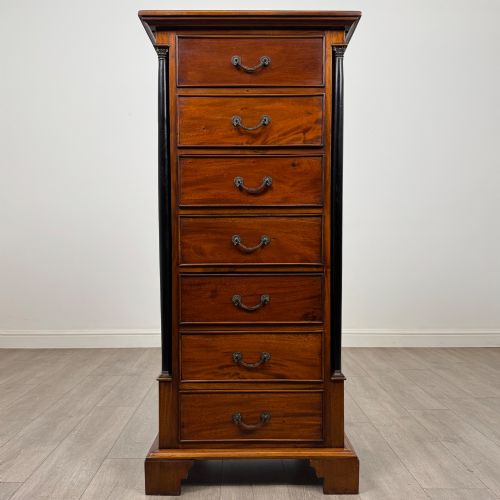
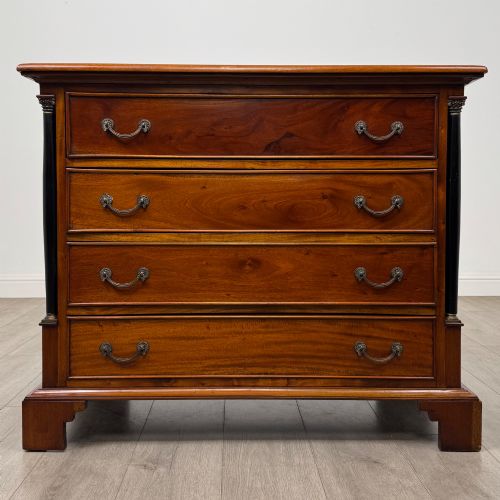
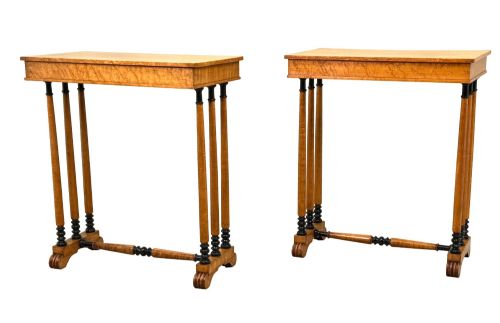
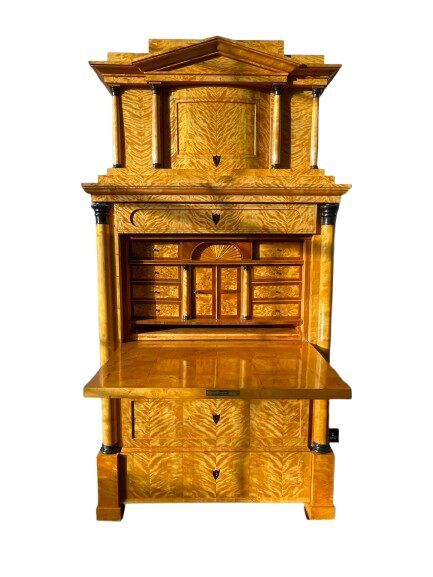




Ebonised Wood Column
An ebonised wood column brings architectural discipline and a sharp, ink-dark silhouette to an interior.
Ebonised Wood Column
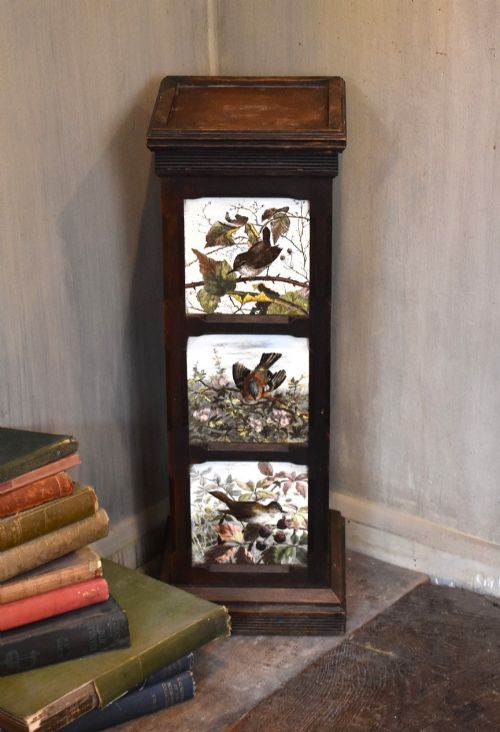
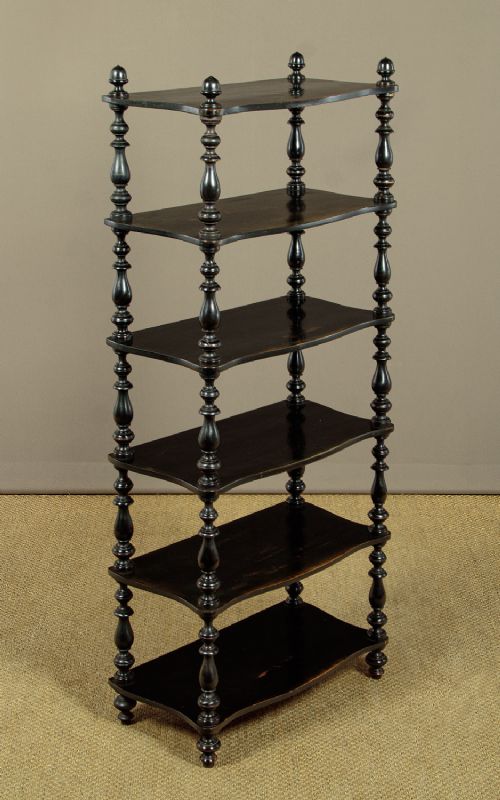
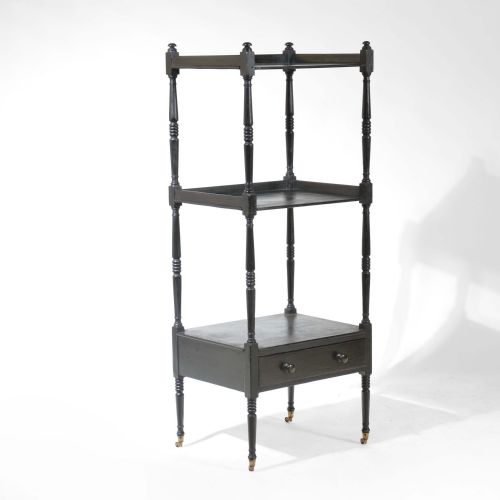
An ebonised wood column serves primarily as a plinth, pedestal, or structural element, designed to elevate sculpture, lamps, or decorative objects. When you search for an ebonised wood column, you encounter pieces that range from straightforward nineteenth-century display pillars to complex architectural mirrors and etageres incorporating dark timber.
The materials and forms recorded in these listings span nineteenth-century pedestal tables, Edwardian wooden plinths, and Regency torchere stands. The ebonised finish provides a dense, uniform black surface that mimics costly ebony while utilising native or alternative hardwoods.
Materials and construction methods
Makers achieved the characteristic dark finish through ebonising, a chemical staining process applied to timber such as beech, mahogany, or fruitwood. This treatment deeply penetrates the grain, resulting in a matte or polished black surface that contrasts with applied giltwood, brass mounts, or carved details.
Structural integrity relied on traditional joinery, turning on lathes for cylindrical shafts, and occasionally combining the ebonised wood with brass or gesso elements to accentuate architectural profiles.
Listings for this phrase include examples from the Regency, Victorian, and Edwardian periods, utilising ebonised wood alongside brass, mahogany, and giltwood.
Assessing quality and craftsmanship
Quality reveals itself in the crispness of the turning and the depth of the ebonised finish. Superior examples show careful preparation of the underlying timber, allowing the dark stain to remain even and durable over decades of handling.
The integration of secondary materials, such as gilt brass collars or finely carved capitals, separates standard utility pieces from exhibition-grade columns commissioned for grand interiors.
Gillow and Co.
The Ebonised Wood Column Glossary
- Ebonised
- Wood treated with chemical stains or pigmented finishes to imitate the appearance of natural ebony. This technique gained widespread popularity during the Victorian and Aesthetic Movement periods.
- Pedestal
- A support or base for a statue, vase, or column. These freestanding forms elevate display items within a room.
- Torchere
- A tall stand or ornamental candlestick originally designed to hold a light source. In later periods, these served primarily as display stands for figures or plants.
- Giltwood
- Wood carved and covered with a thin layer of gold leaf or gesso preparation. It frequently appears alongside ebonised surfaces to provide high-contrast highlights.
Ebonised Wood Column: Frequently Asked Questions
What were ebonised columns used for?
These pieces functioned mainly as display stands, pedestals for sculpture, or decorative architectural supports within nineteenth-century interiors. They provided a stable elevation for art objects and lighting.
Over time, their role shifted toward decorative display, holding everything from porcelain vases to table lamps in period rooms.
How do I style an ebonised column at home?
An ebonised wood column works effectively as a freestanding pedestal in a corner or hallway to display a single sculptural object. The dark finish anchors lighter decorative items placed on top.
Pairing the column with contrasting materials like marble or gilt bronze helps balance the strong visual weight of the black timber.
How can I tell the period of a column?
Dating relies on observing the turning style, the choice of secondary woods beneath the ebonising, and any applied brass or gilt ornamentation. Regency and Victorian pieces often show distinct classical revival motifs.
Later Edwardian and twentieth-century versions tend toward simpler geometric lines or leaner proportions while maintaining the dark surface treatment.
Is ebonised wood actually ebony?
Ebonised wood is a domestic or alternative hardwood, such as fruitwood or mahogany, treated to look like genuine ebony. True ebony was exceptionally costly and reserved for small details.
Staining and polishing allowed cabinetmakers to achieve the desired dark finish on larger structural elements without prohibitive material costs.