


Victorian Sculpture Column
A victorian sculpture column elevates a bust or vase to eye level, bringing classical dignity into a room through stone, wood and bronze.
Victorian Sculpture Column
A victorian sculpture column serves primarily as a sturdy support for displaying art, plants and decorative objects within a Victorian interior. These objects take the form of pedestals, plinths and torchieres that elevate items to command attention in a hallway or drawing room.
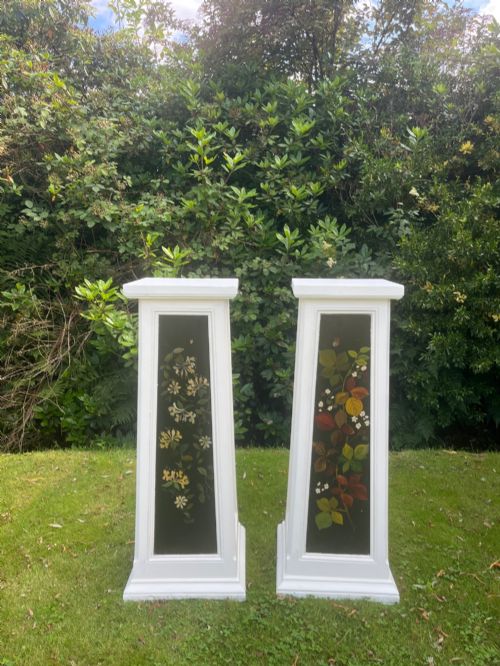
The pieces appearing on this page span the nineteenth century, including specific dates such as 1850, 1870, 1880, 1890 and 1900. Alongside marble and onyx versions, the selection includes examples rendered in mahogany, oak, walnut and grain painted pine.
Neoclassical, Classical Revival, Aesthetic Movement and Italian Renaissance Revival styles dominate the design vocabulary of these columns. Buyers encounter everything from simple cylindrical lamp stands to exhibition quality carved ebony and amboyna pedestals.
How they were made
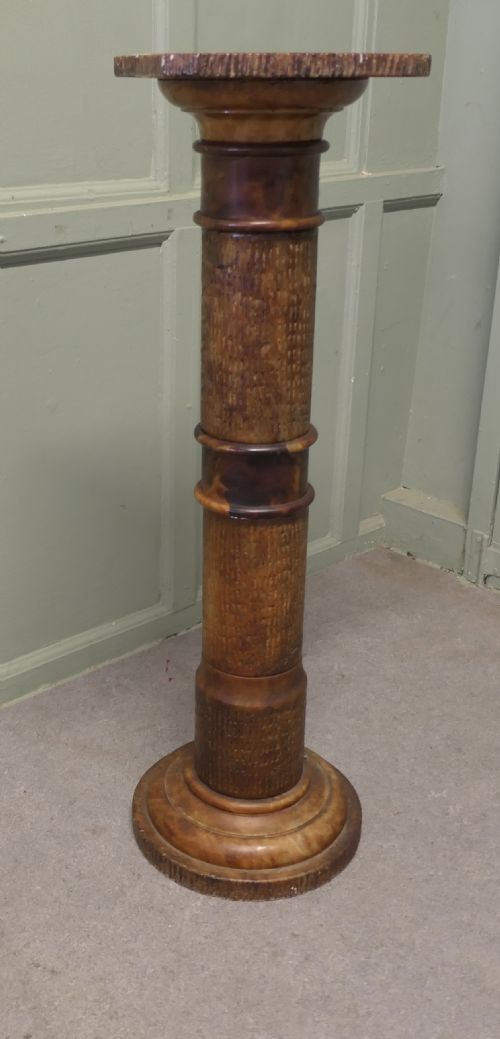
Craftsmen utilised substantial timbers such as mahogany, oak, walnut, birch and satinwood, frequently turning them on lathes to create spiral pillars and smooth cylindrical shafts. Wood surfaces were finished with French polish, grain painting or staining to mimic rarer materials or enhance the natural grain.
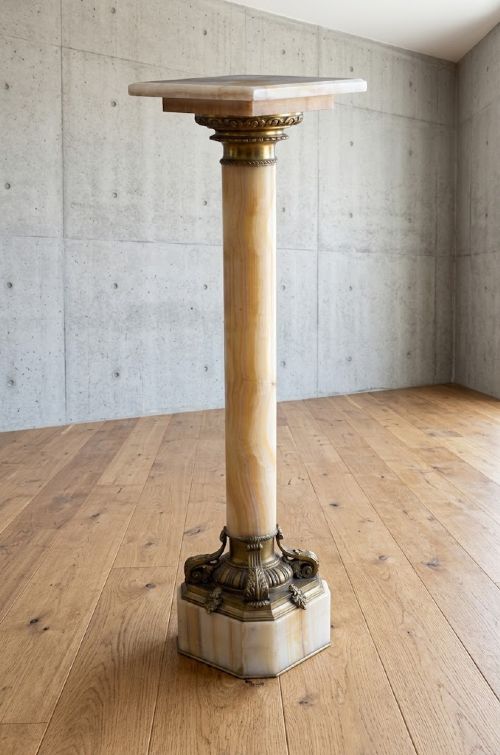
Stone columns rely on natural materials like marble, alabaster, onyx and verde antico, shaped into solid shafts or applied as decorative veneers. Workshops also employed scagliola, a composite of pigmented gypsum and glue, to imitate costly marbles with precision.
Metal components such as orrmolu collars, bronze figures and iron structures provide structural contrast and ornate detailing. Cast bronze elements frequently incorporate figures or musical cherubs, secured to stone or wooden bases.
Materials range from solid mahogany, oak and satinwood to verde antico marble, onyx, alabaster and grain painted pine.
What varies in quality
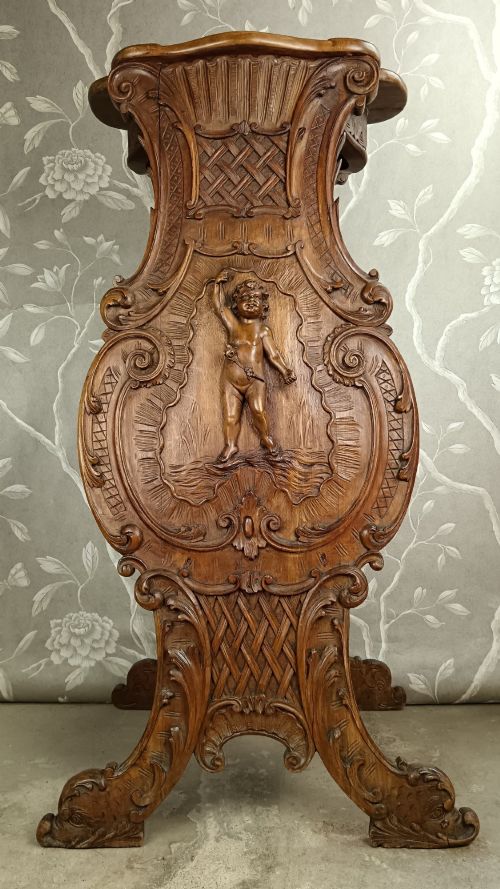
The distinction between standard utility stands and exhibition quality pieces rests upon the ambition of the design and the pedigree of the maker. Master workshops employed finer timbers like amboyna and ebony, complemented by meticulous hand carving rather than mechanical turning.
Material selection dictates the upper tier of the market, where solid blocks of verde antico or honey coloured marble replace painted pine and basic softwoods. The inclusion of cast ormolu mounts and finely patinated bronze collars elevates a piece beyond a simple architectural support.
Gillow & Co.·Paul Ponsard
The Victorian Sculpture Column Glossary
- Torchiere
- A tall stand historically designed to carry a light source, now commonly utilised for displaying busts or urns. These pieces often feature slender shafts rising from tripartite bases.
- Scagliola
- A composite material made from pigmented gypsum, selenite and glue, manipulated to imitate marble and other hardstones. It allows makers to achieve intricate polychrome effects without carving stone.
- Verde Antico
- A dark green serpentine marble exhibiting white or lighter green veining, favoured by nineteenth century makers for classical revival columns. This stone imparts a rich, dark tone to architectural supports.
- Ormolu
- Gilded bronze applied as decorative mounts, collars or feet on furniture and pedestals. The technique involves treating bronze with a mixture of gold and mercury.
- Plinth
- The flat, solid base upon which a column or sculpture rests. It provides both visual stability and physical support to the structure above.
Victorian Sculpture Column: Frequently Asked Questions
What was the original purpose of a Victorian sculpture column?
These columns functioned as architectural display platforms within domestic interiors, elevating portrait busts, classical bronzes and decorative vases to eye level.
By lifting art off the floor, they drew the eye upwards and contributed to the grand, curated aesthetic popular in nineteenth century reception rooms.
How do I distinguish solid marble from faux marble?
Solid marble columns feel cold to the touch and exhibit natural variations in veining that penetrate deep into the stone. Faux marble versions, often constructed from painted pine or plaster, reveal wood grain or softer material layers if inspected closely at unpolished seams.
Scagliola provides a heavier, smoother composite alternative that sits visually between painted wood and genuine quarried stone.
Where should I place a column in a modern interior?
A sculpture column works effectively in an empty hallway corner, flanking a fireplace or framing a doorway as a standalone focal point. Pair them with contemporary ceramic vessels or traditional bronze figures to create height and contrast in a room.
Ensure the base rests on a level surface, particularly with heavier stone or marble iterations.
How can I date a nineteenth century pedestal?
Dating relies on observing stylistic markers, such as the austere geometry of Neoclassical pieces versus the organic motifs of the Aesthetic Movement. Timber choice, construction methods like hand cut joinery, and accompanying maker signatures also help narrow the decade of manufacture.
Archival records and recorded exhibition pieces offer firm chronological parallels for exceptional carved works.