


Ebonised Walnut Stand
An ebonised walnut stand brings dark timber contrast and steady utility to a room, offering a surface for display or daily tasks.
Ebonised Walnut Stand
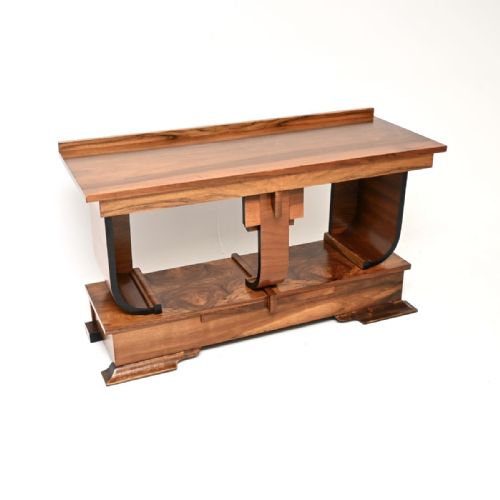
An ebonised walnut stand serves as a compact piece of furniture designed for display or support, frequently taking the form of an occasional table, pedestal, plant stand, or desk accessory. These pieces often emerge from the nineteenth century, spanning Victorian, Aesthetic Movement, and Edwardian periods.
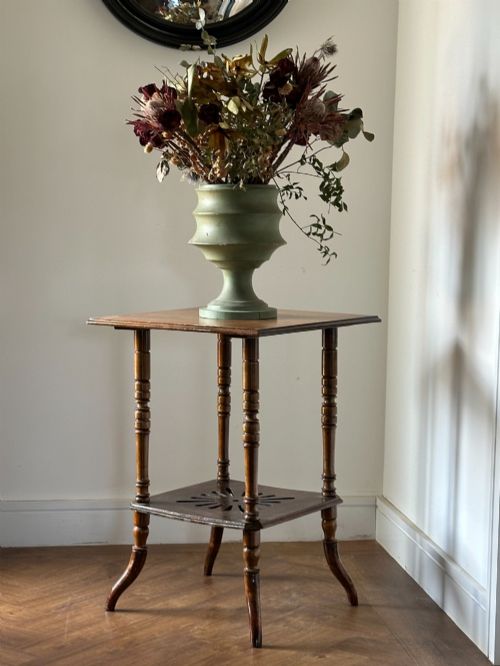
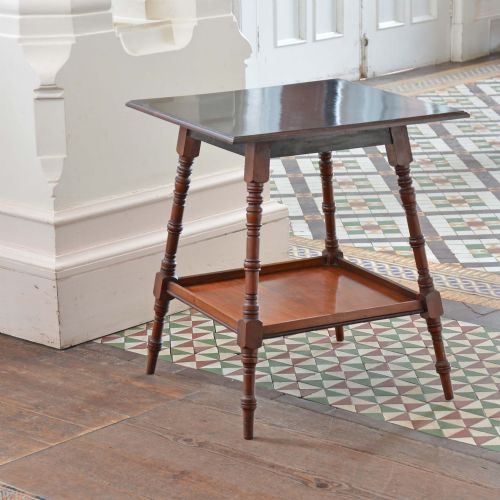
The version most commonly met on this page is a nineteenth-century Victorian or Aesthetic Movement occasional table, side table, or tiered etagere combining dark ebonised surfaces with walnut grain. Makers across England, France, and Germany applied these dark finishes to create striking visual silhouettes for domestic interiors.
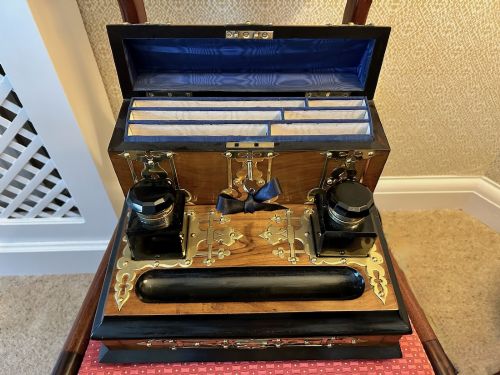
Beyond simple tables, the selection includes specialised forms such as plant stands, music cabinets, and desk stands fitted for ink or pens. Buyers encounter everything from small circular occasional tables to tall display shelves and multi-tiered étagères.
Materials and technique
Craftsmen built these pieces using walnut, burr walnut, and figured walnut timber, often applying an ebonised finish to darken the wood and imitate ebony. This dark treatment provided a sharp contrast against lighter marquetry inlay, brass mounts, or ormolu details.
Decoration relied on marquetry, fine brass mounts, and occasional porcelain or silk elements integrated into the structure. French and English workshops employed traditional joinery to construct multi-tiered etageres, cabinets on stands, and small occasional tables designed for daily use.
Listings feature items spanning the eighteenth, nineteenth, and early twentieth centuries, incorporating walnut, brass, porcelain, and silk.
Quality variations
The distinction between standard and superior pieces rests on the crispness of the ebonised finish, the choice of burr or figured walnut veneer, and the finesse of any marquetry inlay. Finer examples display meticulous attention to detail in their brass mounts, ormolu fittings, and structural joinery.
Origin and maker attribution also shape the standing of a piece, with documented workshops delivering more refined proportions and more harmonious integration of mixed materials like marble, porcelain, and metal.
Gillow & Co.·Gordovil
The Ebonised Walnut Stand Glossary
- Ebonised
- Wood treated to resemble ebony through staining, painting, or chemical processing. This dark finish gained immense popularity during the Victorian and Aesthetic periods.
- Etagere
- A piece of furniture consisting of a set of open shelves for displaying small objects or ornaments. These typically feature three or more tiers.
- Marquetry
- Decorative veneer applied to furniture in patterns or pictures using thin slices of wood, shell, or ivory. It frequently highlights the tops of tables and cabinet doors.
- Ormolu
- Gilt bronze mounted on furniture as decorative feet, handles, or borders. It adds a metallic gleam against the dark ebonised wood.
- Occasional table
- A small table designed for intermittent use in a sitting room or parlour. Examples include circular and side variations used for holding books or lamps.
Ebonised Walnut Stand: Frequently Asked Questions
What is an ebonised walnut stand used for?
These stands serve multiple domestic functions, from holding small plants and writing instruments to displaying decorative objects on tiered shelves.
Buyers often place them in reception rooms or hallways where surface space is needed without a large footprint.
How do I identify an Aesthetic Movement piece?
Aesthetic Movement pieces often feature ebonised surfaces combined with Japanese-inspired motifs, simple geometric lines, and contrasting timber highlights.
They reject heavy Victorian clutter in favour of a cleaner, more deliberate artistic presentation.
Are these stands purely English in origin?
While many items reflect English Victorian cabinet-making traditions, a significant portion originates from French workshops.
French pieces frequently incorporate marquetry inlay, ormolu mounts, and marble tops into their designs.
How should I care for ebonised wood?
Ebonised surfaces require gentle dusting with a soft, dry cloth to protect the dark finish from scratching.
Avoid placing them in direct sunlight or near heat sources to prevent the walnut beneath from drying out or warping.