

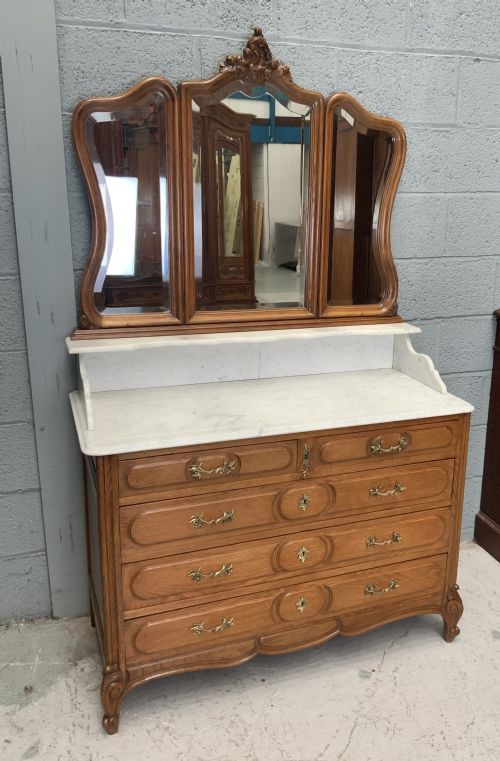


French Marble Washstand
A french marble washstand brings solid stone and timber together into a practical piece that still anchors a bedroom or hall today.
French Marble Washstand
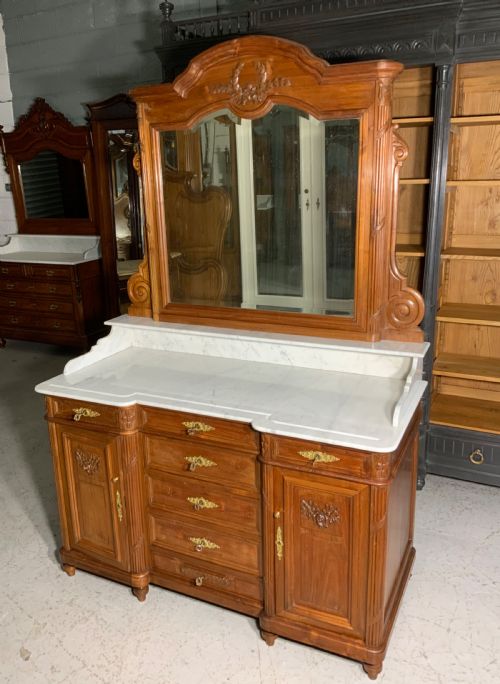
A french marble washstand combines a heavy stone slab with a wooden base, originally built for morning ablutions before indoor plumbing became universal. These pieces appear across several decades, spanning the nineteenth century into the early decades of the twentieth century.
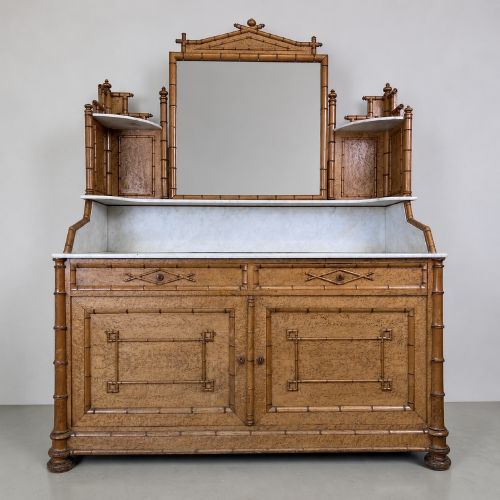
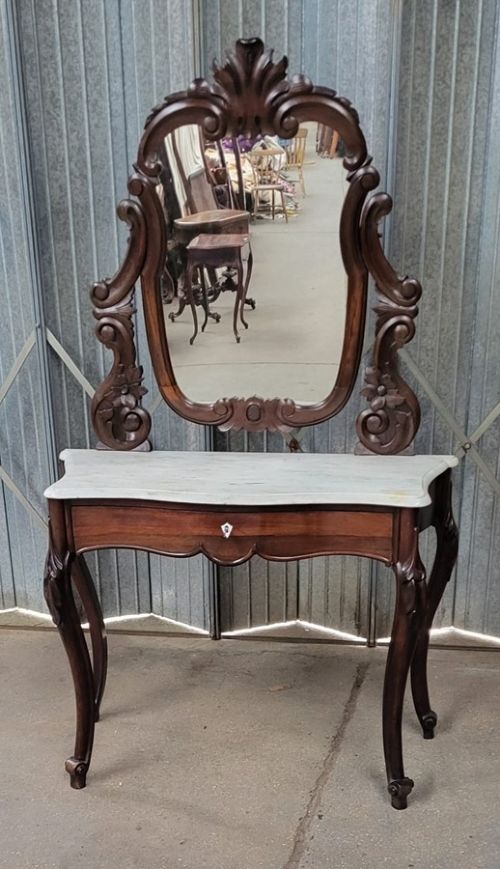
Makers constructed these washstands in various timbers including walnut, mahogany, oak, pine, and birds-eye maple. Styles range from French provincial and Louis Philippe to Rococo Revival, French Aesthetic Movement, and Art Deco.
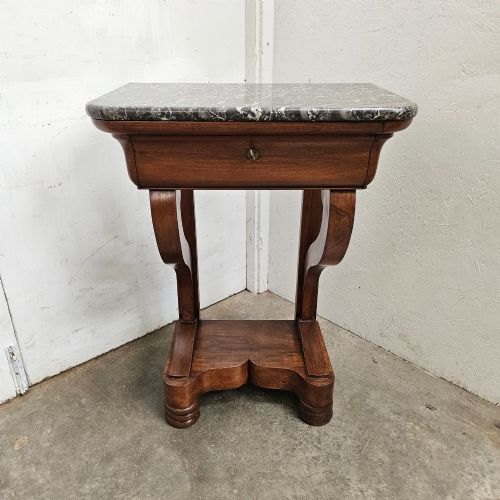
The form often crosses over with dressing tables, commodes, and console tables. Many examples incorporate cupboards or drawers beneath the marble surface.
How they were made
Craftsmen paired solid hardwoods and veneered carcases with thick slabs of stone, securing the marble to withstand daily use with water. Carved details adorn the walnut, oak, and mahogany frames, while specialised framing supports the weight of the stone top.
Secondary materials such as glass, brass, and bronze appear in associated hardware, mirrors, or decorative mounts. Surface treatments include part-ebonising, grey painting, and clear polishing to highlight the grain of the wood.
The archive records styles ranging from French Provincial and Louis Philippe to Rococo Revival, Victorian faux bamboo, and Art Deco.
What varies in quality
The distinction between standard utility items and finer pieces lies in the choice of timber and the depth of the carving. Finely figured walnut or birds-eye maple paired with richly veined marble marks out the more ambitious workshops.
Proportion and execution of the carved ornamentation determine the success of the design. Simpler provincial oak pieces contrast with elaborate French Rococo Revival or Art Deco interpretations.
The French Marble Washstand Glossary
- Marble
- A metamorphic rock capable of taking a high polish, used for water-resistant tabletops. It resists moisture from basins and ewers.
- Faux-bamboo
- Wood turned and painted to imitate natural bamboo stalks. This decorative treatment appears frequently on nineteenth-century pieces.
- Commode
- A low chest of drawers or cabinet with doors. Many examples share forms with washstands.
- Console table
- A table designed to be fixed against a wall, often sharing proportions with marble-topped washstands.
- Athenienne
- A neoclassical tripod stand supporting a basin or bowl. These bronze or metal stands represent a specific classical form.
French Marble Washstand: Frequently Asked Questions
How do I clean the marble top?
Wash the stone with warm water and a mild, non-acidic soap. Avoid harsh chemical cleaners that can etch the polished surface.
Dry the marble thoroughly with a soft cloth after washing to prevent water spots from forming on the stone.
Can I use it as a modern vanity?
The stone surface provides a durable platform for modern toiletries and basins. Many buyers repurpose these pieces in contemporary bathrooms and hallways.
Ensure that any modern plumbing fixtures are installed carefully to protect the historic timber framing from moisture.
What woods were used?
Cabinetmakers utilised walnut, mahogany, oak, pine, and birds-eye maple for the carcases and frames. The choice often reflects the period and regional style.
Hardwoods provided structural stability to support heavy stone slabs without warping under the weight.
How do I date a washstand?
Examine the timber, construction methods, and stylistic cues such as Rococo Revival curves or Art Deco geometric lines. Secondary woods inside drawers offer further clues.
Comparative pieces from the nineteenth and early twentieth centuries establish standard timelines for specific decorative motifs.