



Ebonised Walnut Side Cabinet
An ebonised walnut side cabinet brings dark timber contrast and rich grain to a room, offering both surface display and closed storage.
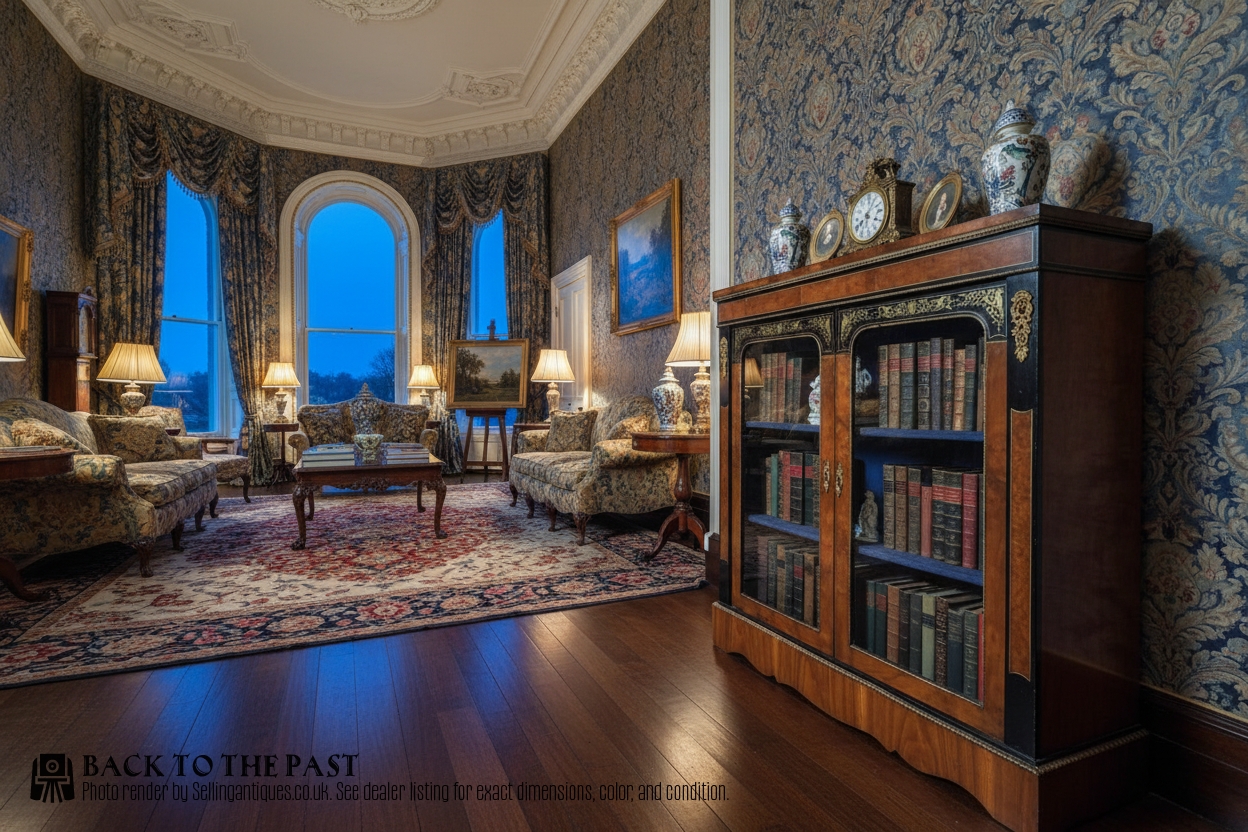
Ebonised Walnut Side Cabinet
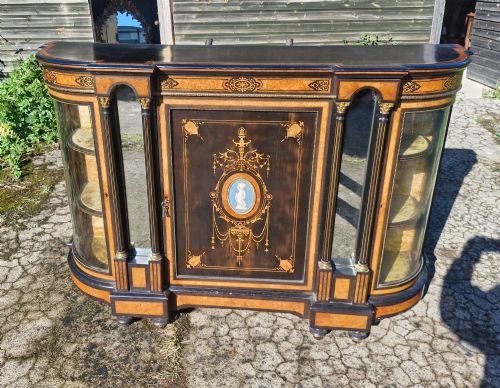
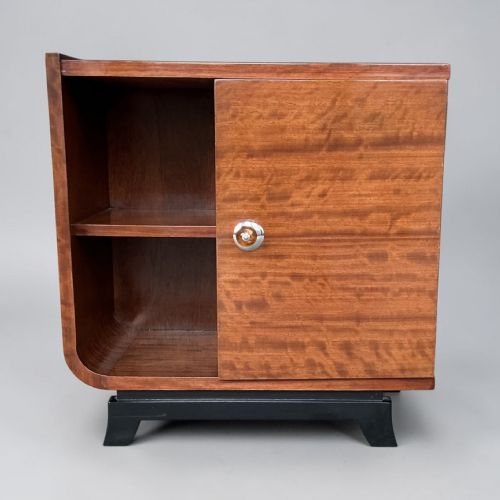
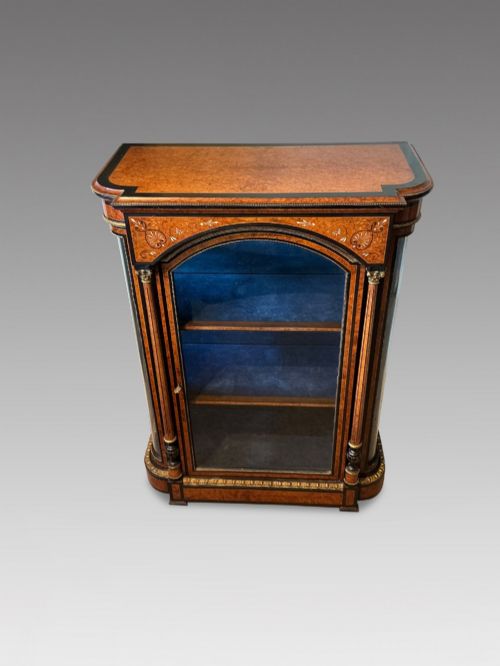
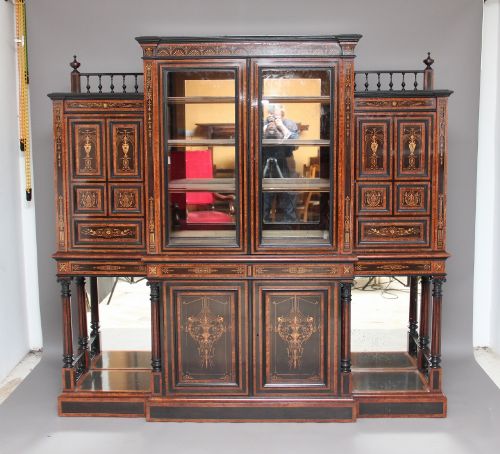
When you search for an ebonised walnut side cabinet, you encounter pieces spanning the Victorian era, the nineteenth century, and the Art Deco period. These forms range from pier cabinets and credenzas to display cabinets and music cabinets, originating from English workshops as well as French and Italian makers.
The Victorian examples frequently combine burr walnut with ebonised wood details, while later twentieth-century pieces introduce modernist lines or specific regional revivals. You will find items equipped with glass doors, marble tops, or open shelving, designed for both practical storage and formal display.
The selection on this page reflects diverse cabinet-making traditions, uniting dark ebonised finishes with the distinct figuring of walnut timber across various nineteenth and twentieth-century styles.
Materials and construction
Cabinet-makers utilised solid walnut and burr walnut veneers, applying a dark ebonised finish to mouldings, columns, and structural highlights to create stark visual contrast. Timber surfaces were often polished to a high sheen, revealing intricate natural grain patterns beneath.
Many pieces incorporate applied or cast ormolu and brass mounts, decorative marquetry inlay, and inset marble tops that add weight and colour variety to the dark timber carcase. Glazed doors use timber framing to protect interior contents while maintaining visibility.
Joinery techniques ranged from traditional carcase construction to specialised two-part builds, ensuring stability for heavy marble slabs and dense hardwood frames.
Ebonised Walnut Side Cabinet Retail Price Guide 2026
Typical asking prices for ebonised walnut side cabinet among the pieces listed under this phrase on Sellingantiques today, from the lower quarter to the upper quarter. They describe what is for sale here now, not the wider market.
Some nineteenth-century side cabinets come equipped with hidden compartments designed to keep private correspondence entirely out of sight.
Judging quality and craftsmanship
The standard of a piece rests upon the selection of the timber veneers, particularly the choice and matching of burr walnut grain across the door panels and primary surfaces. Superior examples demonstrate seamless integration of the ebonised elements with the underlying walnut timber.
Consider the execution of secondary details, such as the precision of brass or ormolu mounts, the complexity of marquetry inlay, and the fitting of marble tops. The integrity of the original polish and the smoothness of door and drawer operation further distinguish finer workshops from standard production.
Lamb of Manchester·Gordovil Spain
The Ebonised Walnut Side Cabinet Glossary
- Ebonised wood
- Timber treated with a stain or finish to imitate ebony. This dark treatment was popular in Victorian and Aesthetic Movement furniture design.
- Burr walnut
- Wood taken from a walnut tree growth or burl, yielding swirling, highly figured grain patterns. It is typically sliced into veneers for decorative cabinet doors.
- Ormolu
- Gilded bronze or brass mounts applied to furniture for decoration. These metal details are common on French nineteenth-century pieces.
- Marquetry
- The art of applying pieces of veneer to a structure to form decorative patterns. Craftsmen used various tinted woods and metals to create floral or geometric designs.
- Credenza
- A type of side cabinet or sideboard used for storage and serving. Nineteenth-century versions often feature glazed central doors flanked by curved side compartments.
Ebonised Walnut Side Cabinet: Frequently Asked Questions
What rooms suit an ebonised walnut side cabinet?
These cabinets work well in dining rooms, living spaces, or grand hallways where their dark timber and contrasting grain can serve as a focal point. They provide practical surface area and enclosed storage for tableware or collections.
Their varied forms, from narrow pier cabinets to low credenzas, allow them to fit into both compact corners and expansive wall spaces.
How do I care for marble-topped cabinets?
Marble surfaces require gentle cleaning with a damp cloth and mild soap, avoiding acidic cleaners that can etch the stone. Regular dusting keeps the polished finish intact.
Take care to use coasters under glasses and protect the stone from heavy impacts that might chip the edges.
How can I tell Victorian pieces apart from later ones?
Victorian cabinets often feature heavy moulding, rich burr walnut veneers, and ornate ormolu mounts typical of nineteenth-century revival styles. They prioritize traditional ornamentation and formal symmetry.
Later pieces, such as those from the Art Deco period around nineteen-thirty, tend to feature cleaner lines, simpler geometric inlays, and modernist forms without historical revival motifs.
Were these cabinets used for music storage?
Certain specialised cabinets were built specifically to house sheet music and small instruments within domestic parlours. These often feature internal shelving or partitioned compartments designed for paper storage.
Their external appearance matches standard side cabinets, concealing their musical purpose behind panelled or glazed doors.