





Ebonised Tripod Stand
An ebonised tripod stand brings dark elegance and a steady three-legged profile to a room, offering a versatile perch for lamps, plants or decorative objects.
Ebonised Tripod Stand
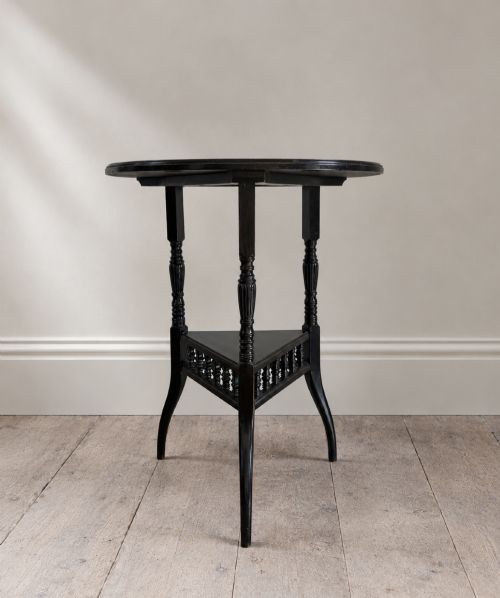
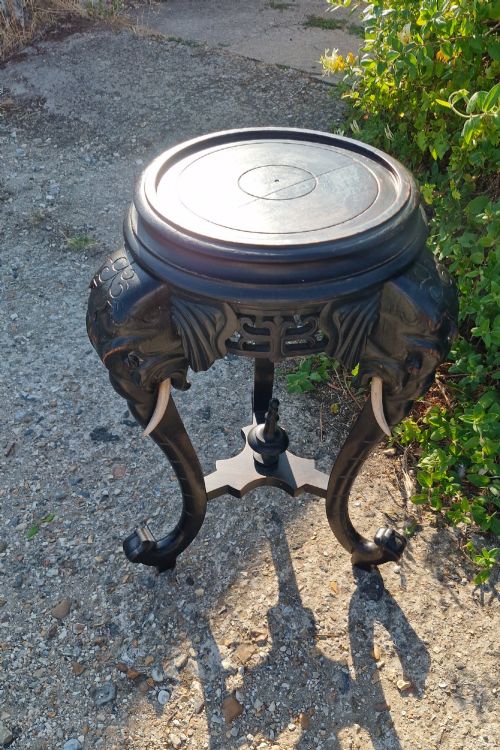
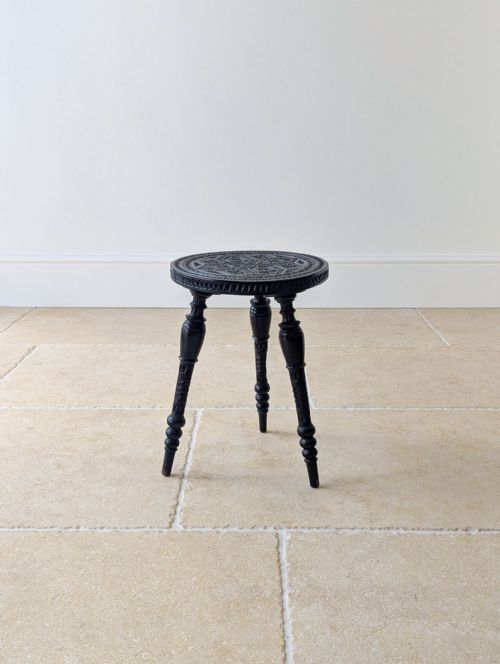
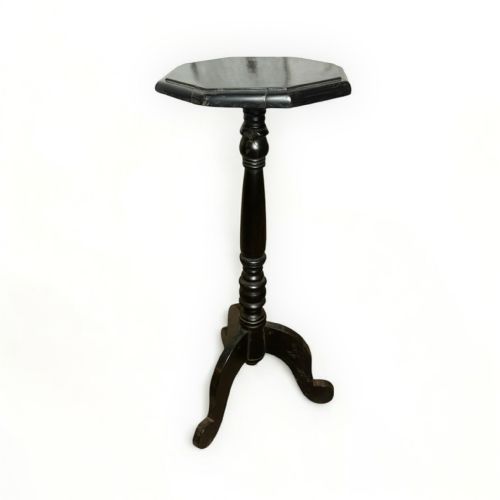
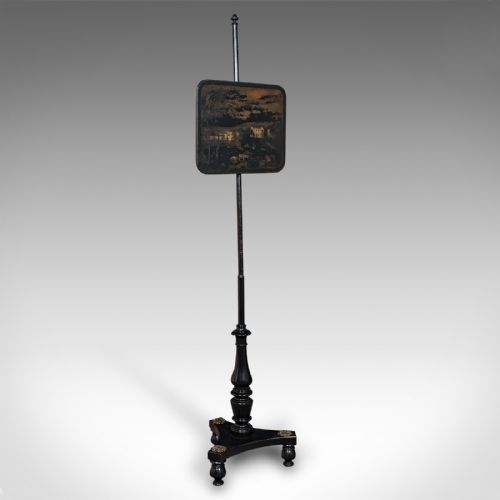
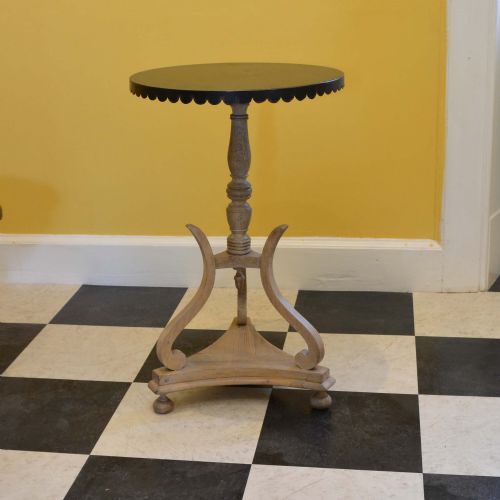
An ebonised tripod stand is a support piece featuring a central shaft mounted on three legs, finished in dark wood to imitate ebony. These pieces frequently appear as torcheres, side tables, occasional tables and music stands spanning the nineteenth century and the early twentieth century.
The selection on this page demonstrates various interpretations of the form, ranging from Arts and Crafts designs and Victorian chip-carved occasional tables to Regency lacquered stands and Far Eastern variations. Buyers encounter simple round tops alongside tilt-top mechanisms, octagonal surfaces and adjustable reading stands.
Originating across different workshops and stylistic movements, the forms incorporate influences from Swedish Biedermeier and Anglo-Indian design to French neoclassical aesthetics. Each variant uses the distinctive three-legged base to maintain stability on uneven floors while occupying minimal floor space.
How they were made
Construction relies heavily on hardwoods such as ebonised wood, oak and solid ebony, shaped into shafts and tripartite bases. Workshops also employed alternative timbers like alder root and burr birch, applying ebonised finishes or lacquer to achieve the dark surface aesthetic.
Decorative techniques recorded in the evidence include hand painting, parcel gilding, chip-carving and brass highlights. Certain pieces incorporate marble tops or painted wooden elements to add textural contrast to the dark structural framework.
Periods represented on the site span the Regency era, the Victorian period, Arts and Crafts, and the early twentieth century.
What varies in quality
Quality in these pieces rests upon the precision of the joinery at the junction of the three legs and the central column, where stability is determined. Superior examples exhibit balanced proportions and crisp execution in surface ornamentation, such as chip-carving or parcel gilding.
The integrity of the ebonised finish or lacquer work significantly affects the visual success of the piece, with finer applications showing enduring depth and adherence to the underlying wood. Mechanisms for adjustable heights or tilt tops operate smoothly in better-made specimens.
The Ebonised Tripod Stand Glossary
- Ebonised wood
- Timber treated with stain, dye or polish to produce a dark, glossy black finish that emulates genuine ebony. This treatment gained popularity in various nineteenth-century revival styles.
- Torchere
- A tall, slender stand designed originally to hold a candle or torch, and later adapted for lamps or decorative urns. These stands typically feature elevated tripod bases.
- Tripod base
- A support structure comprising three legs radiating from a central vertical shaft. This configuration ensures firm contact on uneven domestic flooring.
- Parcel gilt
- A surface decoration technique where selected areas are partially highlighted with gold leaf or gilding. It provides contrast against an otherwise plain or ebonised ground.
- Tilt-top
- A tabletop mechanism that allows the surface to pivot into a vertical position for storage when not in use. This feature appears frequently on nineteenth-century occasional tables.
Ebonised Tripod Stand: Frequently Asked Questions
What rooms suit an ebonised tripod stand?
These stands fit well into corners, beside armchairs or flanking doorways where a compact surface is useful. Their dark finish allows them to anchor brighter colour schemes in both traditional and contemporary interiors.
Because the footprint is small, they function effectively as plant stands or lamp pedestals without crowding the floor area.
How do I care for ebonised wood?
Maintain the finish by dusting regularly with a soft, dry cloth to prevent grit accumulation. Avoid placing the wood in direct sunlight or near heat sources to prevent the dark finish from drying out.
Polish sparingly using products suitable for dark polished woods, testing any new treatment on an inconspicuous underside area first.
What is the difference between a torchere and a side table?
A torchere is typically taller and narrower, designed to elevate lighting or decorative objects rather than serve as a functional surface for sitting alongside. Side tables offer broader, lower surfaces intended for holding books, cups or smaller items within arm's reach.
Both utilise the three-legged tripod format, but their proportions reflect their distinct original purposes.
How can I identify nineteenth-century pieces?
Look for traditional construction methods such as hand-cut joinery, timber shrinkage patterns and the specific type of ebonising agents or lacquers used. Hardware elements like handmade screws or hinges also offer clues to the period of manufacture.
Stylistic cues such as Victorian chip-carving or Regency gilt details help align the piece with documented design eras.