
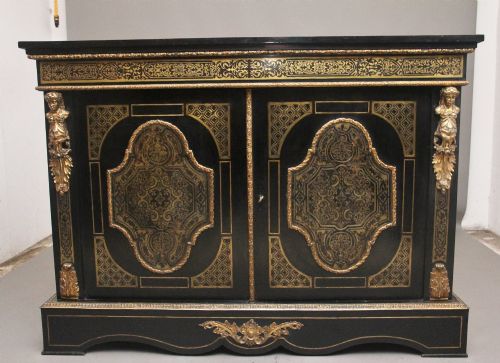
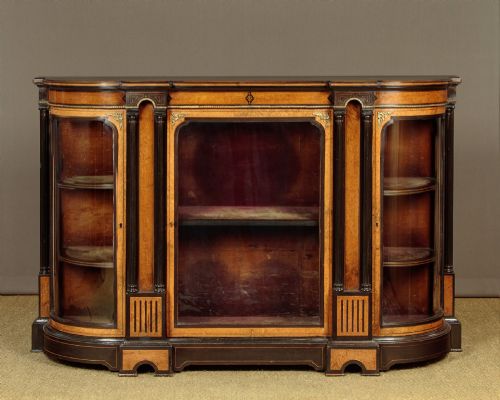
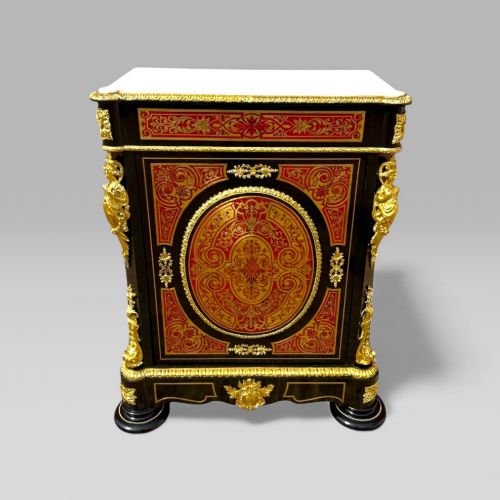


Ebonised Marquetry Credenza
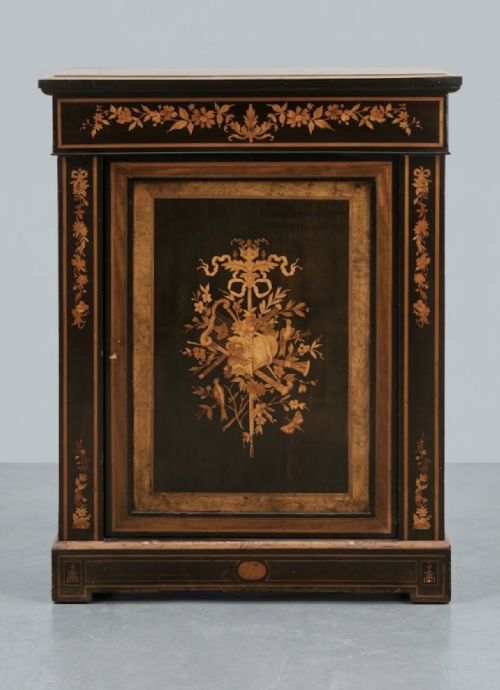
An ebonised marquetry credenza brings nineteenth-century presence to a room, combining dark wood with intricate floral or geometric inlay.
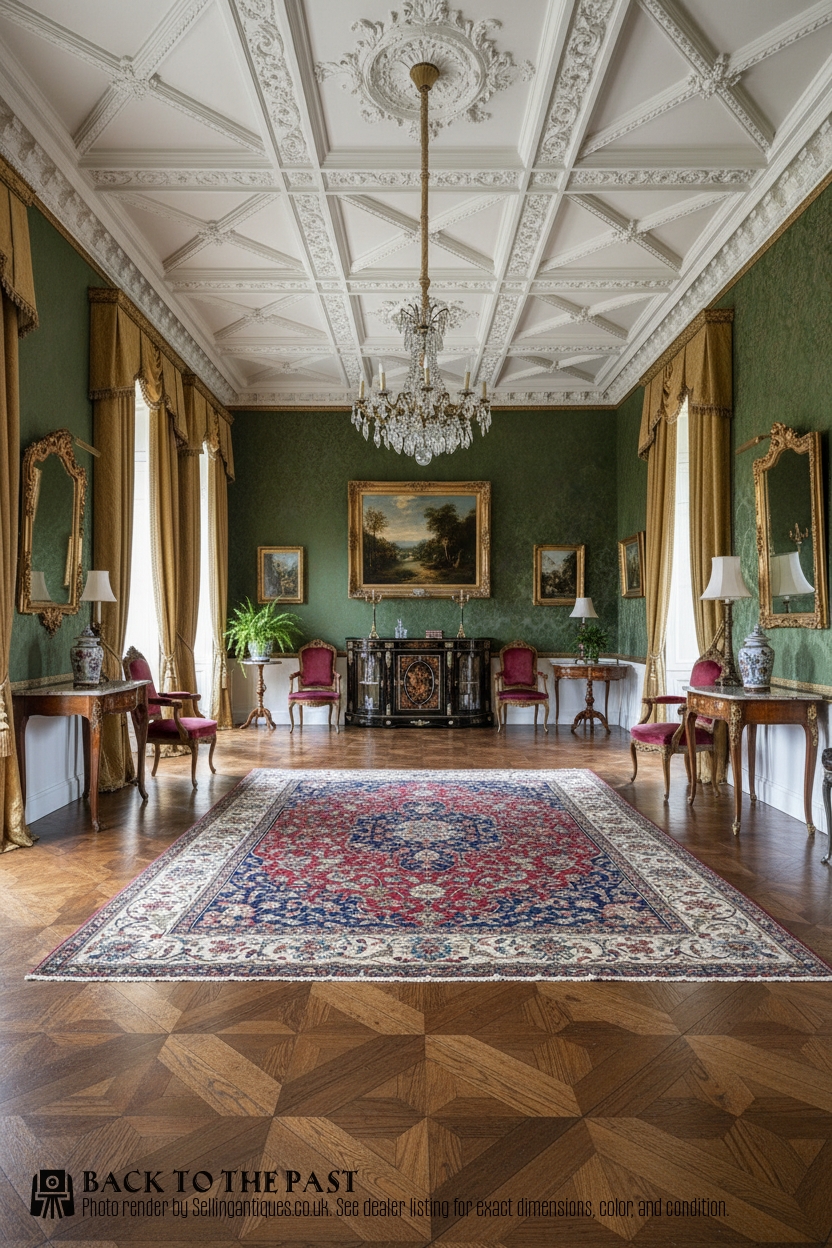
Ebonised Marquetry Credenza
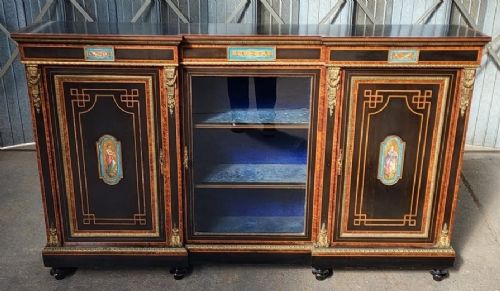
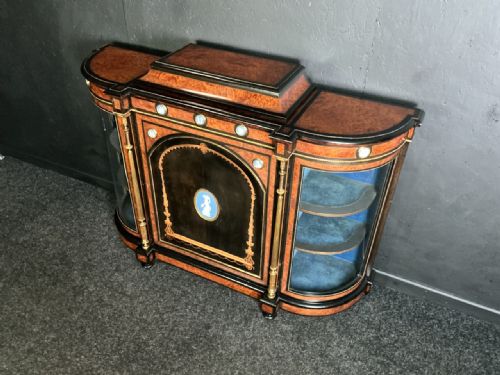
An ebonised marquetry credenza is a low nineteenth-century cabinet designed for display and storage, often with glazed doors or central mirrored sections. You will frequently encounter Victorian examples alongside French Napoleon III pieces from the mid to late nineteenth century.
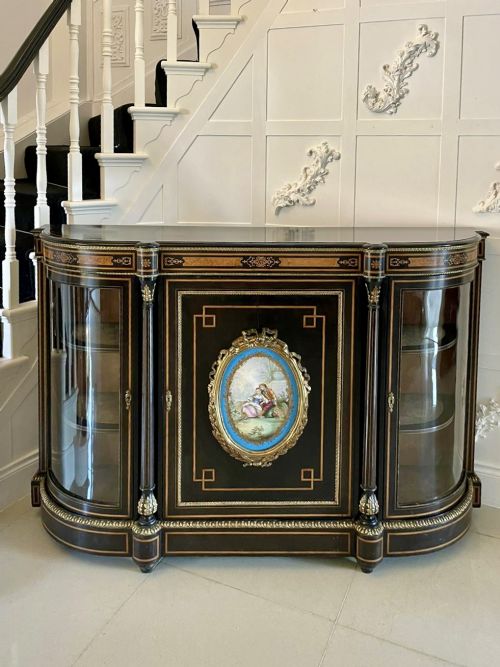
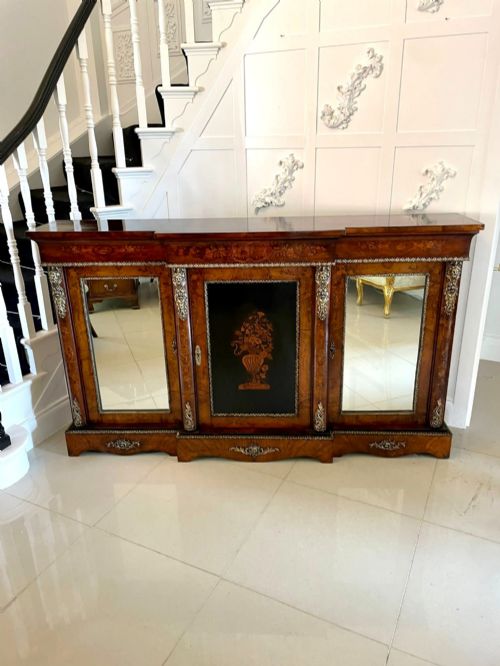
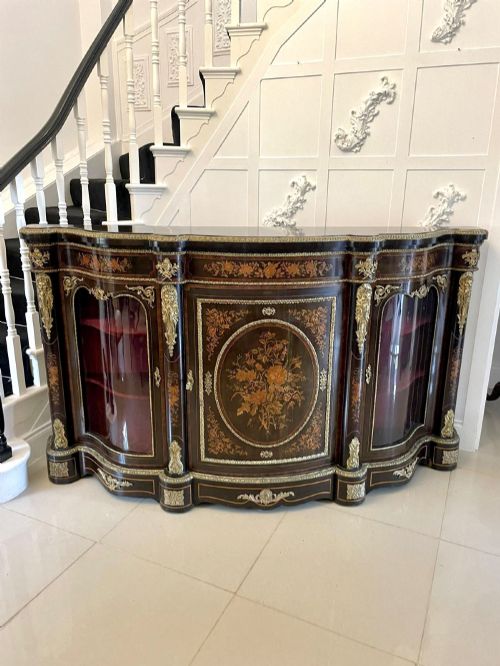
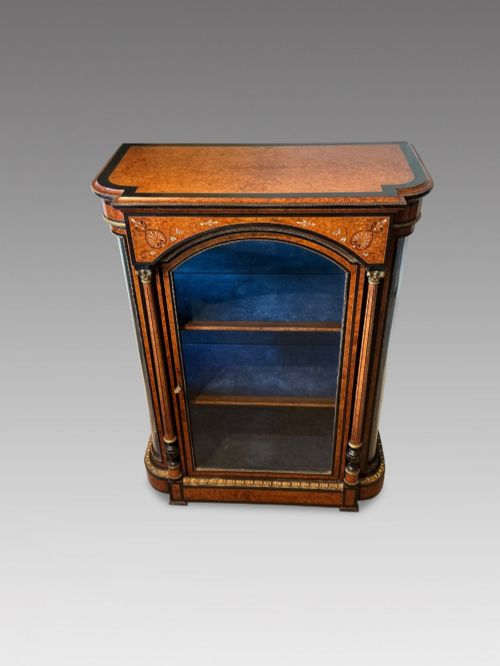
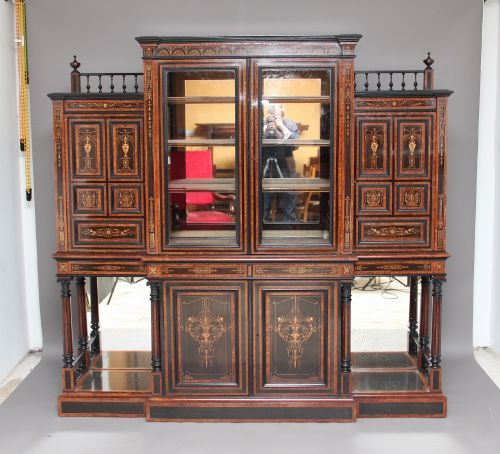
The form spans various shapes from serpentine fronts to breakfronts and bow ends, incorporating side cabinets, pier cabinets and bookcases. Makers working in England and France produced these pieces using walnut, burr walnut and ebonised timber.
Stylistic influences range from the Aesthetic Movement to French Revival and Spanish Renaissance Revival. The most common format on this page is the Victorian ebonised and marquetry credenza, frequently mounted with ormolu.
How they were made
Cabinet makers utilised ebonised wood as a dark ground, applying veneer techniques with burr walnut, amboyna and fruitwoods for marquetry panels. Brass and tortoiseshell worked into boullework appear alongside these inlaid surfaces.
Gilding and cast ormolu mounts punctuate the corners, doors and pillars of the carcase, highlighting the architectural breaks of the design. Glass doors and mirrored backs complete the construction, framed by turned columns and plinths.
Listings feature pieces spanning the nineteenth century, incorporating Victorian, Aesthetic Movement and French Napoleon III styles.
What varies in quality
The refinement of the marquetry dictates the tier of the piece, distinguishing crisp, detailed floral work from simpler geometric patterns. The integration of cast ormolu mounts and the precision of the brass inlay reflect the original workshop's standing.
Cabinet proportions and timber selection, such as figured burr walnut against standard walnut veneer, separate standard production from exceptional examples. The depth of the ebonisation and the crispness of the turned or carved details complete the hierarchy.
Lamb of Manchester·Gordovil Spain·Gillow
The Ebonised Marquetry Credenza Glossary
- Ebonised
- Wood treated with a finish to resemble ebony, creating a dense black surface popular in nineteenth-century cabinetry. This technique provided a contrasting dark ground for inlaid brass and marquetry.
- Marquetry
- The art of applying pieces of veneer to a structure to form decorative patterns and pictures. Floral motifs and scrolls appear frequently in nineteenth-century examples.
- Ormolu
- Gilded bronze used for decorative mounts on furniture, doors and clock cases. It adds metallic highlights to the corners and borders of cabinets.
- Boulle
- A style of marquetry using brass and tortoiseshell inlaid together, named after a French cabinet maker. It creates a rich, reflective surface pattern across cabinet doors and panels.
- Pier cabinet
- A narrow cabinet designed to stand against the wall space between windows. These pieces often feature glazed doors and internal shelving for display.
Ebonised Marquetry Credenza: Frequently Asked Questions
What is an ebonised marquetry credenza?
An ebonised marquetry credenza is a low nineteenth-century display cabinet featuring dark ebonised wood and detailed inlaid veneer work. These pieces were built to serve as side storage and surface display in formal rooms.
They combine glazed doors, mirrored backs and ornate metal mounts, drawing on Victorian and French Napoleon III design traditions.
Where were these cabinets placed?
These cabinets sat against principal walls in nineteenth-century drawing rooms and dining rooms, often positioned beneath mirrors or between windows. Their low profile kept sightlines open while providing top surface space for ornaments.
Glazed compartments allowed owners to exhibit porcelain and small collections safely behind locked doors.
How do I style one at home?
An ebonised credenza anchors a room through its dark timber and reflective brass or ormolu mounts. Use the top surface for lamps, ceramics or books, letting the contrasting marquetry stand out against neutral walls.
Interior shelving suits the display of glassware or collection items, keeping the historical character visible within a modern interior.
How do I tell Victorian from French pieces?
Victorian examples often favour burr walnut or ebonised carcases with floral marquetry and restrained ormolu mounts. French Napoleon III pieces frequently incorporate elaborate boullework using brass and tortoiseshell. Nomenclature in the listings helps identify origins, alongside specific regional construction traits and revival styles.