


Ebonised Inlaid Walnut Table
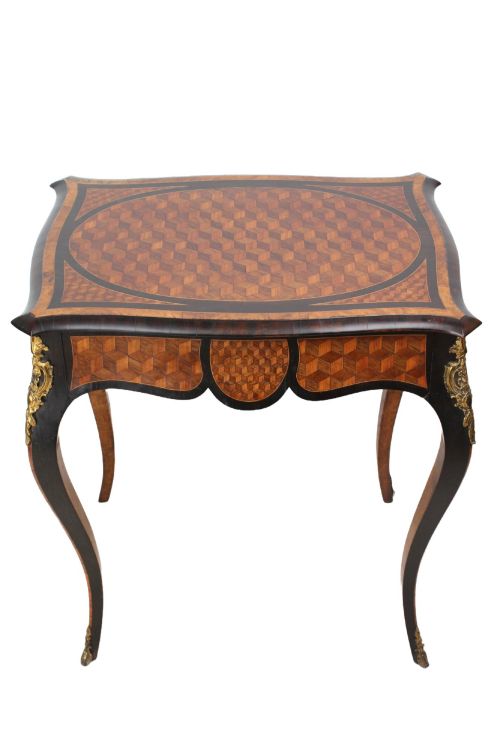
An ebonised inlaid walnut table brings dark, contrasting polish and fine floral or geometric detailing into a room.
Ebonised Inlaid Walnut Table
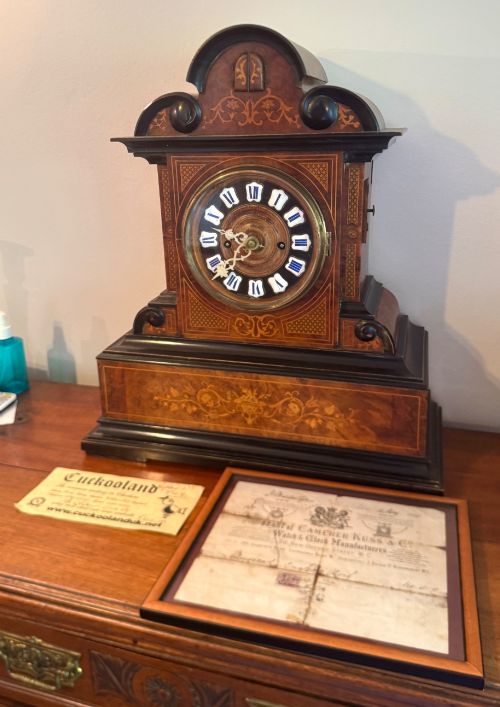
When you search for an ebonised inlaid walnut table, you encounter nineteenth-century pieces that combine warm timber with deep black finishes and contrasting veneers. These surfaces often display intricate floral or foliate marquetry alongside the dark, dense grain of walnut.
The selections span distinct historical revivals and domestic forms. Centre tables, card tables, writing desks, and occasional tables dominate the items, frequently reflecting Victorian tastes or French Napoleon III influences.
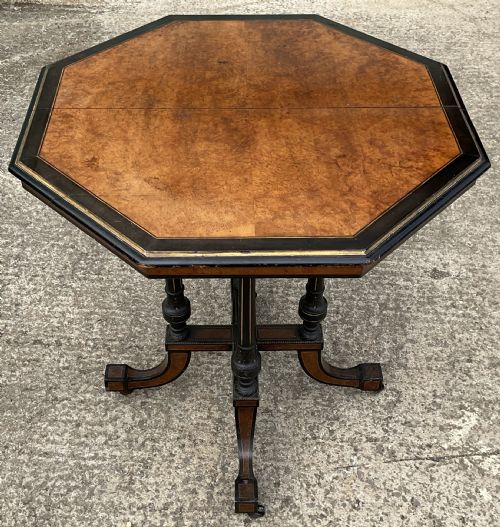
Makers and workshops from England, France, and Germany produced these furnishings for formal reception rooms and ladies' boudoirs. Their structural forms range from octagonal pedestals and stretcher bases to tripod supports and refined writing desks.
Materials and construction methods
Craftsmen built these tables using solid walnut frameworks combined with burr walnut or figured veneers to create rich surface movement. Wood was darkened through ebonising processes to mimic ebony, providing a stark visual boundary for lighter inlaid timbers.
Marquetry and parquetry patterns were meticulously cut and fitted into the timber surfaces, often incorporating brass or ormolu mounts to edge tops, friezes, and legs. Ormolu details and gilt highlights were applied to accentuate the curves of French revival framework.
Listings feature pieces from the Victorian era and the Edwardian period, incorporating materials like walnut, ebonised wood, burr walnut, and ormolu.
Distinctions in craftsmanship and finish
The refinement of the marquetry inlay establishes the primary tier of quality, separating standard production from exhibition-grade pieces. Crispness in the floral details and precision in the multi-wood cutting demonstrate superior workshop skill.
The depth and uniformity of the ebonised finish together with the preservation of the burr walnut figure dictate value. Superior examples retain crisp ormolu mounts and tightly joined structural frames without excessive surface degradation.
JAS Shoolbred·Gillows·Paul Sormani
The Ebonised Inlaid Walnut Table Glossary
- Ebonised
- Wood treated with stain or polish to resemble costly ebony. This dark finish gained immense popularity during the Victorian and Aesthetic periods to create stark tonal contrasts.
- Marquetry
- Decorative veneer work arranged in pictorial or geometric patterns using various coloured woods. Craftsmen applied these thin sheets of timber to table tops and friezes.
- Ormolu
- Gilded bronze mounts applied to furniture edges, legs, and corners. French makers utilised this technique extensively during the nineteenth century.
- Burr walnut
- Timber taken from the growth excrescences of walnut trees, displaying swirling, highly figured grain patterns. It was frequently employed on prominent table tops.
- Parquetry
- Geometric mosaic woodwork formed by small veneer pieces fitted together. It creates repeating patterns like cubes or chequers on writing surfaces and card tables.
Ebonised Inlaid Walnut Table: Frequently Asked Questions
What is an ebonised inlaid walnut table?
These nineteenth-century tables combine warm walnut timber with dark ebonised framing and contrasting decorative veneer work. They frequently appear as centre tables, writing desks, and occasional furniture from the Victorian era or French revival periods.
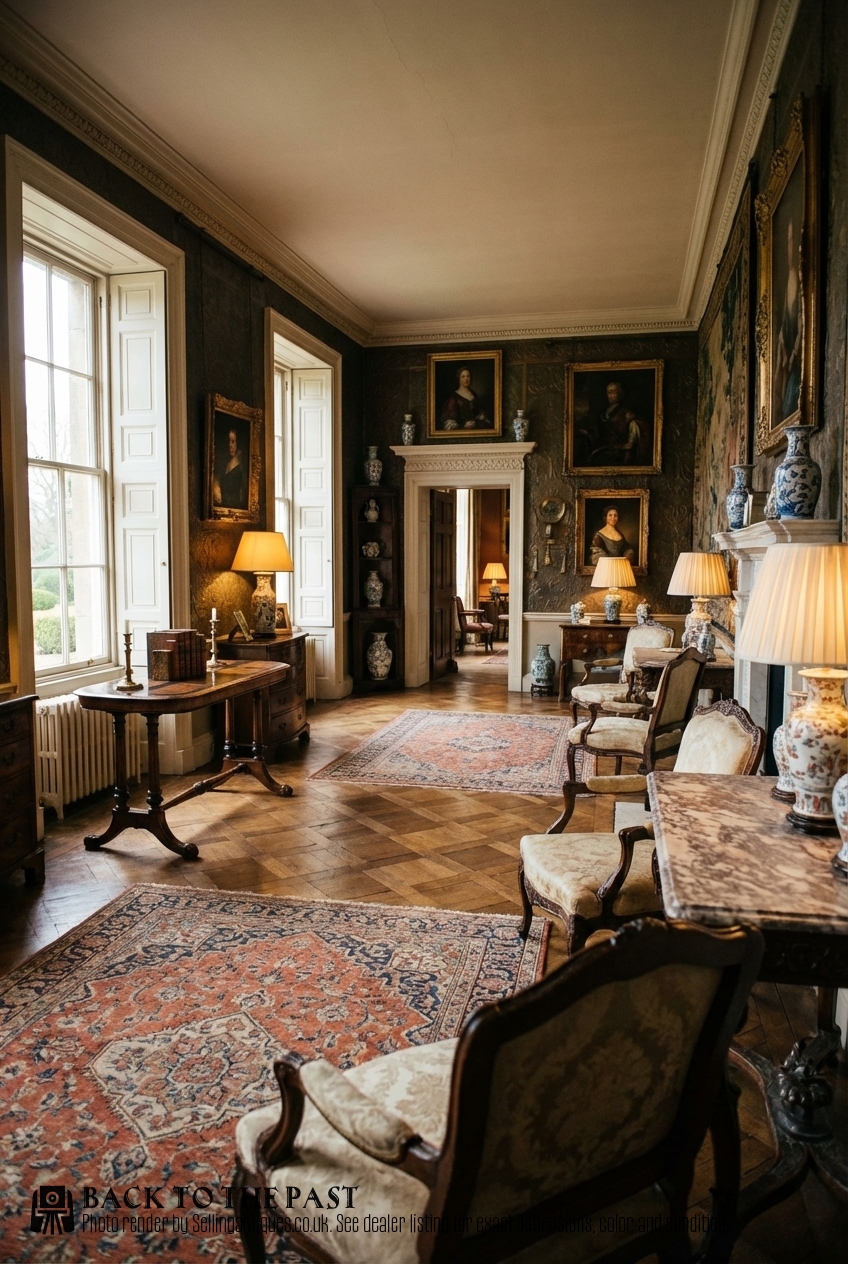
Craftsmen used these pieces in principal reception rooms to display wealth and artistic taste. Their contrasting tones and detailed surfaces suited formal domestic interiors of the period.
How do you clean ebonised wood?
Dusting gently with a soft, dry cloth preserves the dark polished surface without scratching the finish. Avoid harsh modern chemical sprays or excessive moisture which can damage nineteenth-century polish.
Conditioning with appropriate wax occasional applications maintains the lustre of the timber. Care must be taken around inlaid brass or delicate marquetry details during maintenance.
Were these tables used for writing?
Many variations incorporate specific writing surfaces, fitted drawers, or fall fronts for correspondence. Formats like the bonheur du jour and poudreuse served ladies in private morning rooms.
Other larger examples functioned primarily as centre tables for display or card tables with folding tops. Their versatile construction accommodated diverse social activities within the Victorian home.
How do I identify French Napoleon III styles?
Napoleon III furnishings often display lavish marquetry, extensive ormolu mounts, and fluid serpentine lines inspired by earlier Louis XV and XVI revivals. Rich burr walnut and ebonised contrasts feature prominently on these continental pieces.
English interpretations during the same decades tended towards slightly restrained structural silhouettes while adopting similar decorative vocabularies. Comparing the mount quality and timber selection helps distinguish regional workshops.