
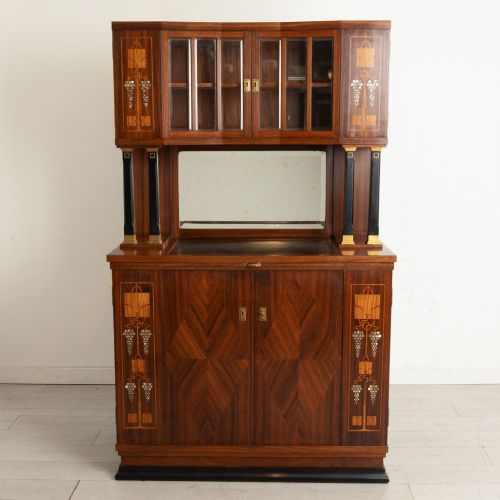
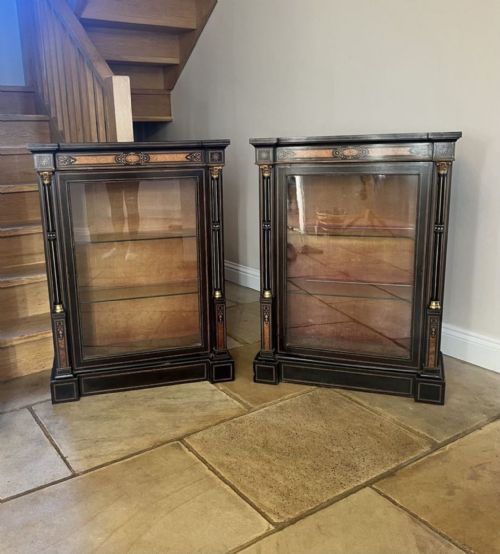
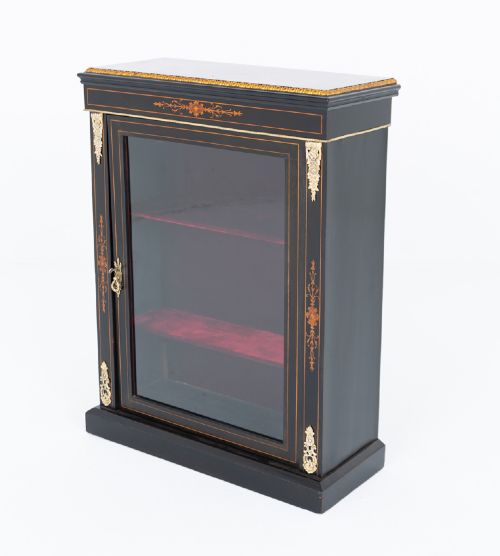


Ebonised Inlaid Display Cabinet
An ebonised inlaid display cabinet brings deep dark timber and bright contrasting marquetry together to showcase prized possessions.
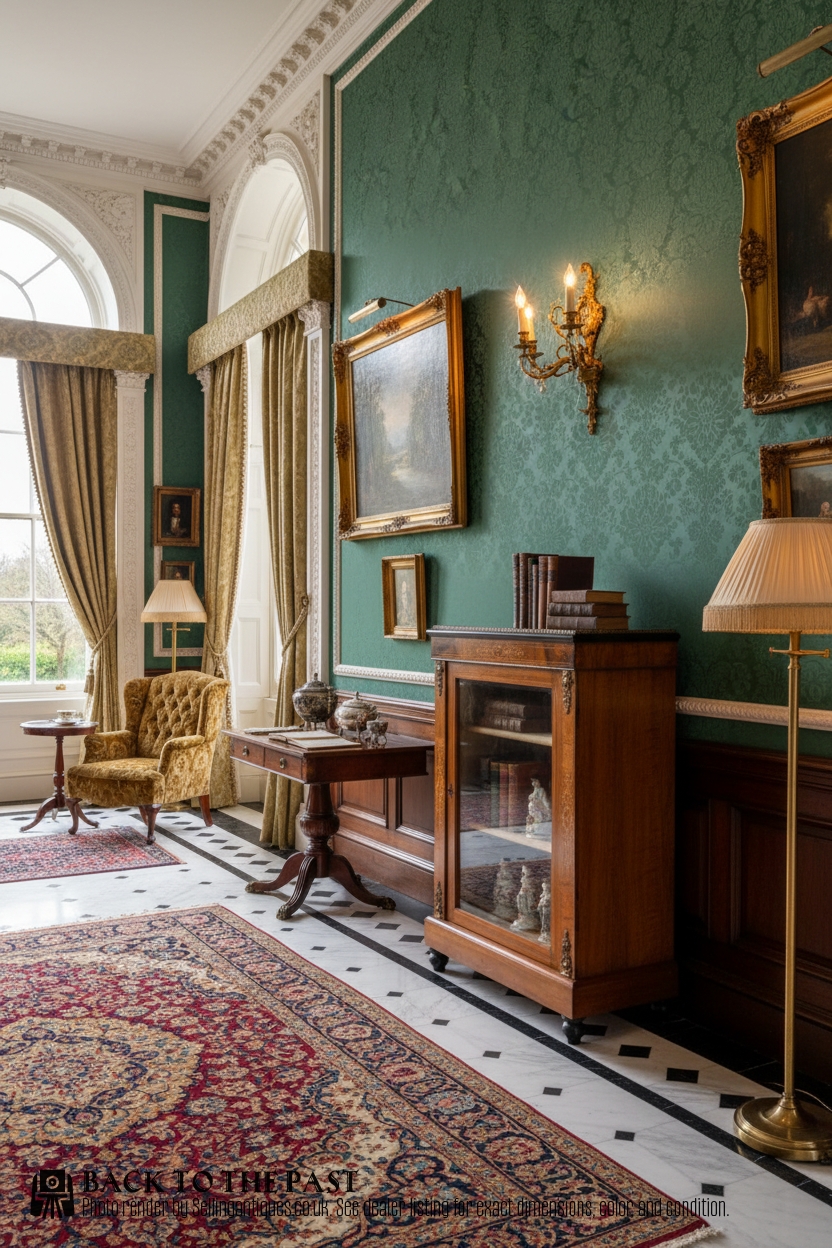
Ebonised Inlaid Display Cabinet
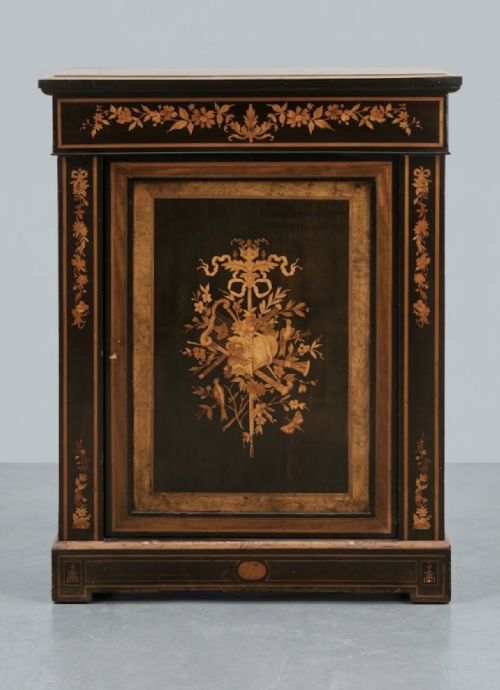
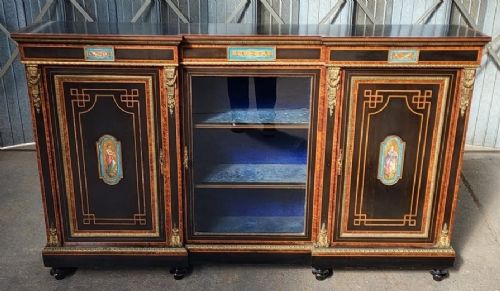
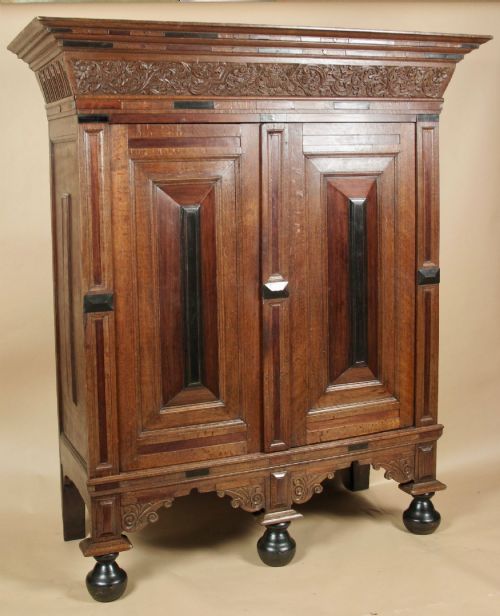
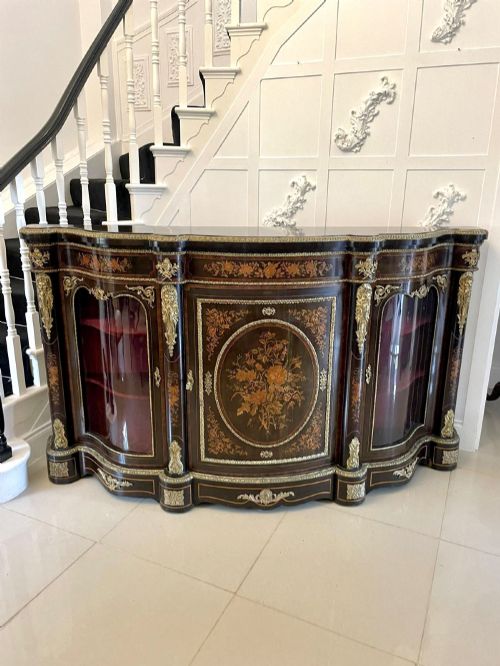
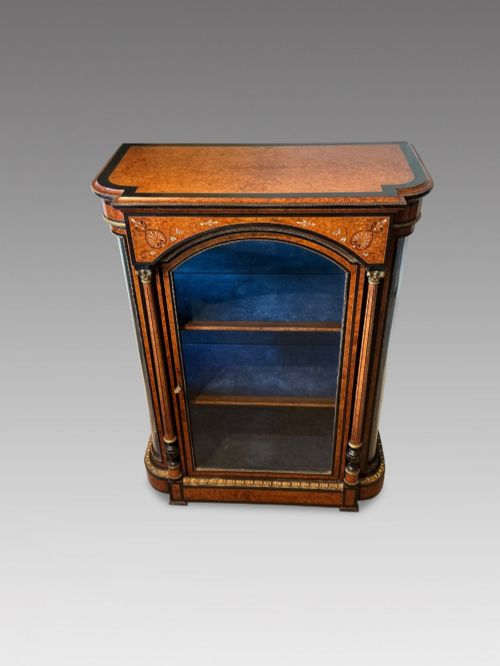
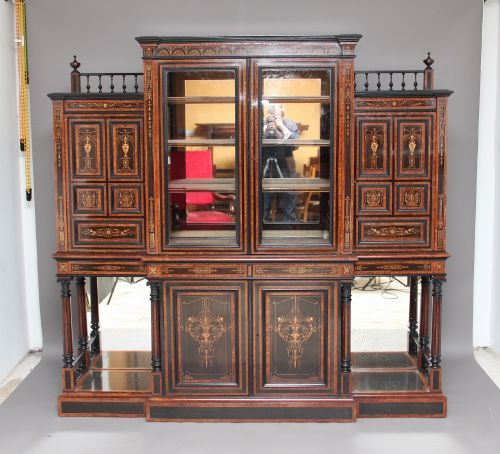
When searching for an ebonised inlaid display cabinet, buyers encounter nineteenth-century forms designed to display porcelain and curiosities within formal reception rooms. The selection on this page centres heavily on Victorian and nineteenth-century examples, spanning multi-door credenzas, breakfront bookcases, and compact pier cabinets.
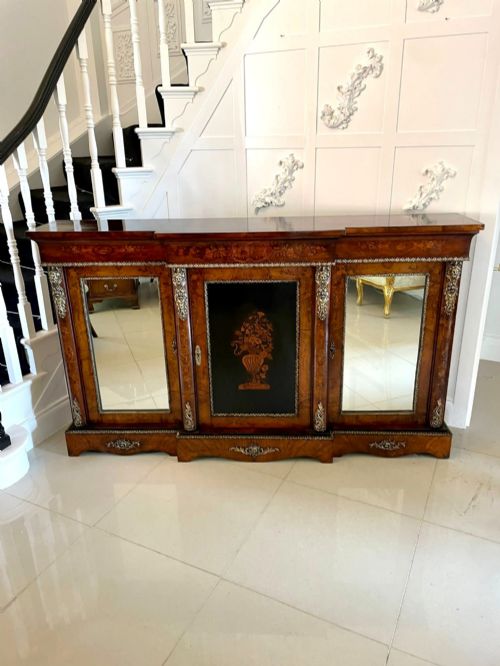
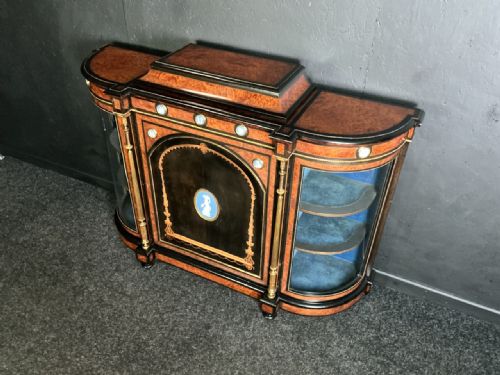
Makers and workshops from Britain and France produced these pieces using dark finishes paired with contrasting fruitwood inlays or brass metalwork. Alongside freestanding glazed display units, the listings include credenzas with mirrored backs and serpentine fronts that served both decorative and storage functions.
Materials and construction
Cabinet makers utilised dense hardwoods such as walnut and oak as foundations, applying a dark ebonised stain to mimic expensive ebony. Surfaces received intricate marquetry in amboyna, burr walnut, and contrasting light timbers, often detailed with engraved brass or tortoiseshell in the Boulle technique.
Ormolu and gilt bronze mounts provided structural enrichment around glass panels and door frames. Interiors frequently incorporated velvet or fabric-lined shelving behind glazed doors to frame displayed items effectively.
Nineteenth-century cabinet makers occasionally tucked secret compartments behind intricate marquetry panels for safe-keeping private correspondence.
Gradations in quality
Quality rests in the precision of the marquetry and the crispness of the cast ormolu mounts rather than mere ornamentation. Superior examples display seamless veneer matching across curved serpentine fronts and rigorous structural integrity in the door frames.
The sophistication of the internal fitting and the depth of the ebonised finish distinguish standard production from exceptional workshop output. Pieces retaining their original glass panes and unified hardware demonstrate higher original status.
Lamb of Manchester·August Ungethüm·Gillow
The Ebonised Inlaid Display Cabinet Glossary
- Ebonised
- Wood finished with a black stain or polish to imitate solid ebony. This treatment grew especially popular during the Victorian era for furniture with classical or aesthetic influences.
- Marquetry
- Patterns formed by inserting decorative veneer pieces into a wood panel. Craftsmen utilised various stained and natural timbers to create floral or geometric compositions.
- Ormolu
- Gilded bronze mounts applied to furniture edges and corners for decoration. The technique requires meticulous casting and gold amalgamation.
- Credenza
- A low cabinet enclosed by doors, originating as a sideboard. Nineteenth-century iterations often feature central glass display sections flanked by cupboards.
- Pier cabinet
- A narrow cabinet designed to stand against the wall space between windows. These pieces typically incorporate a single glazed door and shallow depth.
Ebonised Inlaid Display Cabinet: Frequently Asked Questions
What rooms suit an ebonised inlaid display cabinet?
These cabinets function well in sitting rooms or studies where controlled lighting protects delicate interior displays. Their dark surfaces anchor lighter interior schemes while providing vertical storage.
Placing them away from direct sunlight preserves both the polished timber finish and any fragile internal fabric linings from fading over time.
How do I clean an ebonised surface?
Dusting with a soft, dry cloth prevents particulate accumulation without introducing moisture to the dark finish. Avoid abrasive household cleaners or silicone-based polishes that degrade historic polish.
Occasional application of specialist paste wax maintains the sheen of the wood without altering the tone of the ebonised treatment.
What is the difference between a credenza and a pier cabinet?
A credenza offers a long, low profile with multiple doors, frequently incorporating curved ends and central display sections. These units were designed for principal reception rooms.
A pier cabinet stands tall and narrow, built specifically to occupy the wall space situated between architectural windows. They typically feature a single door and simpler floor plans.
How were these cabinets used originally?
Victorian households utilised these glazed pieces to exhibit imported porcelain, glass collections, and decorative objects. The mirrored backs often fitted inside credenzas served to amplify light and reflect the displayed items.
Cupboard sections below or beside the display zones provided secure storage for table linens, books, or writing materials.