
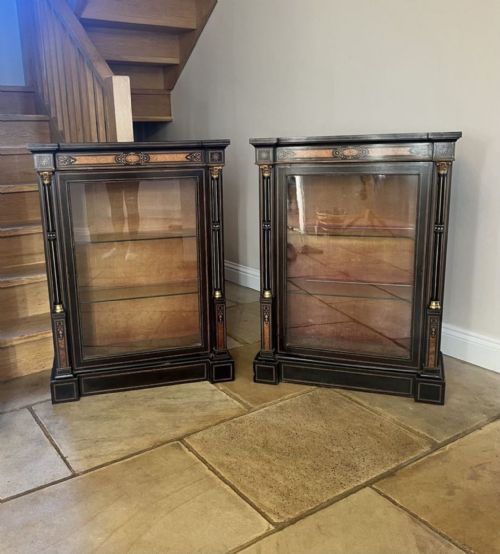
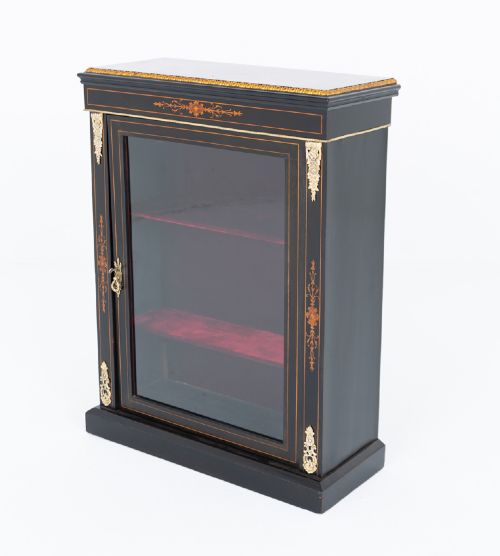


Ebonised Glazed Bookcase
An ebonised glazed bookcase delivers dark elegance, framing books and collections behind glass with deep, blackened wood.
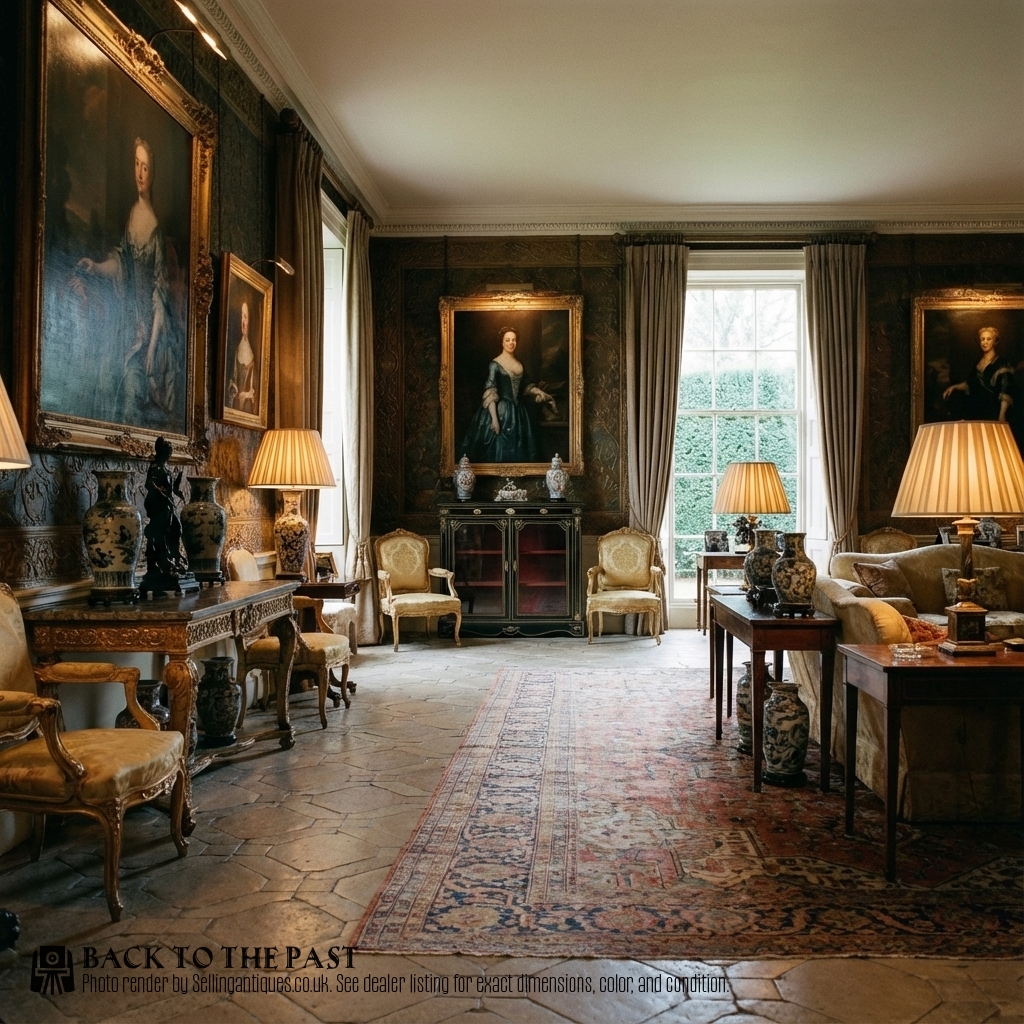
Ebonised Glazed Bookcase
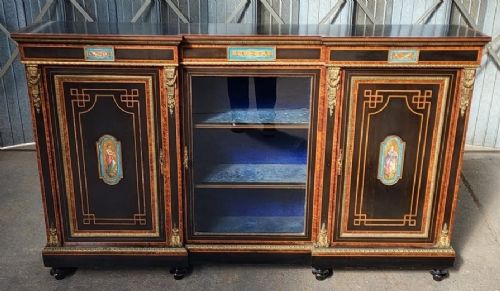
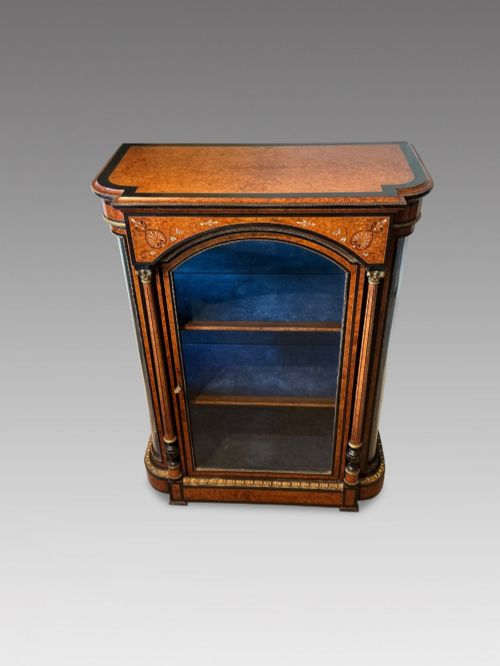
An ebonised glazed bookcase combines darkened wood with clear glass panels, designed to display and protect valuable volumes or curated objects. These pieces emerge predominantly from the Victorian and nineteenth century periods, alongside French Napoleon III and Aesthetic Movement influences.
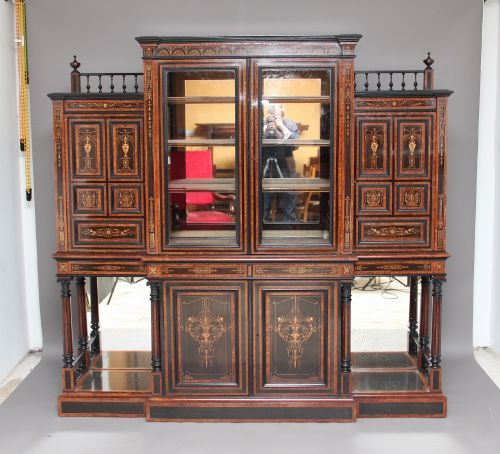
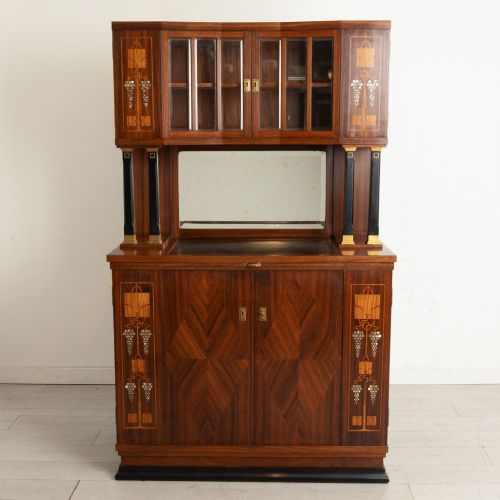
Buyers encounter numerous variants on this page, ranging from neat single-door pier cabinets to substantial breakfront bookcases and multi-door display cabinets. Many examples incorporate glazed doors flanked by timber framing, often housing adjustable shelving for practical domestic utility.
Origins stretch across English workshops, French ateliers, and Viennese studios, reflecting varied continental tastes. The core form remains consistent: a vertical timber carcass finished in black, fronted with glass to reveal the contents within.
How they were made
Maker's workshops built these carcasses using timbers such as walnut, oak, and amboyna, applying a dense black finish to simulate costly ebony. Artisans then integrated glass panels into the doors, securing them with delicate glazing bars.
Decoration relied heavily on brass mounts, ormolu, and intricate marquetry in tortoiseshell or contrasting woods. Craftsmen also applied parcel-gilding, porcelain plaques, and fine metal stringing to accentuate the dark surfaces.
Listings feature Victorian, 19th Century, and 1920s periods, incorporating glass, ebonised wood, brass, ormolu, porcelain, tortoiseshell, walnut, and burr walnut.
What varies in quality
Quality rests upon the depth of the ebonisation and the crispness of the secondary timbers beneath the dark finish. Superior examples display meticulous brass inlay and heavy, finely chased ormolu mounts rather than cast metal shortcuts.
The precision of the door joinery and the clarity of the original glass pane manufacture distinguish finer workshop output. Robust structural integrity in the plinth and cornice separates standard domestic furniture from exceptional cabinet work.
Lamb of Manchester·August Ungethüm
The Ebonised Glazed Bookcase Glossary
- Ebonised
- Wood treated with stain, paint, or chemical processes to imitate the dark, dense appearance of ebony. This finish became immensely popular during the nineteenth century for formal cabinet work.
- Ormolu
- Gilded bronze mounts applied as decorative ornaments to furniture corners, friezes, and door surrounds. The technique involves mercury gilding on bronze bases.
- Pier Cabinet
- A narrow display cabinet specifically designed to stand against the wall space between windows. These compact glazed units suit smaller interiors.
- Breakfront
- A cabinet front featuring sections that project forward from a central recessed plane. This architectural arrangement adds visual depth to large bookcases.
Ebonised Glazed Bookcase: Frequently Asked Questions
What rooms suit an ebonised glazed bookcase?
These dark cabinets anchor formal drawing rooms, studies, and libraries where deep tones complement traditional seating and heavy textiles. Their glass doors prevent visual crowding in compact spaces.
Placing them away from direct sunlight protects both the darkened wood finish and the paper bindings of stored volumes from fading.
How do I care for ebonised wood?
Maintain the dark surface by dusting gently with a dry, soft cloth to prevent abrasive particles from scratching the blackened finish. Avoid silicone polishes that build up a greasy residue over time.
Feed the timber occasionally with a suitable wax formulated for dark antiques to preserve the subtle lustre of the polished surface.
How can I tell Victorian pieces apart?
Victorian examples often feature combinations of walnut or amboyna beneath the black finish, frequently accented with Sevres porcelain plaques or gilt incising. French pieces from the same era lean towards elaborate brass and tortoiseshell marquetry.
English iterations tend to display restrained Aesthetic Movement geometry or robust architectural cornices compared to continental counterparts.
Were these cabinets meant only for books?
Many structures served a dual purpose as display cabinets for ceramics, curiosities, and scientific instruments alongside bound volumes. Adjustable shelving allowed owners to reconfigure interiors for diverse collections.
Music cabinets and pier cabinets similarly blurred the line between storage and exhibition space in nineteenth-century homes.