



Ebonised Frame Silhouette
An ebonised frame silhouette delivers the quiet dignity of Georgian and Regency portraiture, offering a direct window into the past that collectors treasure for its stark contrast.
Ebonised Frame Silhouette
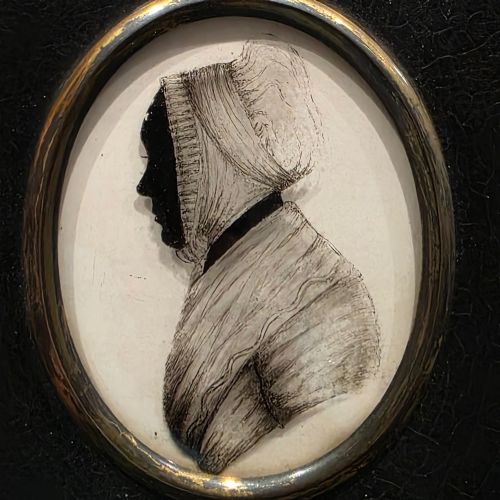
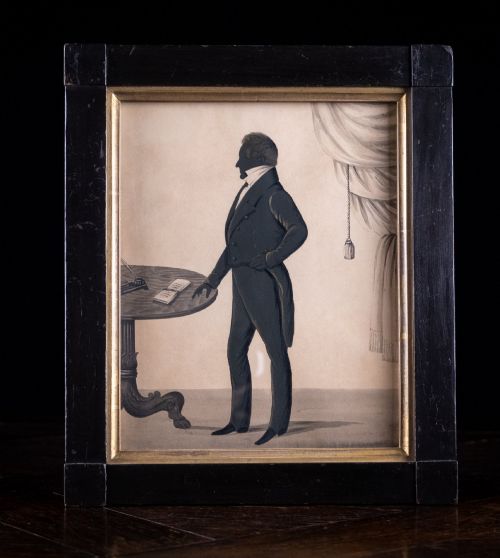
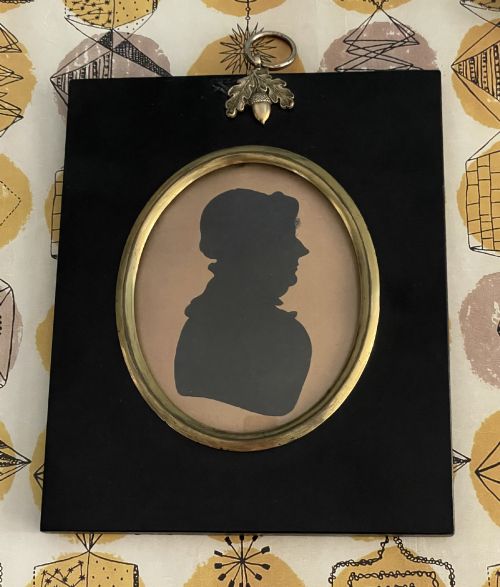
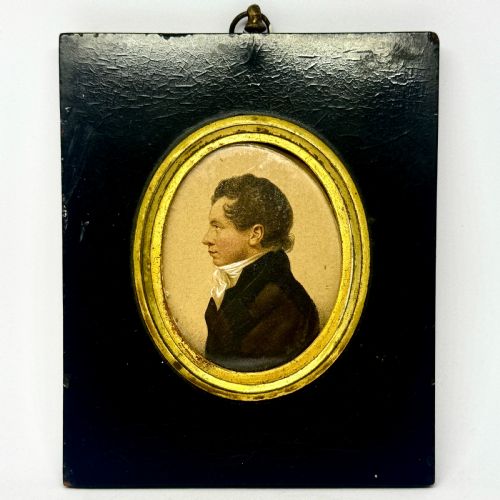
When you search for an ebonised frame silhouette, you are looking at miniature portraiture framed in dark wood, spanning the eighteenth and nineteenth centuries. These pieces capture sitters through cut paper, paint, or reverse painting on glass.
The versions you are most likely to meet on this page hail from the Georgian and Regency periods. They appear as framed wall art or portable portrait miniatures, often featuring notable subjects rendered with remarkable precision.
How they were made
Craftsmen shaped wood into dark, ebonised frames to enclose the delicate imagery. These frames frequently house glass panels that protect the fragile contents within.
Some historical sitters gaze across the room with such stern precision that guests often lower their voices when walking past.
What varies in quality
The finesse of the silhouette cutter or painter dictates the superior pieces in this range. A deft hand captures the exact likeness and posture of the sitter with minimal lines.
The condition of the original ebonised wood and the preservation of the glass and painted details separate a standard item from a truly distinguished example.
George Atkinson·James Gillespie·Thomas London·John Miers
The Ebonised Frame Silhouette Glossary
- Ebonised wood
- Timber treated to resemble ebony, providing a deep black finish common in framing.
- Reverse painted
- A technique where pigment is applied to the back of a glass panel so the image is viewed through the front.
- Cut paper
- A method of creating silhouettes by snipping black paper with fine scissors.
- Silhouette
- A portrait profile filled in with a solid dark colour, usually black.
Ebonised Frame Silhouette: Frequently Asked Questions
What is an ebonised frame silhouette?
It is a historical portrait featuring a profile likeness housed inside a dark, ebonised wooden frame. These works date primarily from the eighteenth and nineteenth centuries.
They serve as direct records of historical individuals, executed through painted mediums or cut paper silhouettes.
How do I date a silhouette?
Dating relies heavily on the style of the frame, the clothing and hair of the sitter, and any accompanying inscriptions on the back. Regency and Georgian examples exhibit distinct sartorial trends.
Examining the materials, such as the type of glass and paper, provides further clues to the decade of creation.
Were silhouettes painted or cut?
Both methods were common practice among period artists. Some profiles were meticulously snipped from black paper, while others involved ink or paint applied directly to card or glass.
Artists frequently combined techniques, using gold leaf to illuminate jewellery and uniform details on the dark profiles.
How should I display them?
These pieces require placement away from direct sunlight to prevent the fading of paper and pigments. Maintaining stable indoor humidity protects the wooden frames and the glass.
Group displays work well on panelled or neutral walls, mirroring how portrait miniatures were arranged historically.