

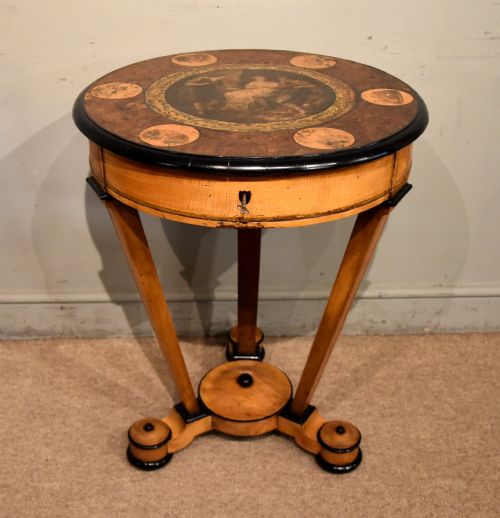
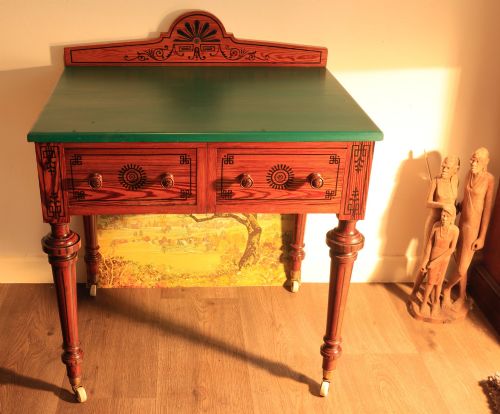


Ebonised Dressing Table
An ebonised dressing table brings dark, striking contrast to a bedroom, offering functional surface space alongside deep historical character.
Ebonised Dressing Table
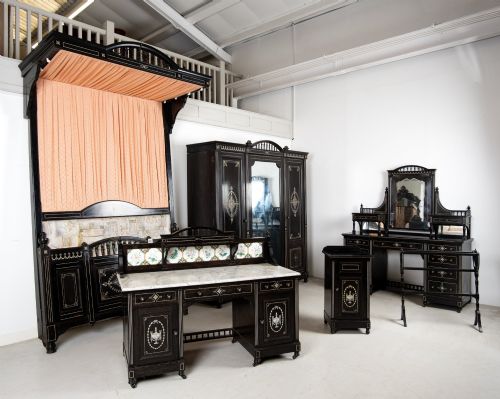
When you search for an ebonised dressing table, you encounter pieces defined by a dark, blackened finish designed to imitate expensive ebony. The selection includes various forms such as large Victorian pedestal desks, kidney-shaped tables, and multi-piece bedroom suites.
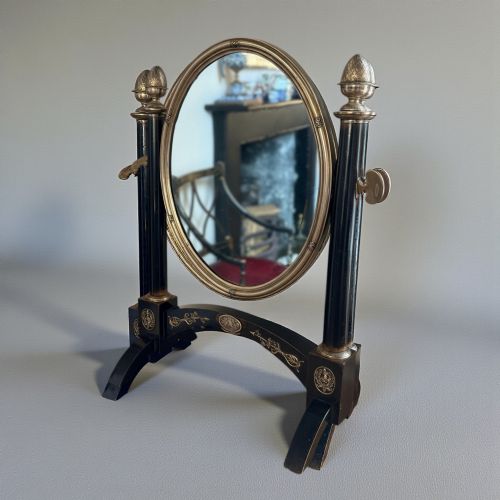
The objects span multiple periods, most notably the Victorian era and the Aesthetic Movement, alongside related pieces like dressing mirrors, writing tables, and poudreuses. Many examples incorporate contrasting details like gilt, inlay, or marble tops within their design.
How they were made
Craftsmen utilised timbers such as birch, walnut, and mahogany, applying dark stains or finishes to achieve the characteristic ebonised surface. This technique often paired with parcel gilt highlights or contrasting light wood inlays.
Higher-end pieces incorporated specialised materials such as ormolu mounts, ceramic tiles, bone inlay, and brass hardware. Glass plates feature in the associated dressing mirrors and adjustable table attachments.
Ebonised Dressing Table Retail Price Guide 2026
Typical asking prices for ebonised dressing table among the pieces listed under this phrase on Sellingantiques today, from the lower quarter to the upper quarter. They describe what is for sale here now, not the wider market.
Listings feature 19th century, Victorian, Edwardian, and 1920 periods, utilising ebonised wood, brass, glass, birch, ormolu, bone inlay, marble, and ceramic tiles.
What varies in quality
Quality rests in the depth of the ebonised finish and the precision of the decorative elements, such as hand-applied stencilling, marquetry, or parcel gilding. Finer pieces demonstrate superior joinery and retain original components like glass plates, hardware, and stencilled decoration.
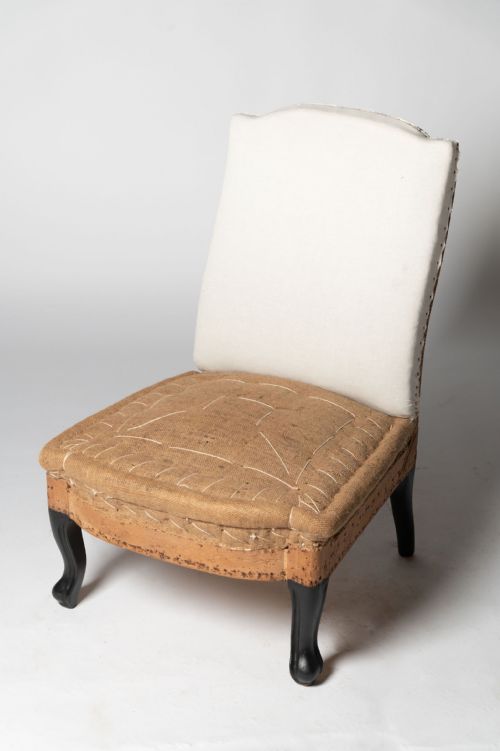
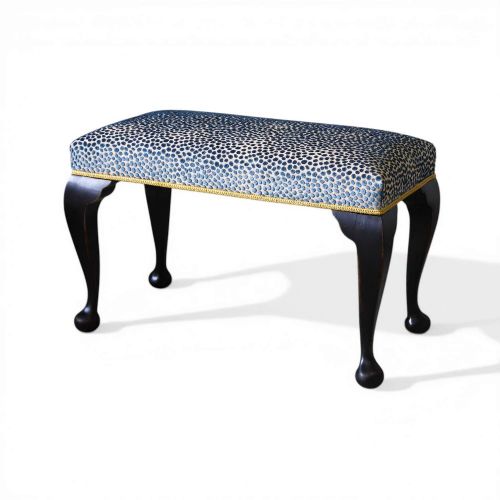
The complexity of the form dictates distinction, ranging from simple turned-leg tables to elaborate kneehole pedestal models with carved details and matching stools.
The Ebonised Dressing Table Glossary
- Ebonised
- Wood treated with stain, paint, or chemical processes to simulate the dark, dense appearance of ebony. This finish gained immense popularity during the Victorian and Aesthetic Movement periods.
- Poudreuse
- A French dressing table or vanity table equipped with folding lids, compartments, and often a built-in mirror. These pieces served aristocratic and bourgeois dressing rituals.
- Parcel Gilt
- A decoration technique where portions of an object are highlighted with thin gold leaf or gilt. It provides a striking contrast against an ebonised wooden surface.
- Aesthetic Movement
- A late 19th-century design style that emphasised visual beauty over narrative content, often featuring dark ebonised finishes and Japanese-inspired motifs.
- Kneehole Pedestal Table
- A large desk or dressing table featuring a central recess for the legs, flanked by pedestals of stacked drawers. They offer substantial storage alongside surface workspace.
Ebonised Dressing Table: Frequently Asked Questions
What periods do these pieces come from?
The inventory spans the Georgian, Regency, and Victorian eras, extending into Edwardian times and the 1920s. Victorian pieces, particularly those from the Aesthetic Movement, dominate the selection.
You will also find French Napoleon III and Biedermeier examples alongside later twentieth-century dressing table mirrors.
How do I care for ebonised wood?
Dust regularly with a soft, dry cloth to protect the darkened finish from scratches. Avoid placing the furniture in direct sunlight or near heat sources to prevent the wood from drying out.
Keep moisture away from the surface and consult a professional restorer before applying any wax or polish.
What materials accompany the black finish?
Makers combined ebonised wood with contrasting materials such as gilt, ormolu, brass, and bone inlay. Marble tops and ceramic tiles appear on specific table designs.
Secondary timbers like birch and walnut frequently form the underlying structure beneath the dark finish.
Are matching stools and mirrors common?
Some dressing tables are part of larger bedroom suites that include matching stools, benches, and writing desks. Adjustable dressing mirrors and triptych table mirrors also accompany the category.
Many pieces survive as standalone items, though matching upholstered stools occasionally appear alongside them.