

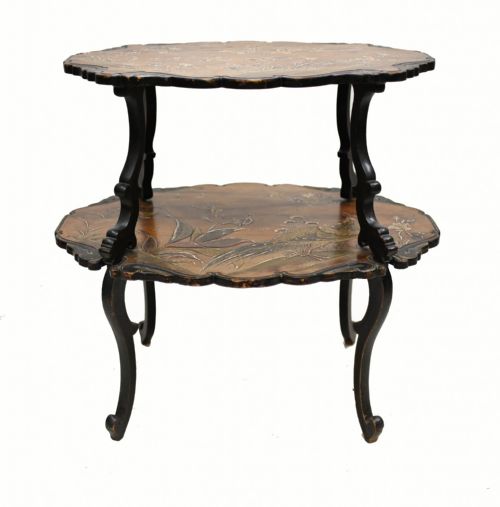


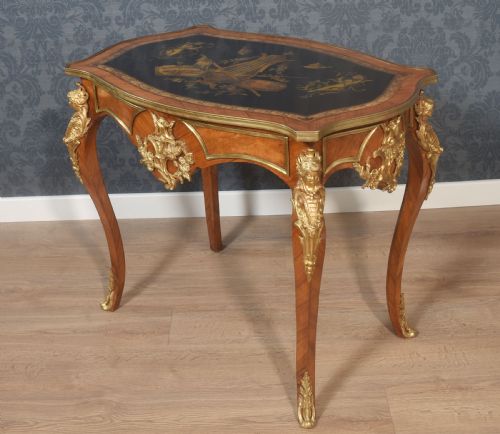


Ebonised Cabriole Table
An ebonised cabriole table brings dark sophistication to a room, offering the graceful curves of Louis XV style alongside deep, polished finishes.
Ebonised Cabriole Table
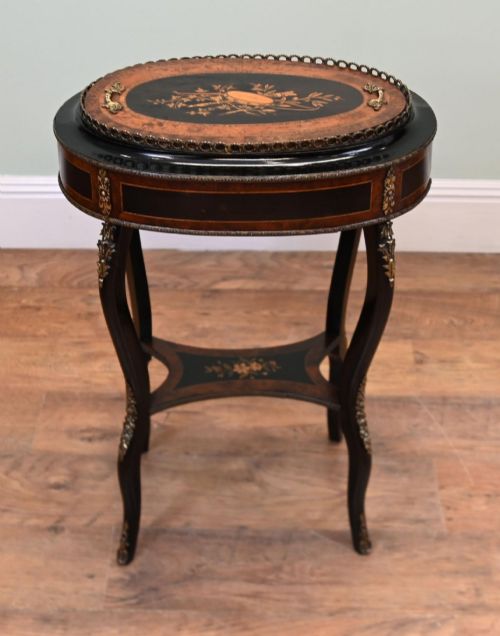
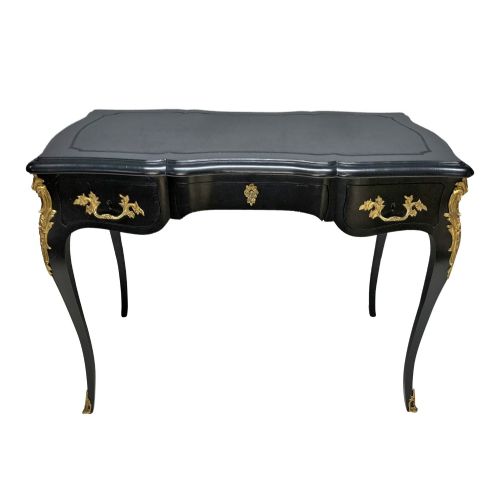
When you search for an ebonised cabriole table, you encounter dark, curved furniture primarily originating from the nineteenth and early twentieth centuries. These pieces encompass occasional tables, console tables, and writing desks finished in dramatic black surfaces alongside serpentine legs.
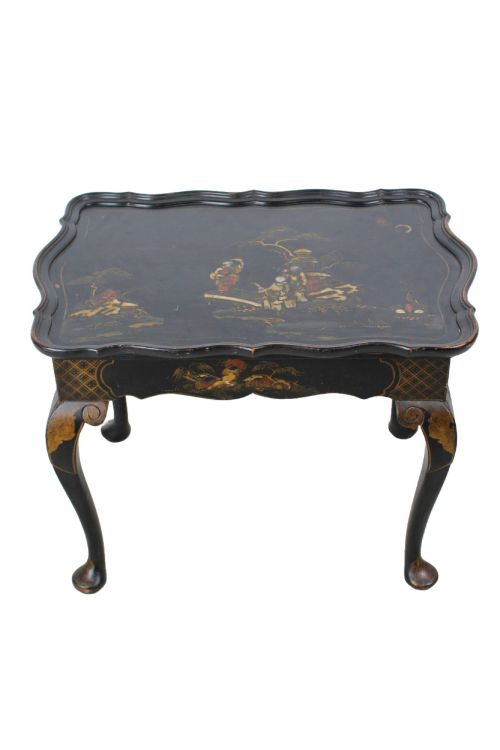
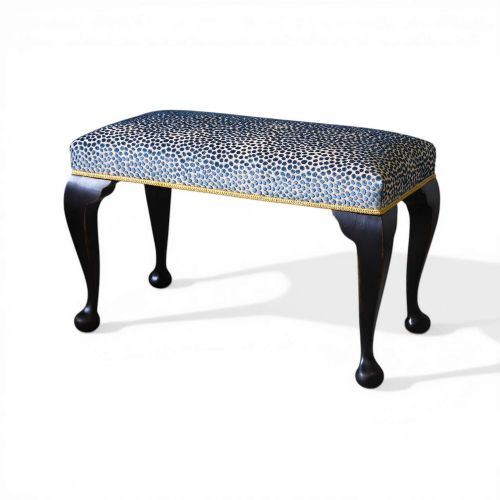
The selections on this page lean heavily towards French Napoleon III and Edwardian interpretations, often incorporating lacquer, japanning, or chinoiserie decoration. Alongside these tables, related forms such as plant stands and stools appear, sharing the same characteristic dark aesthetic.
Buyers frequently find that these tables serve effectively as centre pieces or decorative side supports in traditional and eclectic interiors alike. Their distinct silhouettes reflect revivals of historical European styles adapted for Victorian and Edwardian drawing rooms.
Materials and construction methods
Cabinet makers utilised hardwoods such as walnut or rosewood as foundations, applying specialised ebonising techniques to mimic costly ebony wood. Surfaces were subsequently finished with black lacquer or polished to achieve a deep, reflective sheen.
Many examples feature applied ornamentation including ormolu mounts, brass details, and gilt highlights to accentuate the dark wooden frames. Marquetry inlay, amboyna, and hand-painted chinoiserie motifs frequently enrich the tops of writing and card tables.
Ebonised Cabriole Table Retail Price Guide 2026
Typical asking prices for ebonised cabriole table among the pieces listed under this phrase on Sellingantiques today, from the lower quarter to the upper quarter. They describe what is for sale here now, not the wider market.
Listings feature items dated from the 1870s through to the Edwardian period, utilising ebonised wood, lacquer, and ormolu.
Distinctions in craftsmanship
The refinement of the carving along the cabriole legs sets superior examples apart, showing fluid, organic movement rather than stiff execution. Quality is further evident in the precision of the joinery and the depth of the hand-applied lacquer or polish.
Subtleties in surface decoration, such as intricate floral marquetry or finely detailed japanning and gilt work, elevate individual pieces. The retention of original brass mounts and ormolu details also dictates the standing of a table within the range.
The Ebonised Cabriole Table Glossary
- Ebonised wood
- Timber treated with stain, paint, or chemical processes to imitate solid ebony, popular in European furniture production.
- Cabriole leg
- A furniture leg featuring a double curve, typically arching outward at the knee and tapering inward toward the foot in imitation of animal limbs.
- Japanning
- A European imitation of East Asian lacquerwork, created by applying layers of varnish and heat-curing the surface before decoration.
- Étagère
- A piece of furniture consisting of open shelves for displaying small objects, frequently taking a tiered form.
- Ormolu
- Gilded bronze applied as decorative mounts and accents on nineteenth-century furnishings.
Ebonised Cabriole Table: Frequently Asked Questions
What is an ebonised cabriole table?
An ebonised cabriole table is a dark-finished piece of furniture defined by its curved legs, originating largely from the nineteenth century.
These tables include occasional, writing, and console variants, often decorated with lacquer or gilt details in French revival styles.
How do I care for ebonised wood?
Ebonised surfaces require gentle dusting with a soft, dry cloth to prevent micro-scratches on the dark polish.
Avoid placing these tables in direct sunlight or near heat sources to protect the lacquer and prevent wood movement.
What periods do these tables represent?
The pieces available predominantly span the Victorian and Edwardian eras, with strong influences from French Napoleon III and Louis XV revival styles.
Craftsmen during these periods frequently looked back to earlier European designs, reinterpreting them with dark finishes and exotic decorative elements.
Where should I place a console table?
Console tables fit naturally against a hallway or drawing room wall, often positioned beneath a mirror or artwork.
Their shallow depth allows them to function as decorative display surfaces without obstructing walkways in compact spaces.