



Eastern Carved Side Table
An eastern carved side table brings intricate geometry and rich surface inlay into a room, offering both practical utility and distinct regional character.
Eastern Carved Side Table
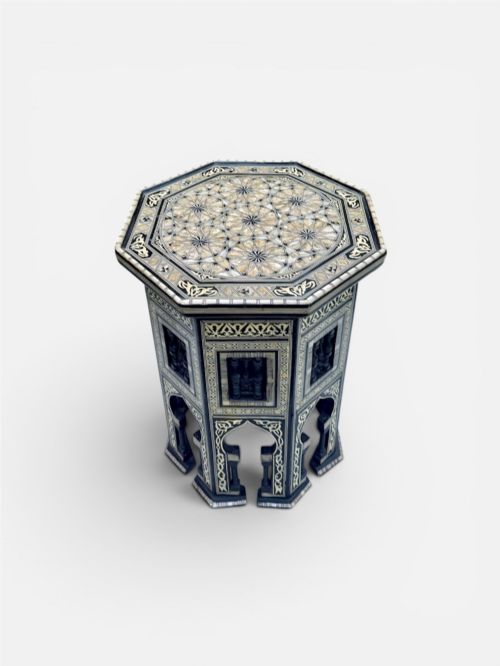
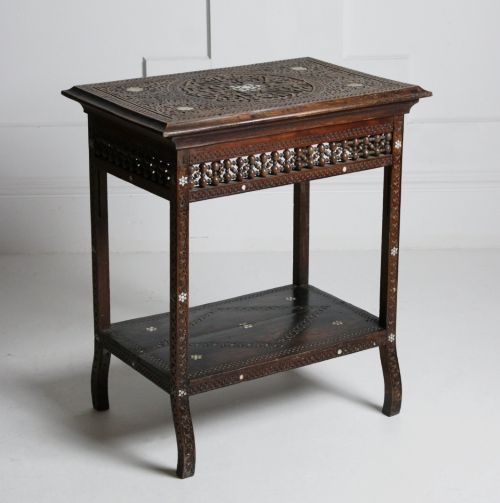
When you search for an eastern carved side table, you encounter low occasional pieces, folding coffee stands, and multi-tiered surfaces originating from diverse traditions. These tables showcase elaborate hand carving across hardwood, rosewood, and teak frameworks.
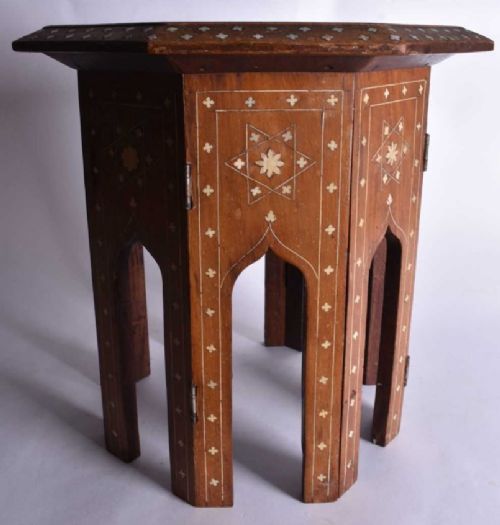
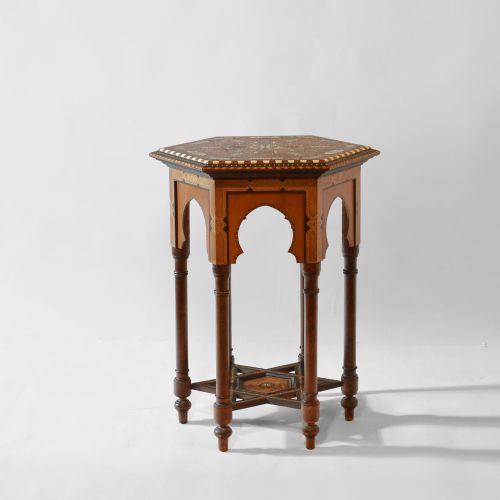
The versions most frequently met on this page span the Victorian era into the early twentieth century, incorporating Anglo-Indian, Moorish Revival, and Syrian design vocabularies. Such pieces often utilise octagonal or hexagonal top formations designed to fold or dismantle easily.
Makers and workshops across the Middle East, India, and the Far East produced these works for both domestic use and export to Western markets. Their forms function naturally as lamp stands, wine tables, or central decorative focal points.
Materials and construction methods
Construction relies heavily on dense hardwoods such as teak, walnut, and rosewood, carved deeply with foliate and geometric motifs. Artisans also employed softer wood carcase structures to support extensive surface decoration.
Surface ornamentation defines these tables through intricate mother-of-pearl inlay, bone elements, and brass wirework. Individual pieces combine geometric parquetry with pierced fretwork panels assembled without modern mechanical fasteners.
Several tables retain clever folding mechanisms that transform a rigid octagonal surface into a flat wooden disc ready for instant travel.
Markers of quality and craftsmanship
Quality rests in the precision of the geometric inlay and the depth of the hand carving. Pieces featuring dense, intact mother-of-pearl work without significant losses demonstrate superior workshop standards.
The structural integrity of folding joints and the tightness of wooden joinery separate standard export pieces from finer commission work. Superior examples maintain crisp carving edges and balanced proportions across multi-tiered or panelled surfaces.
Liberty and Co
The Eastern Carved Side Table Glossary
- Octagonal top
- A geometric surface possessing eight distinct sides, commonly found on folding tables from Damascus and Anglo-Indian workshops. This shape allows complex inlay patterns to radiate symmetrically from the centre.
- Mother-of-pearl
- The iridescent inner layer of mollusc shells, utilised by artisans to create luminous geometric or floral accents. Pieces of shell are cut precisely and pressed into carved recesses within the wooden substrate.
- Moorish Revival
- A nineteenth-century architectural and decorative style drawing inspiration from traditional Islamic art of Spain and North Africa. It is characterised by horseshoe arches, intricate lattice work, and star polygons.
- Mamluk Revival
- A design movement referencing the metalwork, glass, and decorative arts of the Mamluk Sultanate. Tables in this style often incorporate brass inlay and geometric strapwork recalling medieval Cairo.
Eastern Carved Side Table: Frequently Asked Questions
How do I care for inlaid wood?
Dust surfaces regularly with a soft, dry cloth and avoid placing wooden tables near direct heat sources or strong sunlight. Natural materials like bone and mother-of-pearl benefit from minimal handling and stable indoor humidity.
Refrain from using liquid polishes or abrasive cleaners that might loosen tiny inlaid sections. Professional waxing preserves the dry, historic finish of the timber without harming delicate adhesive bonds.
Are these tables sturdy enough for daily use?
Many folding and occasional tables were built to be portable, meaning their stability depends on the tightness of the original hinges and wooden pins. While they easily support lamps, books, or tea services, heavy loads should be avoided.
Checking the alignment of folding bases ensures the top rests evenly without wobbling. Gentle handling prevents strain on intricate fretwork and pierced wooden panels.
How can I tell regional styles apart?
Syrian and Damascus tables frequently feature dense mother-of-pearl mosaic work combined with walnut or softwoods in geometric star patterns. Anglo-Indian pieces tend to display deep overall floral carving on dense teak or rosewood.
Moorish Revival designs emphasise architectural fretwork and lattice panels, whereas Mamluk Revival examples lean heavily on contrasting brass inlay. Studying the choice of timber alongside the inlay medium clarifies the likely geographic origin.
What is the purpose of a folding top?
Folding table bases allowed nineteenth-century travellers and homeowners to store or transport surfaces with ease. The hinged or interlocking wooden framework collapses flat while remaining surprisingly stable when locked into position.
This practical feature reflects the portable nature of campaign and export furniture popular during the Victorian period. Today, it offers flexibility for arranging smaller rooms or occasional display spaces.