

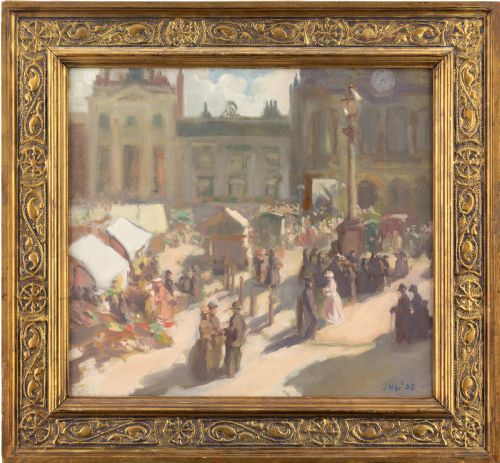


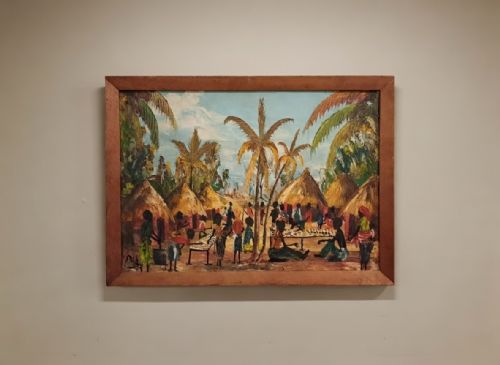


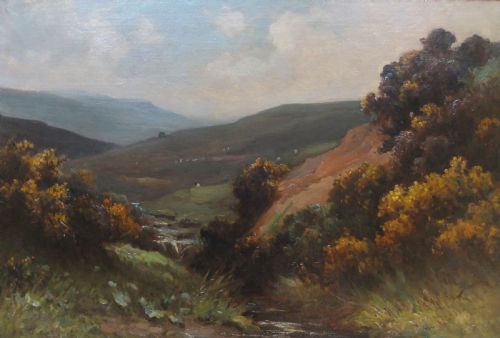

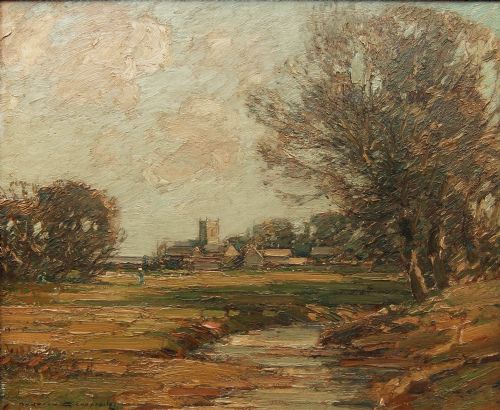
Earthy Tone Oil Painting
These earthy tone oil painting works bring muted, natural palettes and painterly brushwork into interiors through landscapes and genre scenes.
What these pieces are
An earthy tone oil painting comprises historical artworks executed in oil paint upon supports such as canvas, board, and wood. The selection spans the nineteenth century through the mid-twentieth century, capturing rural landscapes, pastoral views, and village scenes.
Buyers encounter British Impressionism, nineteenth century Italian works, Barbizon style landscapes, and twentieth century British school paintings. Common subjects include Yorkshire farmyards, coastal towns, and figures resting by rivers.
The most frequent items on this page are landscape oil paintings on canvas or board dating from around nineteen hundred to nineteen thirty. These works often display subdued natural pigments and traditional framing.
How they were made
Artists applied oil paint using brushwork techniques onto prepared canvas stretched over wooden frames or directly onto wooden boards. The pigment mixtures rely on ochres, umbers, and siennas to create the characteristic natural palette.
Surviving works frequently retain their period frames constructed from wood and moulded composition, sometimes finished with gilt accents. The physical supports show the ageing characteristics typical of canvas and board from these periods.
Retail Price Guide 2026
Typical UK retail prices for earthy tone oil painting, calculated from the Sellingantiques database of over a million retail prices indexed since 2003. This retail price guide relies exclusively on Sellingantiques data; no external sources or auction records are used, so the figures do not describe the wider market.
Materials recorded across the inventory include canvas, oil paint, wood, board, gilt, and moulded composition.
What varies in quality
The distinction between standard works and superior examples lies in the confidence of the brushwork and the depth of the tonal harmony. Masterful handling of light and shadow within a restricted palette elevates a composition significantly.
Provenance and documentation also separate pieces, as works with identified artists, studio sale stamps, or specific exhibition histories command greater interest. The preservation of the original paint surface without extensive overpaint remains a key factor.
John Hodgson Lobley·Herbert Royle·William JB Jenkins·Vincenzo Irolli·Kershaw Schofield·George F Wetherbee·William Greaves
The Earthy Tone Oil Painting Glossary
- Canvas
- A heavy woven fabric stretched across a wooden stretcher frame to serve as a support for oil paint. It provides a slightly flexible surface that responds to atmospheric changes.
- Board
- A rigid flat panel made of wood or compressed material used as an alternative to canvas. Artists frequently utilised board for smaller plein air studies.
- Gilt
- A thin layer of gold leaf or gold-coloured metallic finish applied to the surface of picture frames. It adds a decorative border that catches ambient light.
- Barbizon School
- A nineteenth century French art movement focused on realistic landscape painting en plein air. Practitioners emphasised natural tones, atmospheric skies, and rural realism.
Frequently Asked Questions
What periods do these paintings cover?
The available selection spans from the nineteenth century through to nineteen sixty. The majority originate from the early decades of the twentieth century.
Specific dates within titles reference either the year of creation or the estimated period established by dealers based on stylistic evidence.
What surfaces are used for these artworks?
Paintings in this category utilise canvas stretched over wooden frames as well as flat wooden boards. Oil paint is the primary medium across all listed items.
Support materials often show their age through natural craquelure and the patina of the underlying wood or fabric.
How should I hang an oil painting?
Hang oil paintings away from direct sunlight and sudden temperature shifts to protect both the canvas and the painted surface. Ensure the wall fixings are appropriate for the weight of the frame.
Most pieces arrive ready to hang with traditional picture wire secured to the original wooden stretcher or frame.
Are these paintings signed by the artists?
Several pieces feature visible signatures or attribution to named historical artists, while others include studio sale provenance or exhibition labels. A few works bear indistinct initials.
Signatures provide direct attribution to painters associated with British Impressionism, the Barbizon style, or regional schools.