

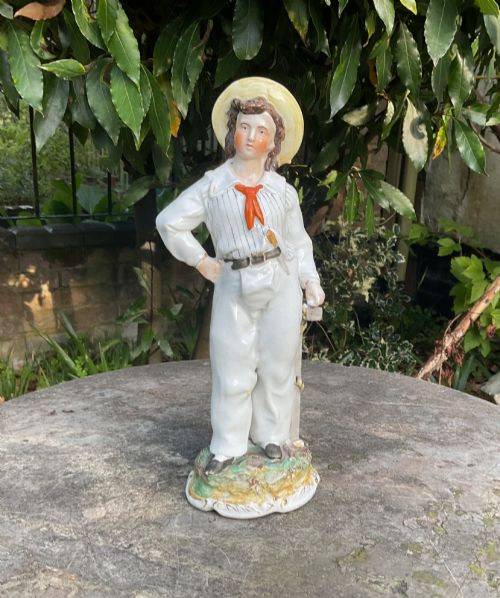


Earthenware Royal Figurine
An earthenware royal figurine brings Victorian pageantry into a room through hand-painted ceramic portraiture.
Earthenware Royal Figurine
When you search for an earthenware royal figurine, you encounter Victorian portrait pieces depicting monarchs, princes and political figures. These decorative items range from solo portrayals of Queen Victoria to pairs representing royal children and alliance groups.
The pieces on this page mostly take the form of Staffordshire pottery flatback figures and portrait groups. Subjects include Queen Victoria, Prince Albert, the Prince of Wales, Napoleon III and various royal couples.
Originating predominantly from the nineteenth century, these ceramic figures served as mantelpiece ornaments for households wishing to display loyalty to the crown. Makers fashioned them to commemorate weddings, reigns and international alliances.
Materials and construction methods
Potters built these figures using earthenware clay, shaping them into ceramic forms that were subsequently fired and glazed. Many examples utilise lead glaze to achieve a glossy surface finish.
Colour and detail arrived through enamel paint applied over or under the glaze, often accented with gilding or gilt highlights. Flatback construction meant the backs were left unpainted or partially finished for display against a wall.
Earthenware Royal Figurine Retail Price Guide 2026
Typical asking prices for earthenware royal figurine among the pieces listed under this phrase on Sellingantiques today, from the lower quarter to the upper quarter. They describe what is for sale here now, not the wider market.
Assessing quality in royal figures
The application of gilding and the richness of the cobalt blue glaze distinguish standard production from superior work. Pairs and complex group figures involving multiple subjects generally demand greater skill in balancing the ceramic composition during firing.
The Earthenware Royal Figurine Glossary
- Flatback
- A figure moulded with a finished front and a flat, unadorned reverse designed to sit flush against a wall or mantelpiece. This method saved time and materials during nineteenth-century production.
- Lead glaze
- A glossy coating containing lead oxide applied to earthenware before firing to seal the porous clay body. It gives the ceramic surface a reflective sheen.
- Enamel paint
- Opaque vitreous paint fused to the glazed ceramic surface through a low-temperature second firing. It provides the bright reds, blues and greens seen on Victorian figures.
- Gilt
- A thin layer of gold leaf or gold paint applied to crown details, clothing edges and titles. It highlights specific elements of the royal costume.
- Portrait group
- A ceramic piece depicting two or more named individuals together, such as royal couples or political allies. These compositions capture historical alliances and family milestones.
Earthenware Royal Figurine: Frequently Asked Questions
What periods do these figures come from?
The pieces listed originate in the nineteenth century, specifically spanning the Victorian era from the 1840s through to the 1880s.
Most items date to the mid-Victorian decades when Staffordshire potteries produced commemorative portrait pieces in large quantities.
Who do these figures depict?
Subjects include British royalty such as Queen Victoria, Prince Albert, the Prince of Wales and the Princess Royal. Other pieces show European leaders and family groups like Napoleon III.
Pair figures often represent royal children, wedding couples or political allies from nineteenth-century treaties.
Where were these ceramics made?
The majority originate from Staffordshire potteries in England, which dominated the production of portrait figures during the Victorian period. Factories such as Royal Worcester also contributed ceramic figures.
Potters in these regions created ornamental pieces for domestic display across Britain and the empire.
How do I display them at home?
Flatback figures suit placement on mantelpieces, bookshelves and console tables where they can rest against a wall. Their flat backs make them ideal for shallow ledges.
Keep them away from direct sunlight and dust them gently with a dry cloth to protect the enamel paint and gilt details.
How are pairs and groups different from single figures?
Single figures present one monarch or prince on an individual base, often with a painted title. Pairs show two matching figures, such as royal children on horseback or the Prince and Princess.
Portrait groups combine multiple named figures on a single base to record a specific family or political alliance.