


Earthenware Milk Pitcher
An earthenware milk pitcher brings tactile weight and domestic history to a table, spanning regional British folk traditions and refined neoclassical forms.

Earthenware Milk Pitcher
An earthenware milk pitcher represents a fundamental form of domestic pottery designed for daily service, appearing across eighteenth, nineteenth, and early twentieth century periods. When searching for an earthenware milk pitcher, buyers encounter a diverse selection ranging from robust regional folk art pieces to refined factory-produced cream jugs.
The pieces on this page span Georgian, Victorian, and Art Deco styles, with nineteenth-century examples dominating the selection. Forms include standard milk jugs, creamers, cow creamers, and pouch jugs, originating primarily from English, Welsh, and French workshops.
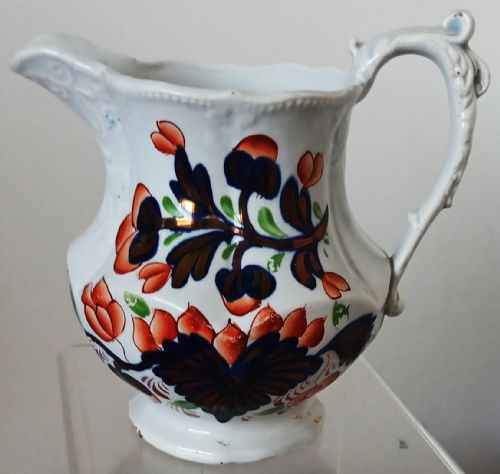
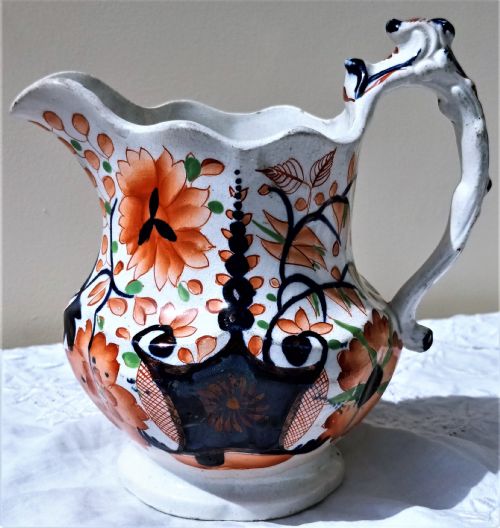
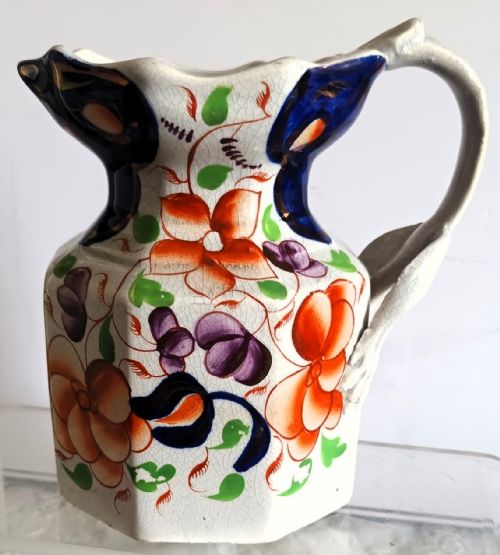
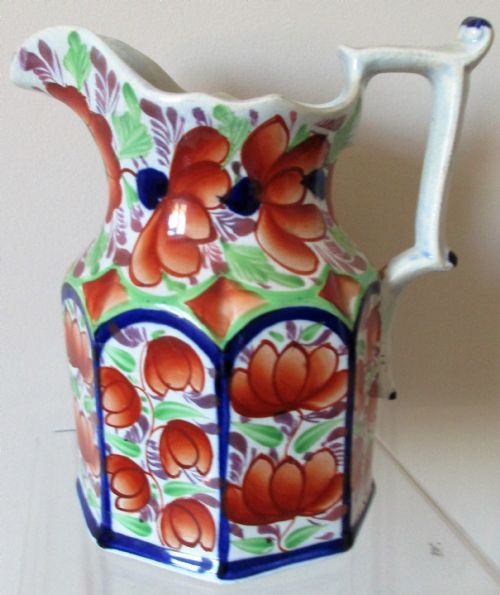
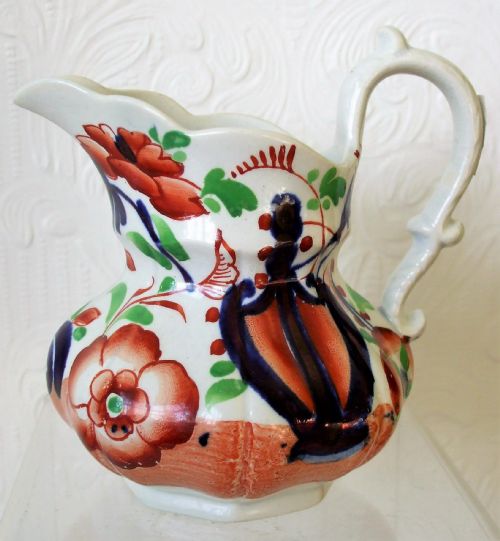
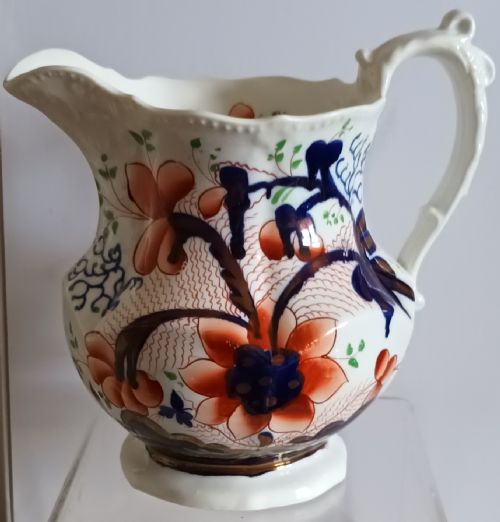
Regional British pottery traditions feature prominently, particularly Gaudy Welsh patterns such as Pagoda and Gower alongside Staffordshire earthenwares. These domestic vessels demonstrate both utilitarian purpose and decorative ambition through varied regional aesthetics.
What varies in quality
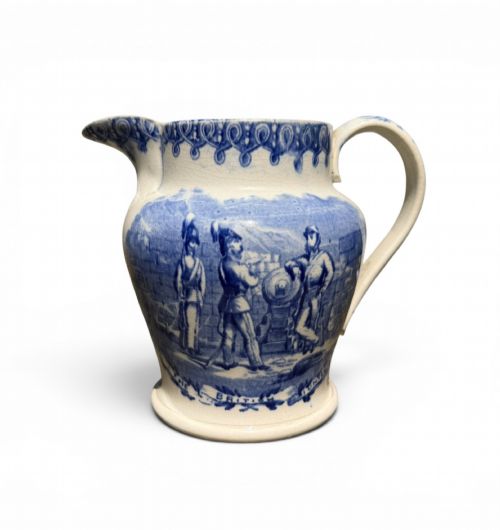
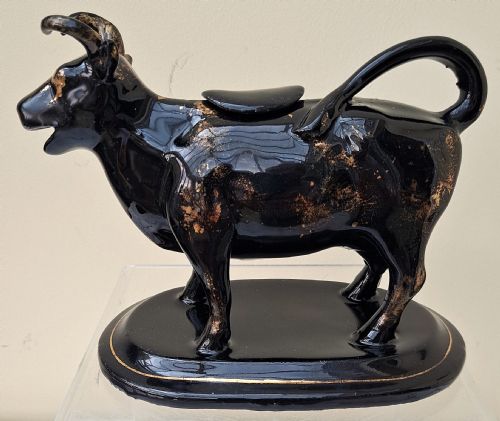
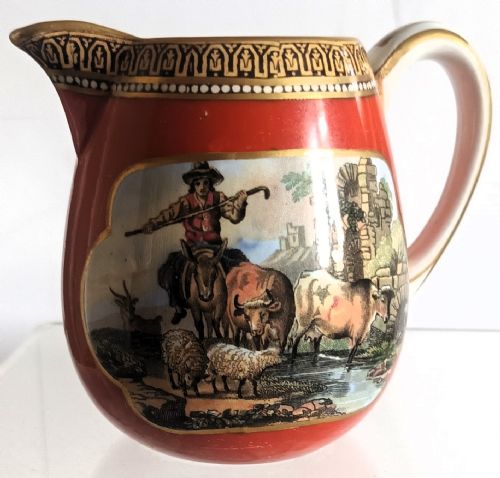
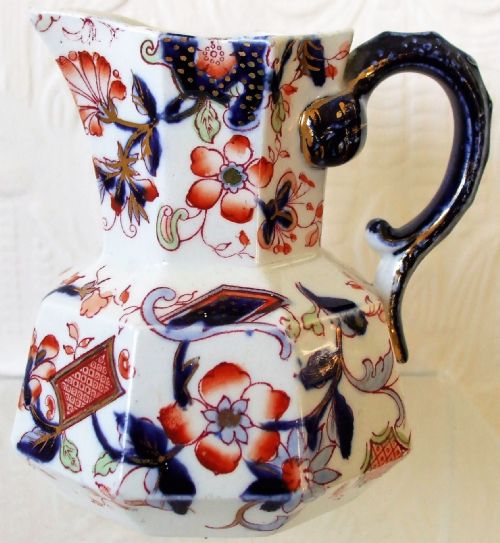
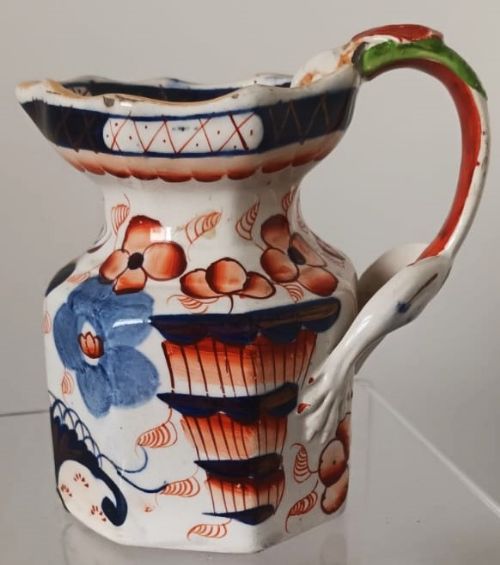
Quality in these pitchers rests upon the crispness of the moulding, the control of the glaze, and the precision of the hand-painted or transfer-printed decoration. Finer examples display balanced proportions and sharp relief work, particularly evident in faceted jugs and figural pieces like cow creamers.
The execution of regional patterns, such as the varied designs found on Gaudy Welsh pottery, demonstrates the skill of the decorator. Superior pieces maintain clean alignment in multi-coloured enamel schemes and harmonious integration of lustre or gilt accents.
Listings feature earthenware bodies decorated with copper lustre, enamel paint, and gilt highlights across Georgian and Victorian periods.
Keeling And Co·Masons·Leeds Pottery·Phillips And Bagster·Wedgwood By Keith Murray
The Earthenware Milk Pitcher Glossary
- Earthenware
- Porous pottery fired at lower temperatures than stoneware or porcelain, requiring a glaze to hold liquids. It forms the core material for the majority of these pitchers.
- Copper lustre
- A metallic glaze technique producing a reflective, copper-hued surface finish. It appears frequently on nineteenth-century Staffordshire jugs.
- Cow creamer
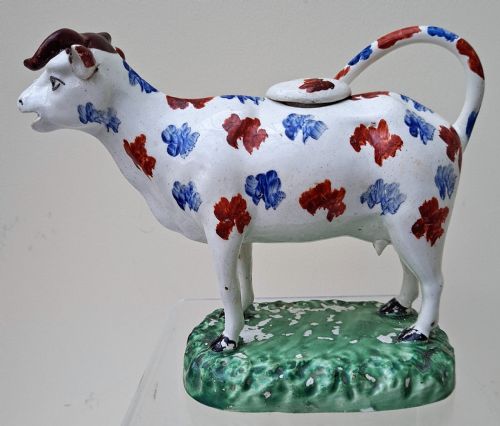
- A whimsical ceramic vessel shaped like a cow, with milk poured through an opening on the back. These functional cream jugs date across Georgian and Victorian periods.
- Gaudy Welsh
- A style of brightly decorated pottery featuring cobalt blue, copper lustre, and iron-red enamel. It is strongly associated with Welsh market wares of the nineteenth century.
- Creamware
- A refined, pale-cream-coloured earthenware developed in the eighteenth century by makers such as Leeds Pottery. It offered a lighter, more delicate alternative to heavier utilitarian clays.
Earthenware Milk Pitcher: Frequently Asked Questions
What is a cow creamer?
A cow creamer is a novelty milk jug modelled in the form of a cow, designed to sit on a tea table and dispense cream from its mouth.
These whimsical pieces were produced in earthenware throughout the Georgian and Victorian periods by English and Welsh potters.
How do I date an earthenware jug?
Dating relies on stylistic markers, material changes, and recorded factory periods visible in the pottery.
Eighteenth-century creamware exhibits lighter, neoclassical profiles, while nineteenth-century pieces often display bolder transfer-printed patterns or copper lustre finishes.
What is Gaudy Welsh pottery?
Gaudy Welsh pottery refers to brightly coloured earthenware items decorated with cobalt blue, copper lustre, and vibrant enamel paints.
These patterns, including names like Pagoda and Gower, were popular during the nineteenth century in Welsh and English households.
How were these milk pitchers used?
These vessels served a practical role in transferring milk or cream from storage containers to the dining or tea table.
Alongside domestic utility, many surviving examples functioned as decorative display items within period homes.
What is black basalt?
Black basalt is a fine-grained, unglazed black stoneware or earthenware body developed during the eighteenth century.
It provides a smooth, dark surface that mimics antique stone and adds textural contrast to a collection of glazed ceramics.