




Earthenware Decorative Wall Platter
An earthenware decorative wall platter brings bold colour and pattern to a room, offering large-scale ceramics made to hang rather than dine from.
Earthenware Decorative Wall Platter
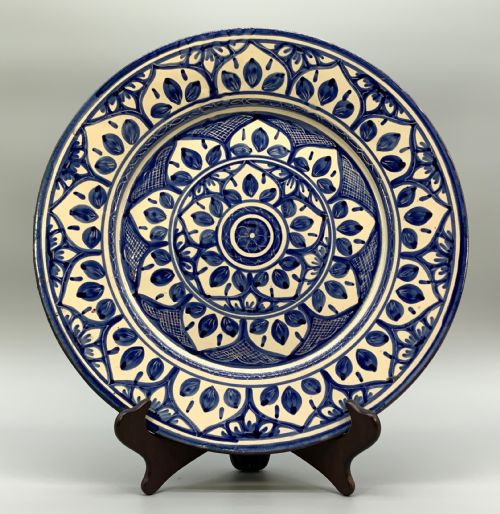
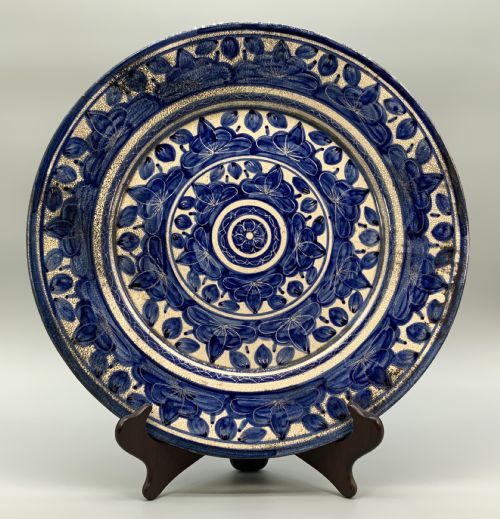
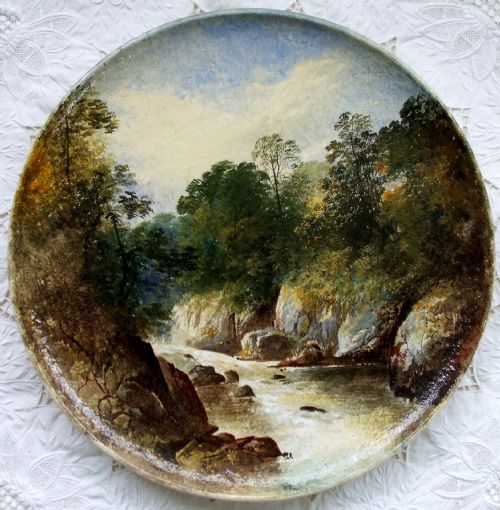
When you search for an earthenware decorative wall platter, you encounter large chargers, dishes, and plaques designed primarily for display rather than the table. These pieces span centuries of production, from eighteenth-century Delft chargers to nineteenth-century majolica and twentieth-century art pottery.
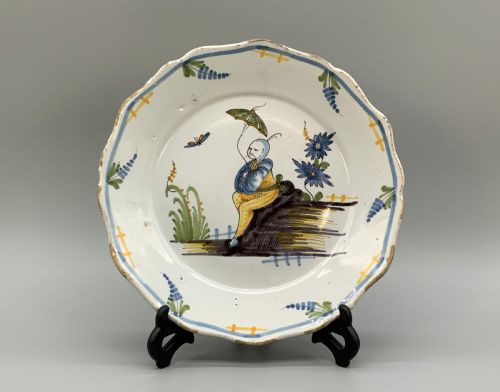
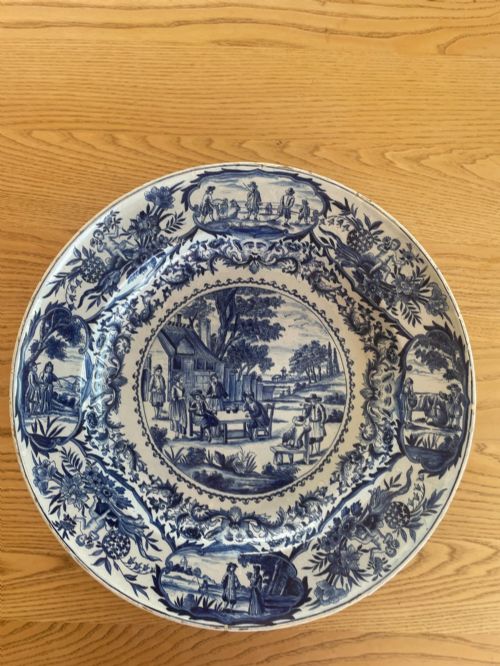
The most common examples on this page are eighteenth-century and nineteenth-century earthenware dishes decorated in blue and white, alongside polychrome and manganese interpretations of Dutch, Moorish, and Renaissance styles.
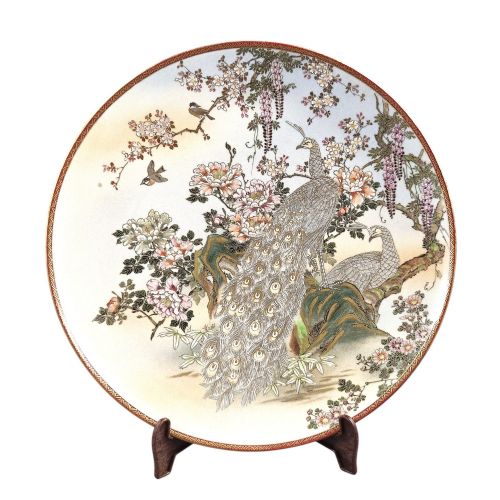
Makers and regional potteries across England, France, Italy, Holland, and Japan produced these large display surfaces, employing varied glazing and transfer-printing techniques to create striking pictorial wall art.
How they were made
Potters shaped earthenware clay into broad plates and chargers before applying specialised surface treatments such as tin glaze, enamel, and cobalt oxide pigments. Many pieces rely on tin-glazed earthenware or faience and maiolica techniques, capturing rich pigments directly onto the porous body.
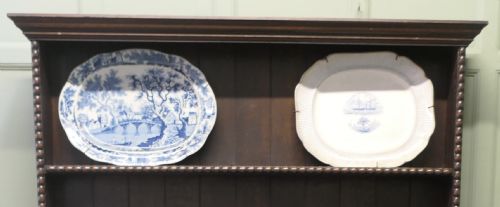
Other examples utilise transfer-printing to lay intricate blue and white topographical scenes across the pottery surface, whilst high-fired art pottery incorporates textured glazes and moulded decoration during shaping.
Listings feature earthenware wall platters spanning the eighteenth, nineteenth, and twentieth centuries, incorporating tin glaze, enamel, and transfer-printed decoration.
What varies in quality
The distinction between ordinary and exceptional work lies in the confidence of the brushwork, the depth and registration of the glaze, and the ambition of the pictorial scene. Hand-painted istoriato narratives and finely articulated manganese or polychrome details display a level of artistry that mechanical transfer cannot match.
Surface preservation and the stability of tin glaze or enamel layers also define the upper tier of pieces, where crisp lines and vibrant mineral colours remain intact across centuries.
Copeland Pottery·Stubbs·Minton·Charlotte Rhead Bursley Ware·Jose Alvez Cunah
The Earthenware Decorative Wall Platter Glossary
- Charger
- A large decorative plate intended for display on a wall or sideboard rather than daily dining use.
- Tin Glaze
- An opaque white pottery glaze containing tin oxide, which provides a smooth canvas for painted decoration in cobalt or enamel.
- Majolica
- A type of earthenware coated with an opaque tin-lead glaze and decorated with brightly coloured metal oxides.
- Faience
- European tin-glazed earthenware, particularly associated with French, Dutch, and Italian potteries.
- Istoriato
- A style of pottery decoration featuring detailed historical, biblical, or classical narrative scenes painted across the entire surface.
Earthenware Decorative Wall Platter: Frequently Asked Questions
How do you hang a heavy earthenware wall platter?
These large ceramic plates require secure wall fixings and specialised spring-loaded brass plate hangers that distribute the weight evenly across the rim without pinching the earthenware body.
Ensure the hanging wire or wall hook engages directly with structural wall studs or heavy-duty masonry anchors to support the substantial weight safely.
How do you distinguish tin glaze from standard glaze?
Tin glaze incorporates tin oxide to create an opaque, milky-white background that completely masks the underlying buff or red earthenware body.
Standard translucent glazes allow the natural colour and texture of the fired clay to remain visible beneath the glassy surface layer.
What is the difference between delftware and maiolica?
Delftware generally refers to tin-glazed earthenware produced in Holland and England, typically celebrated for blue and white or manganese maritime and floral motifs.
Maiolica represents the Italian tradition of tin-glazed pottery, often characterised by vibrant polychrome palettes and complex narrative historical scenes.