




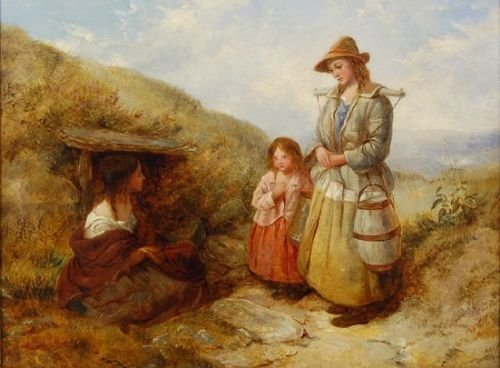
Earthen Tone Rustic Painting
These earthen tone rustic painting works bring the quiet rural scenes and muted palettes of past centuries directly into modern rooms.
Earthen Tone Rustic Painting
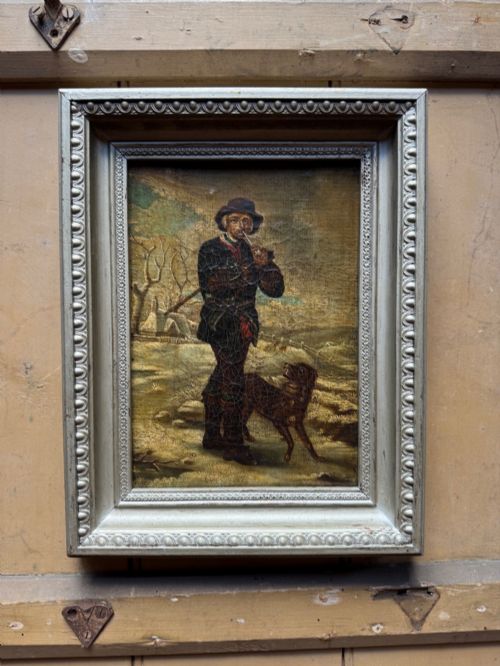
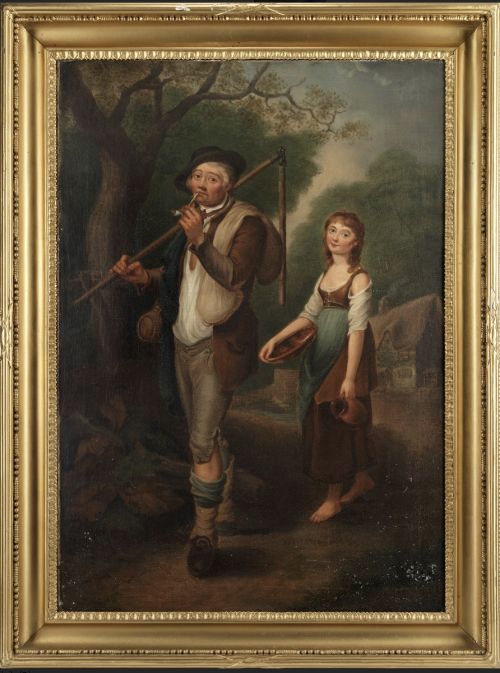
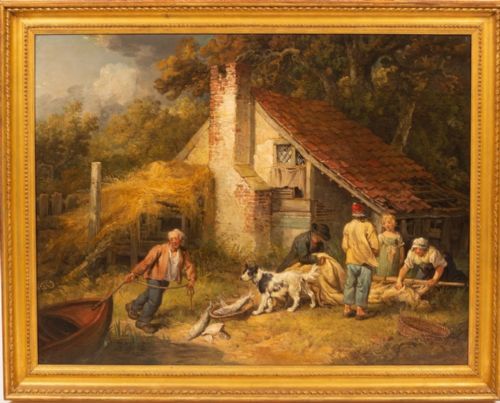
When you search for earthen tone rustic painting, you encounter works capturing pastoral life, country cottages, and agricultural labour across the nineteenth and twentieth centuries. The selection spans oils on canvas and watercolours, leaning heavily into nineteenth-century realism, British impressionism, and nineteenth-century folk art.
You meet agricultural landscapes, farmyard scenes, blacksmith interiors, and coastal country views executed by followers of notable artists and regional painters. These pieces utilise muted natural colourways dominated by browns, greens, and ochres to depict rural life with grounded sincerity.
How they were made
Painters of these works utilised oil paint on canvas or watercolour paint on paper, often framing the finished pieces in wood and gold leaf. The application relies on traditional brushwork to build textured depictions of farmland, livestock, and rustic architecture.
Unconventional methods also appear, such as sand pictures utilised to create tactile farmyard scenes with genuine grit and texture. Support materials range from stretched canvas to heavy paper, each chosen to suit the specific demands of oil or watercolour mediums.
One industrious nineteenth-century artist bypassed paint entirely, pouring coloured sand into a frame to construct a gritty farmyard scene.
What varies in quality
The distinction between standard works and superior examples rests in the confidence of the brushwork and the depth of atmospheric perspective. Masterful handling of light brings movement to cottage interiors and farmland skies, whereas lesser pieces rely on stiff repetition and flat shadows.
Compositional balance and the preservation of the original support material dictate the standing of a piece within its period. Strong tonal cohesion across earthen palettes separates works with genuine observational power from routine topographical records.
Thomas Barker of Bath·Owen Bowen·Ernest Higgins Rigg·Fred Lawson·James Ward·George Morland·Henry Collins·James Hughes Clayton·Edward John Cobbett
The Earthen Tone Rustic Painting Glossary
- Oil on Canvas
- Pigment mixed with drying oil applied to a stretched woven fabric support. This combination allows for rich colour blending and textured impasto work.
- Watercolour Paint
- Water-soluble pigment applied to paper to create transparent washes of colour. It requires precise control to capture light effects without heavy layering.
- Gold Leaf
- Gold beaten into extremely thin sheets and applied to frames or surfaces as decoration. It provides a warm metallic border that complements rustic earth tones.
- Folk Art
- Artistic work created within a traditional culture by self-taught or non-academic makers. These pieces prioritise direct storytelling and regional character over formal academic rules.
- Sand Picture
- A tactile artwork created by fixing coloured sands to a backing board to form a pictorial scene. This technique creates a distinct three-dimensional surface texture.
Earthen Tone Rustic Painting: Frequently Asked Questions
What subjects do these rustic paintings show?
The works depict traditional country scenes, including farmyards, farmland landscapes, blacksmith interiors, and figures engaged in rural labour like feeding hens or collecting water.
These subjects reflect nineteenth and early twentieth-century British agricultural life, offering a documentary glimpse into rural trades and domestic routines.
How do I care for nineteenth-century oil paintings?
Keep the canvas away from direct sunlight and dramatic shifts in room temperature or humidity to prevent cracking in the paint layer.
Dust the surface gently with a soft, dry brush and avoid using chemical cleaning agents on the oil paint or gold leaf frame.
What is a sand picture?
A sand picture is a nineteenth-century artwork made by gluing coloured grains of sand onto a backing board to build up a textured topographical or farmyard scene.
These pieces use natural mineral shades to create durable, tactile surfaces that mimic the visual weight of traditional paintings.
How can I tell a watercolour from an oil painting?
Watercolours are painted on paper under protective glass, showing translucent washes where the white of the paper illuminates the pigment.
Oil paintings use opaque pigments on canvas or panel, presenting a textured surface with visible brush marks that does not require glass framing.
What periods are represented in these rural artworks?
The selections date primarily from the nineteenth century, including Victorian works, alongside early twentieth-century pieces up to the nineteen-thirties.
Styles transition from nineteenth-century realism and folk art through to British impressionism as the decades progress.