



Earth Tone Watercolour
Earth tone watercolour works capture landscapes and figures in muted, natural palettes across the nineteenth and twentieth centuries.
Earth Tone Watercolour
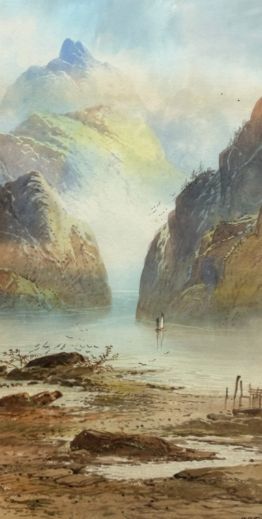
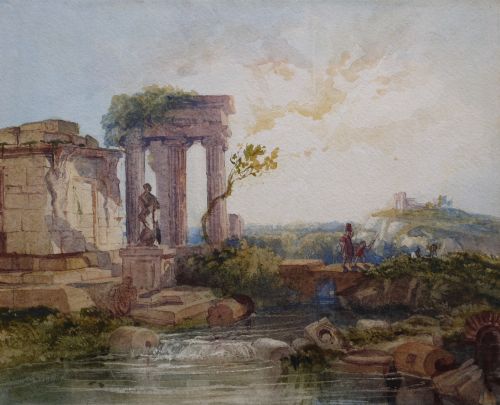
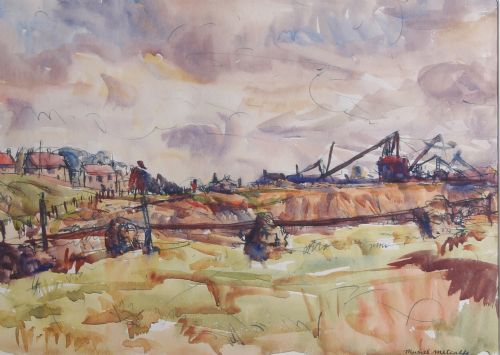
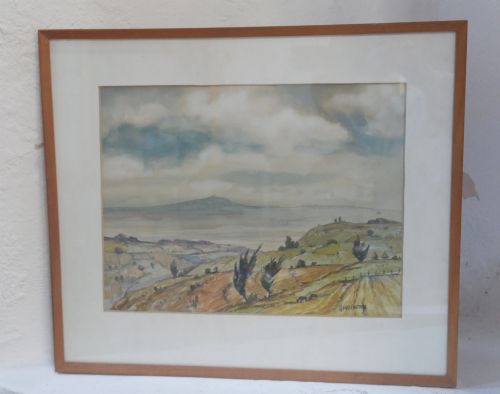
When you search for an earth tone watercolour, you are looking at original paintings executed on paper using water-soluble pigments that rely on natural, muted colour schemes. These works span the nineteenth century, the Edwardian era, and mid-twentieth-century Modern British movements, taking the form of landscape views, coastal scenes, and figurative subjects.
The versions you are most likely to meet on this page include British landscapes depicting Welsh valleys, Yorkshire harbours, and rural farming scenes. Artists of these periods utilised washes of pigment to render atmospheric skies, earthy soil tones, and weathered stone structures with remarkable subtlety.
Materials and technique
The works recorded here are executed on paper supports using watercolour paint and pigment, occasionally framed behind glass with wooden surrounds to protect the delicate medium from moisture and light damage.
Artists built these compositions through transparent washes and layered brushwork, allowing the white or tinted surface of the paper to shine through and create natural luminosity in the skies and water.
The listings span the Victorian and Edwardian periods through to the 1950s, utilising paper, glass, and wood.
Separating the ordinary from the exceptional
The distinction between a standard topographical sketch and a superior earth tone watercolour lies in the confidence of the brushwork and the management of tonal values. Master hands controlled pigment dilution to convey atmosphere, weather, and distance without overworking the paper.
Compositional balance and the preservation of light separate the finer examples from more formulaic productions. A successful sheet retains a fresh, spontaneous quality where every wash contributes directly to the overall depth and mood of the scene.
William Henry Earp·Richard Principal Leitch·Thomas Ellison·Muriel Metcalfe·Alfred George Morgan·Oswald Garside·James Tower·Fred Lawson·Anne Dorrien Smith·James Orrock·James Hardy Junior·Louie Stanley Maurice Prince·John Syer·Sidney James Beer·John Edward Bale·Kate E Booth·Adrian Jones·Henry Charles Fox·Thomas James Lloyd·Stephen John Batchelder·Percy Brooke·Leonardo Morello·Albert Robert Quinton·John Sowden·Thomas Pyne
The Earth Tone Watercolour Glossary
- Watercolour pigment
- The finely ground colour particles suspended in a water-soluble binder that form the primary medium of these paintings.
- Wash
- A fluid layer of diluted pigment spread evenly across the paper to create smooth backgrounds like skies or water.
- Support
- The physical material, in this case paper, upon which the artist applies the paint and pigment.
- British Impressionism
- A late nineteenth and early twentieth-century painting style focusing on everyday subjects and natural light effects.
Earth Tone Watercolour: Frequently Asked Questions
What subjects appear in these watercolours?
The selections encompass British and European landscapes, coastal fishing scenes, rural farming activities with plough teams, and architectural views.
Artists frequently documented specific local geography, from Welsh valleys and Yorkshire harbours to Italian street scenes and village life.
How should I frame and display them?
Watercolours require careful framing behind glass with acid-free mounts to prevent the paper from touching the glazing and sustaining humidity damage.
Keep these works away from direct sunlight to protect the sensitive watercolour pigments from fading over time.
How do I identify the period of a painting?
Stylistic markers, artist signatures, and framing materials often point toward specific decades such as the Edwardian era or the nineteenth century.
Subject matter clothing, agricultural methods, and architectural details also help narrow down the date of execution.
What defines a Modern British watercolour?
Mid-century works often embrace a simplified approach to landscape and still life, moving away from strict Victorian realism toward expressive form.
These pieces demonstrate a distinct interest in texture, restricted palettes, and the structural qualities of everyday objects.