

English Rural Landscape
When you explore an english rural landscape, you enter a visual record of fields, rivers, and farmsteads painted across the nineteenth and early twentieth centuries.
English Rural Landscape
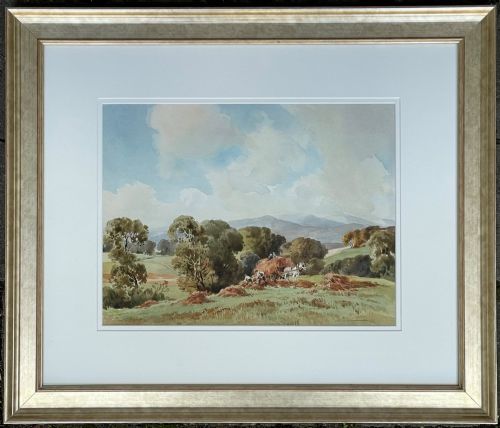
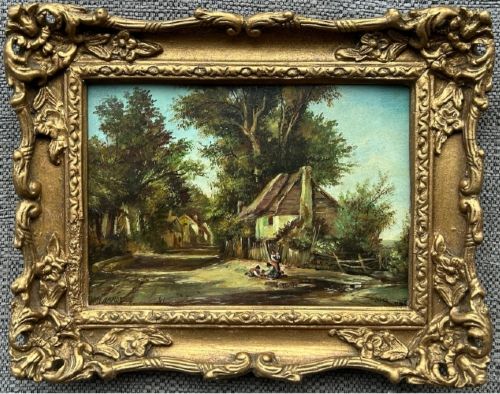
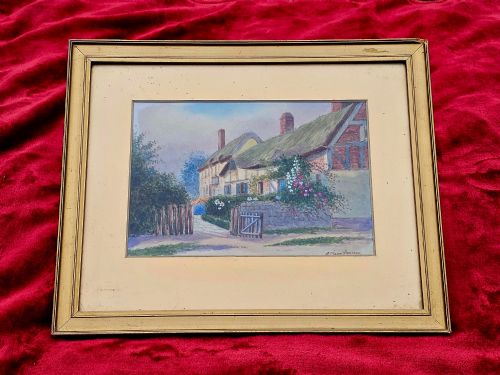
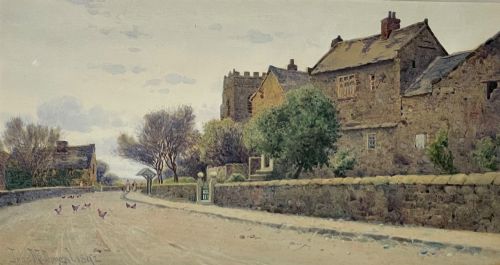
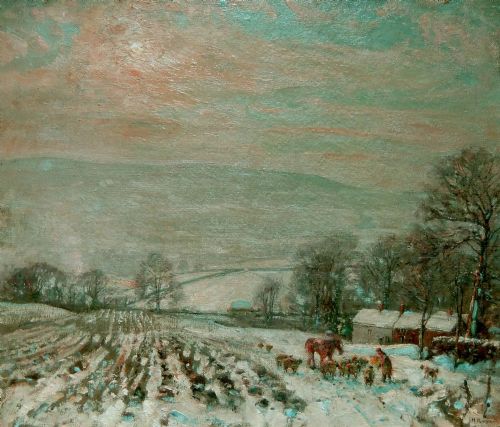
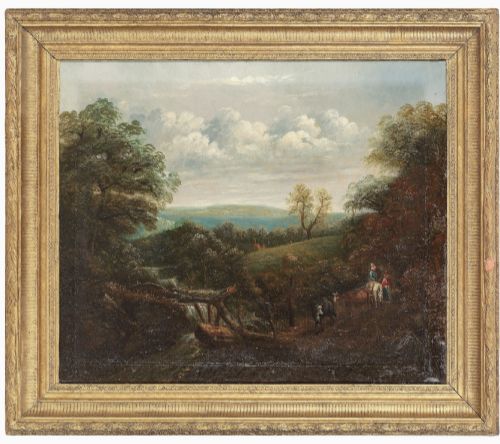
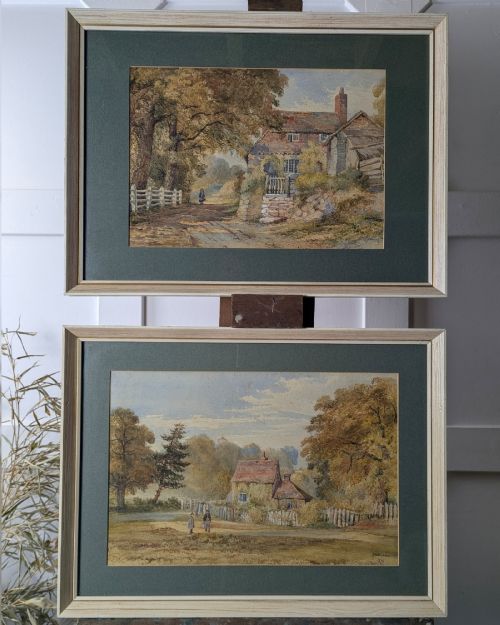
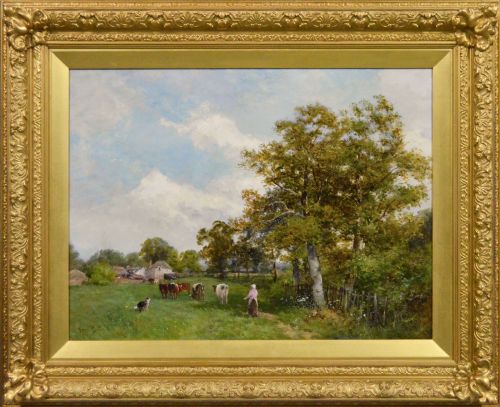
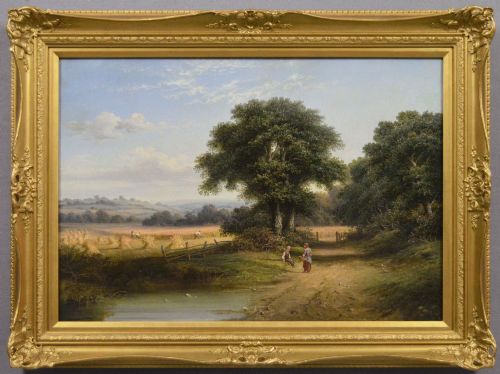
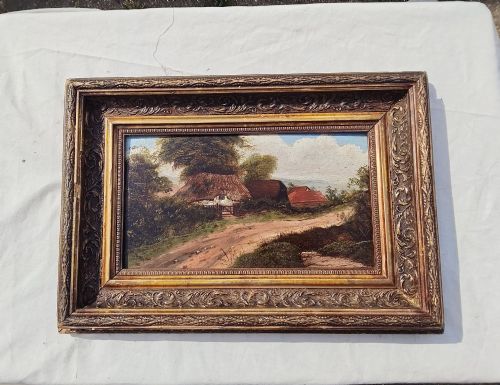
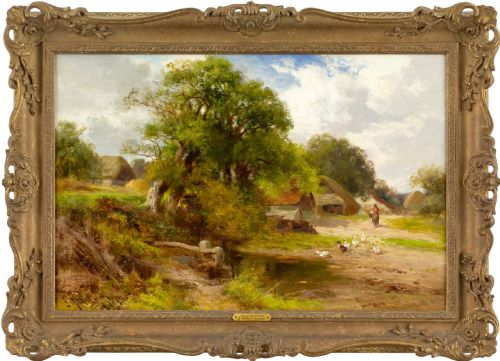
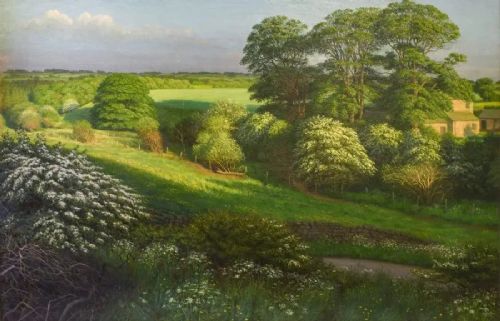
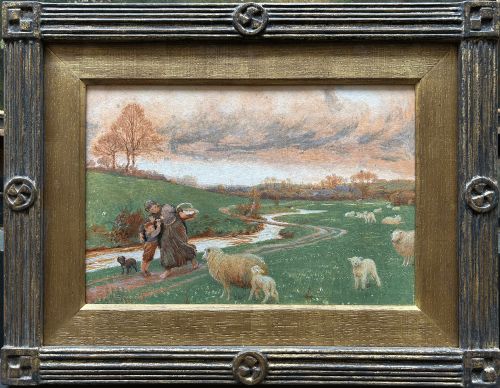
An english rural landscape captures the pastoral scenery, agricultural life, and village architecture of Britain through the eyes of regional painters and national institutions alike. You encounter depictions of thatched cottages, harvest fields, winding country lanes, and livestock grazing by rivers.
The works span from the late eighteenth century through the Edwardian period and into the mid-twentieth century, encompassing movements such as the Norwich School, British Impressionism, and Victorian pastoral realism. Most pieces on this page originate from the Victorian era and the early decades of the 1900s.
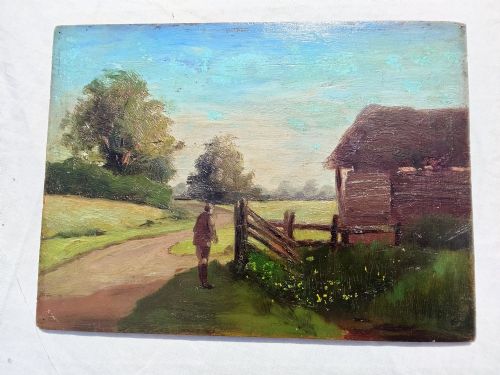
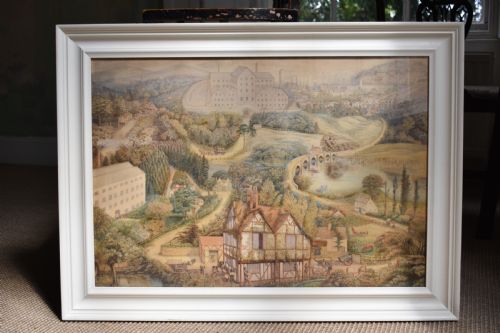
Formats vary between finished gallery canvases and intimate watercolours on paper or card, reflecting both plein-air studies and studio compositions. Subjects range from solitary figures working the land to quiet village views in Yorkshire, Sussex, Dorset, and beyond.
How They Were Made
Artists relied on traditional pigments suspended in oil or bound with water, applying them to stretched canvas, wooden panels, board, or heavyweight paper. Oil paint allowed for rich impasto and deep tonal layering, while watercolour suited swift washes and delicate atmospheric effects.
Supports frequently included canvas over wooden stretchers, thick card, or prepared wooden boards, often housed within period gilt wood frames that complement the pastoral palette. Preparatory sketches were occasionally worked up outdoors before being completed in the studio.
English Rural Landscape Retail Price Guide 2026
Typical asking prices for english rural landscape among the pieces listed under this phrase on Sellingantiques today, from the lower quarter to the upper quarter. They describe what is for sale here now, not the wider market.
A good number of these country paths are shared exclusively with wandering sheep, stubborn cows, and very patient dogs.
What Varies in Quality
Quality rests upon the artist's command of light, atmosphere, and naturalistic proportion, distinguishing a spirited plein-air observation from a formulaic studio copy. The most successful paintings capture the specific weather and mood of a region rather than relying on generic rustic tropes.
Brushwork and handling reveal the maker's confidence, with assured, expressive strokes bringing foliage, water, and livestock to life. Compositional balance and the integration of human figures or animals into the wider topography also elevate a work above standard topographical illustration.
George Graham·Percy Lancaster·William Howard Hardy·A Marie Parsons·John McDougal·Herbert Royle·Robert A Nottingham·David Bates·Walter Heath Williams·John Horace Hooper·Raymond Booth·Frederick Walker·George Oyston·William Greaves·Miles Birkett Foster·Herman S Melville·George Morland·Sydney Yates Johnson·Edgar Woollatt·Harry Freckleton·Henry Charles Fox·William JB Jenkins·Ernest Higgins Rigg·Cuthbert Crossley·Reginald Grange Brundrit
The English Rural Landscape Glossary
- Plein-air
- Painting outdoors directly from nature to capture transient effects of light and weather. This approach became central to nineteenth-century landscape practice.
- Impasto
- Paint applied thickly to a canvas or panel so that it stands out from the surface. It gives visible texture to elements like clouds, foliage, or mud.
- Norwich School
- The first provincial art movement in Britain, flourishing in the early nineteenth century and focusing on local Norfolk scenery. Its members drew inspiration from Dutch landscape traditions.
- Pastoral
- A style or subject matter that romanticises rural life and agricultural scenes. These works typically present a harmonious, peaceful view of the countryside.
- Wash
- A thin, semi-transparent layer of diluted watercolour pigment applied across paper. It provides luminous backgrounds for skies and water.
English Rural Landscape: Frequently Asked Questions
What periods do these paintings cover?
The works span from the late eighteenth century through the Victorian era, the Edwardian period, and into the mid-twentieth century.
Most examples date from the nineteenth and early twentieth centuries, reflecting changing approaches to depicting the British countryside.
Were these painted outdoors or in studios?
Artists often worked both outdoors and in studios, utilising quick plein-air watercolour sketches to capture immediate light effects.
These field studies were frequently developed into larger finished oil paintings on canvas or panel back in the studio.
How do I identify regional British scenes?
Titles and signatures often provide direct clues to specific locations, referencing counties like Yorkshire, Sussex, Dorset, and Cheshire.
Local landmarks such as cottages, mills, and rivers help ground the compositions in recognizable topographical traditions.
What framing is typically found on these works?
Many pieces retain their period frames, ranging from ornate gilt wood mouldings to simpler traditional wooden surrounds.
These frames often show the wear and patination expected from over a century of domestic display.