
Early Walnut Tallboy
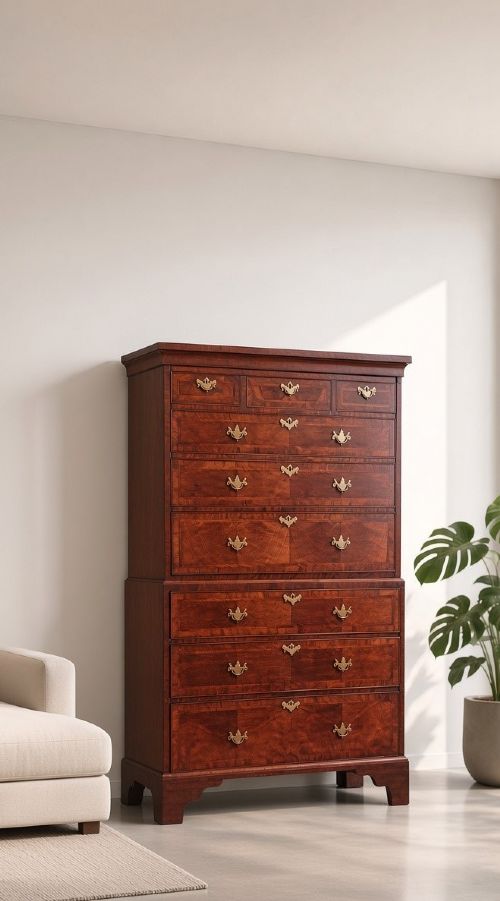
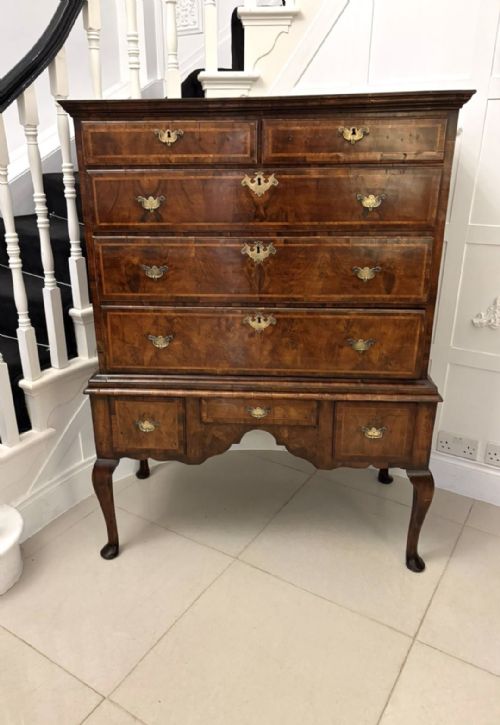
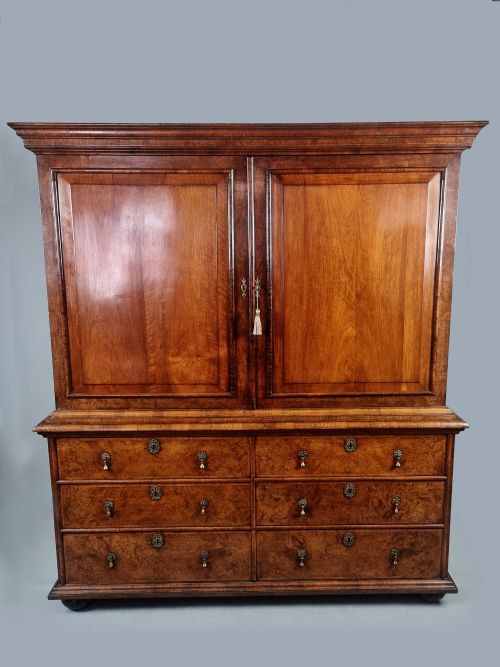
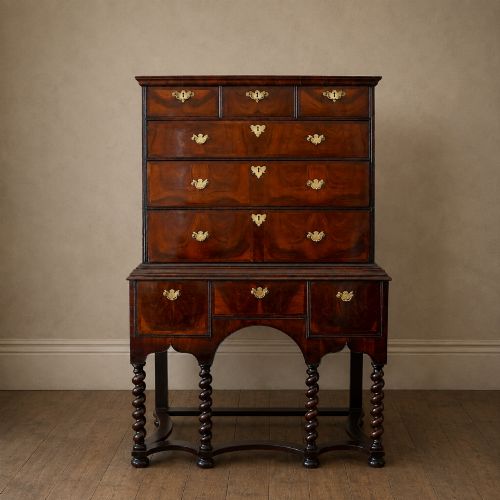
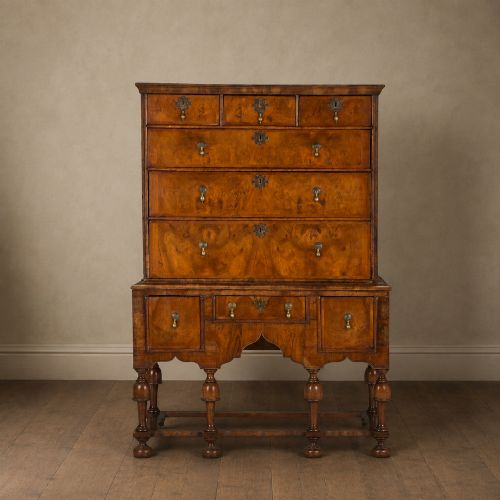
An early walnut tallboy brings together stacked storage and rich timber grain, offering a commanding presence in a room.
Early Walnut Tallboy
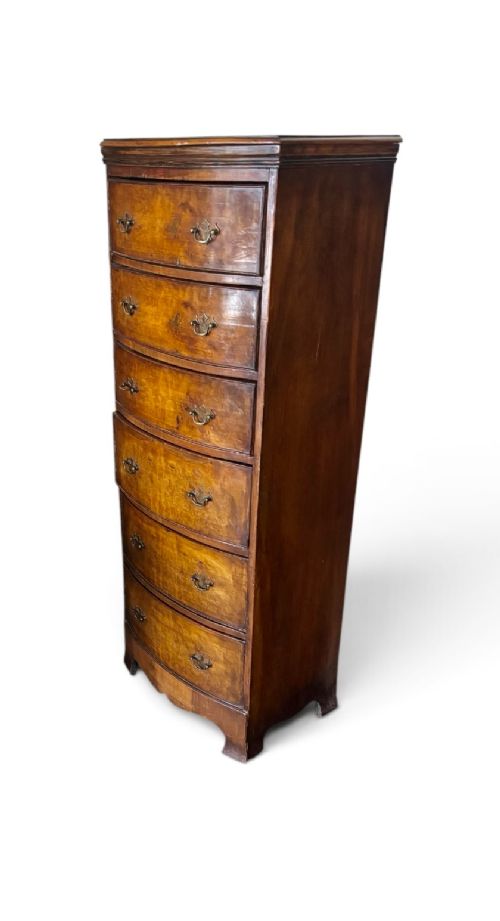
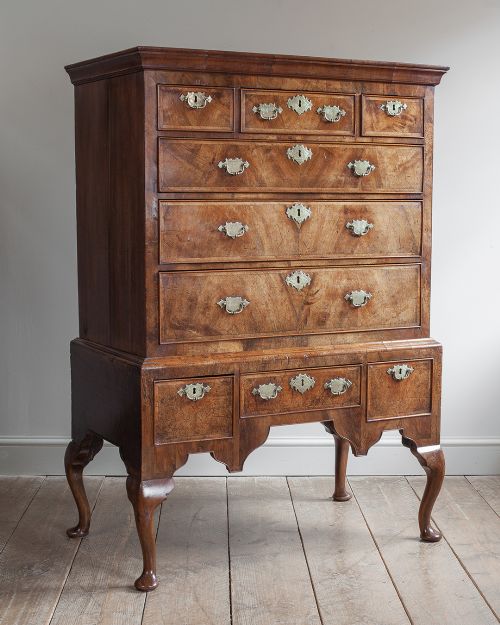
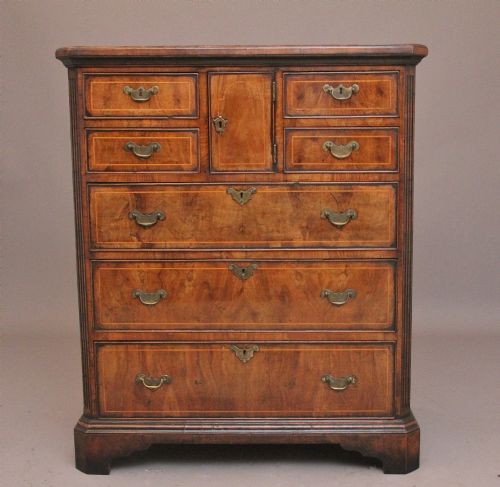
An early walnut tallboy combines two chests stacked one upon another to maximise vertical storage without taking up excessive floor space. The form emerges prominently in the eighteenth century, drawing on periods such as Queen Anne and George I.
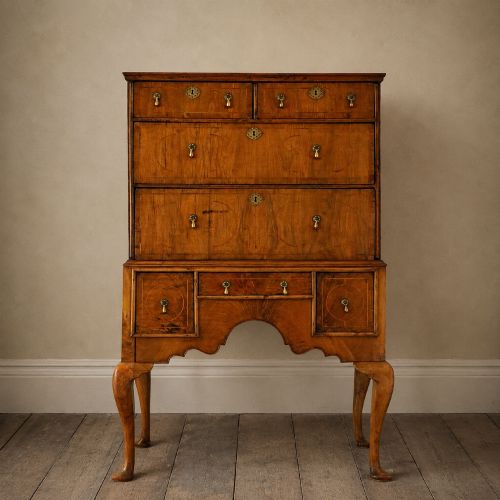
While many examples take the form of a chest on chest, the category also embraces chests on stands and related cabinet pieces. Buyers frequently encounter eighteenth-century origins alongside later revivals from the twentieth century.
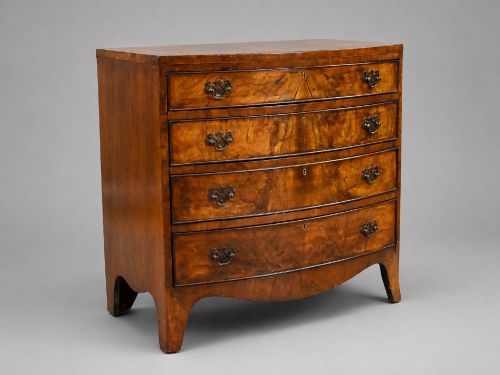
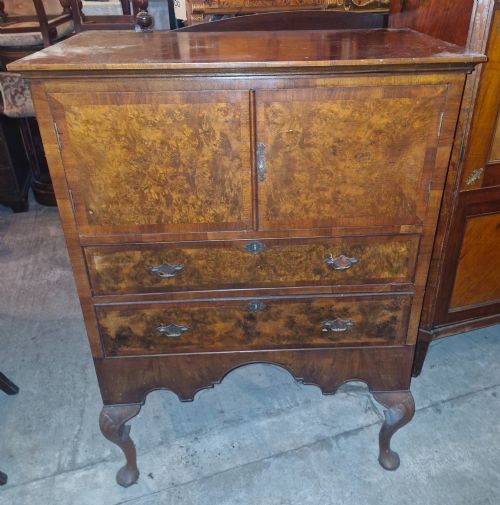
The phrase early walnut tallboy encompasses both grand proportioned case furniture and smaller scaled pieces suited to domestic rooms. Timber choice ranges from plain walnut to highly figured burr veneers.
How they were made
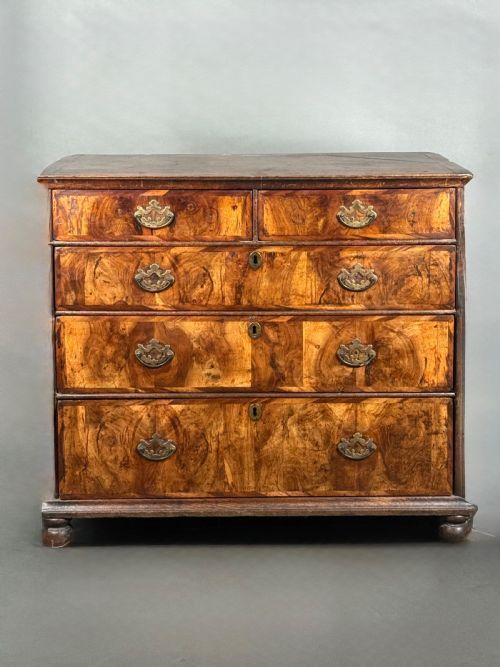
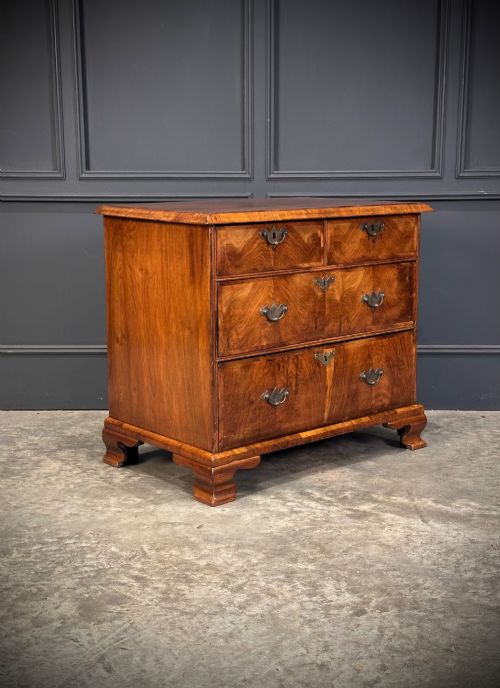
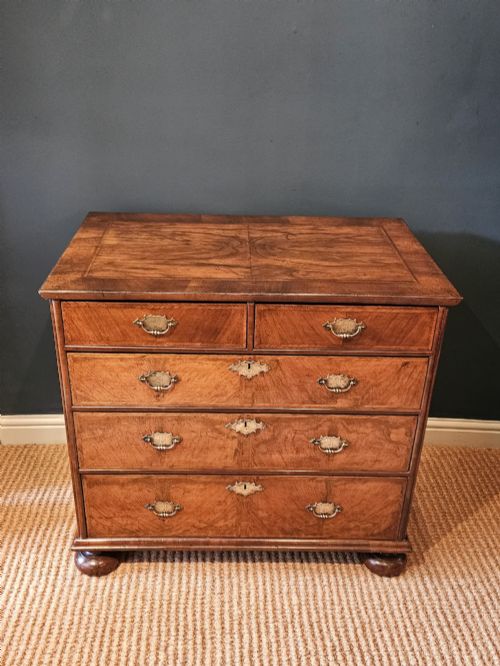
Cabinetmakers constructed carcass frames primarily in oak or pine, applying thin veneers of walnut to the external surfaces. Burr walnut and figured walnut provided decorative movement across the drawer fronts and top panels.
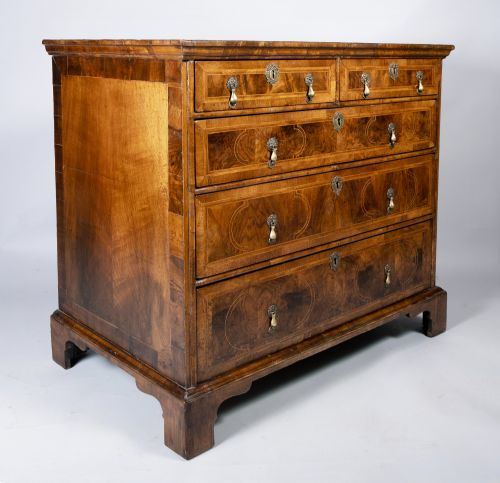
Detailed surface enrichment involved herringbone banding and feather-banded borders inlaid around the edges of drawers. Brass handles and escutcheons secured with pins punctuate the timber grain across the front elevation.
Several pieces conceal secret document drawers hidden within the upper cornices, waiting for modern owners to discover their historic compartments.
What varies in quality
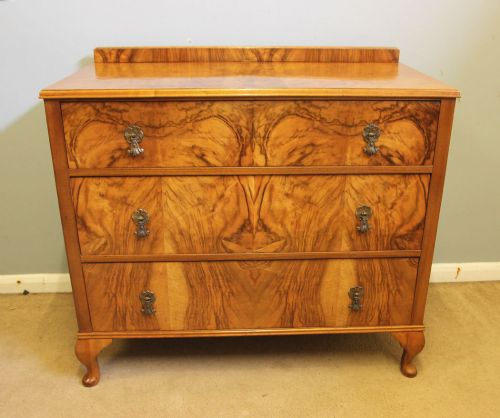
The sophistication of the timber figuring dictates much of the visual hierarchy among these pieces, with tightly swirled burr veneer commanding particular attention. Crispness in the execution of crossbanding and inlaid borders reveals the hand of a skilled maker.
Proportion and the retention of original surface patination distinguish superior examples from standard ones. Elements such as matching grain patterns across successive drawer tiers indicate careful planning during construction.
The Early Walnut Tallboy Glossary
- Tallboy
- A tall chest of drawers made in two sections, one stacked securely on top of the other. The configuration provides extensive drawer space within a relatively narrow footprint.
- Burr walnut
- Timber taken from a tree growth or excrescence, yielding a highly swirled and mottled grain pattern. Cabinetmakers sliced this wood into thin veneers for decorative facades.
- Herringbone banding
- A decorative inlay of small wood veneers arranged in a V-shaped zig-zag pattern. This technique frames drawer perimeters on case furniture.
- Feather banding
- Two strips of veneer laid with the grain running in opposite directions to form a central light line resembling a feather. It creates a refined border on drawer fronts.
- Chest on stand
- A lower chest raised on legs or a low frame rather than resting directly on the floor. These pieces often feature cabriole legs characteristic of the early eighteenth century.
Early Walnut Tallboy: Frequently Asked Questions
What is the difference between a tallboy and a chest on chest?
A tallboy generally refers to a tall stacked chest, while a chest on chest specifically describes two distinct box sections placed one upon the other. Both forms offer substantial vertical storage capacity.
Historically, makers used these terms interchangeably depending on the region and the specific internal configuration of drawers.
How do I care for walnut veneer?
Walnut veneer requires stable indoor humidity levels away from direct sunlight to prevent timber shrinkage and lifting. Gentle dusting with a dry cloth preserves the polished surface.
Avoid placing damp items or harsh chemical polishes on the wood, as moisture can penetrate the older glues beneath the veneer.
Where were tallboys placed in a historic home?
These tall pieces of furniture served primarily in bedrooms and dressing rooms for storing garments, linens, and personal documents. Their vertical design kept floor space free in smaller chambers.
In larger houses, they also found placement in dressing closets and upper hallways where vertical storage proved essential.
How can I tell an eighteenth-century piece from a twentieth-century revival?
Eighteenth-century examples display construction methods such as hand-cut dovetails and oak secondary timbers inside the drawer boxes. The timber patination shows deep oxidation accumulated over generations.
Twentieth-century revival pieces often exhibit machine tooling marks, different internal woods, and uniform factory finishes that lack older wear patterns.