
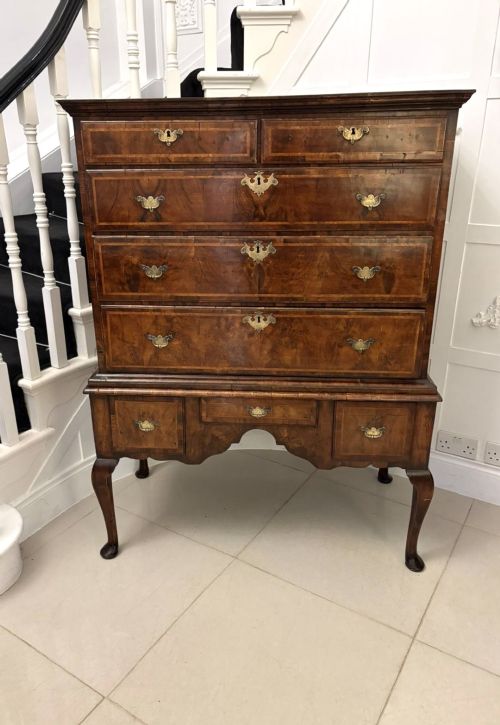
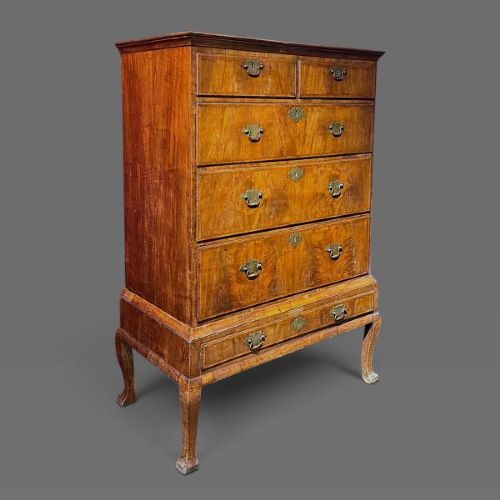
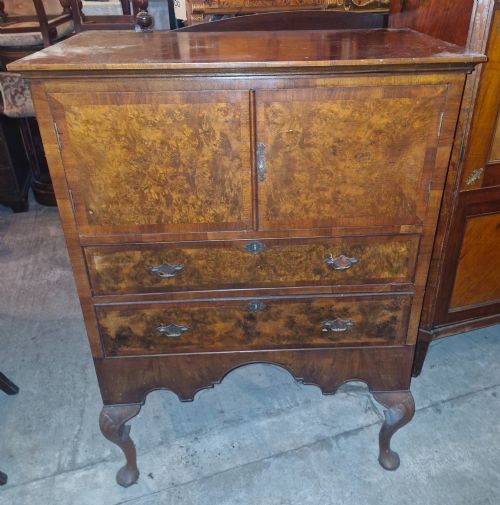
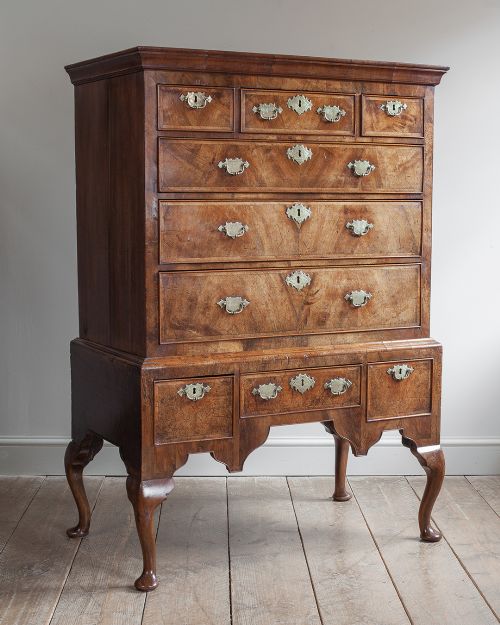



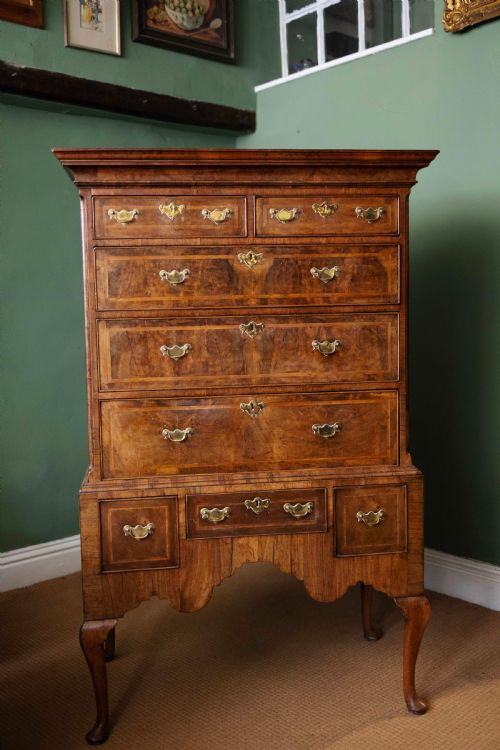

Early Walnut Chest Stand
An early walnut chest stand brings rich timber figures and elevated storage to a room.
Early Walnut Chest Stand
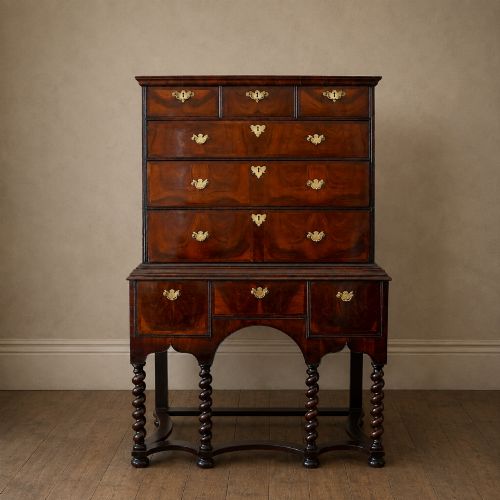
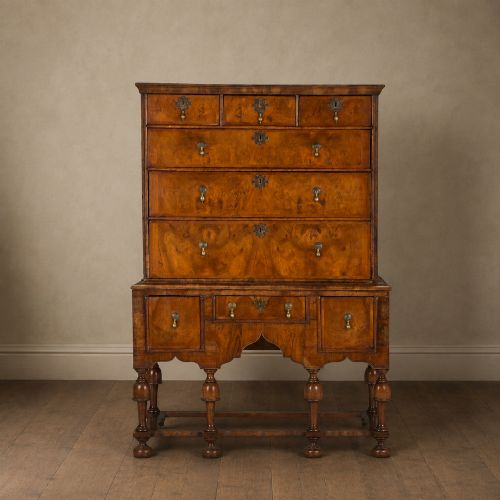
An early walnut chest stand combines an upper section of drawers with a supporting table base, originating primarily from the eighteenth century. These pieces serve as practical storage furniture with distinct architectural presence.
The version most frequently encountered on this page dates from the Queen Anne and George I periods, showing traditional craftsmanship in English and continental workshops. They appear in forms ranging from compact collectors cabinets to taller drawer units.
Buyers select these items for their rich cabinetmaker timbers and elevated silhouettes that lift storage off the floor. They bridge the gap between heavy case furniture and lighter table supports.
Materials and Construction
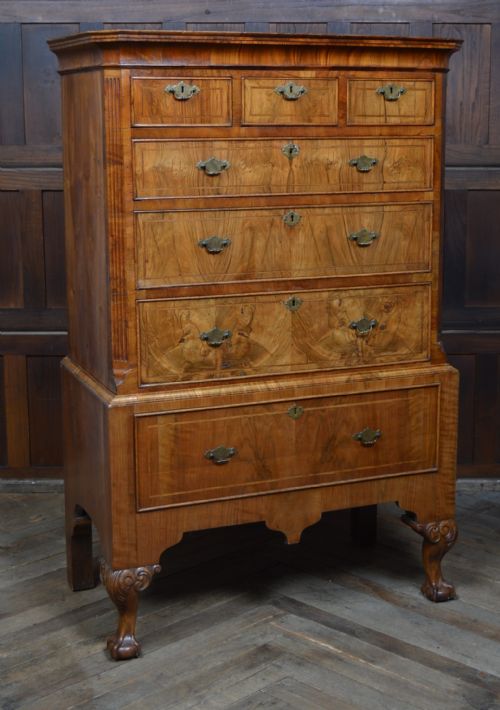
Joiners built these frames using solid English walnut, oak, and pine, applying burr walnut veneers to the primary surfaces for decorative effect. Crossbanding and feather banding frequently border the drawer fronts to frame the grain.
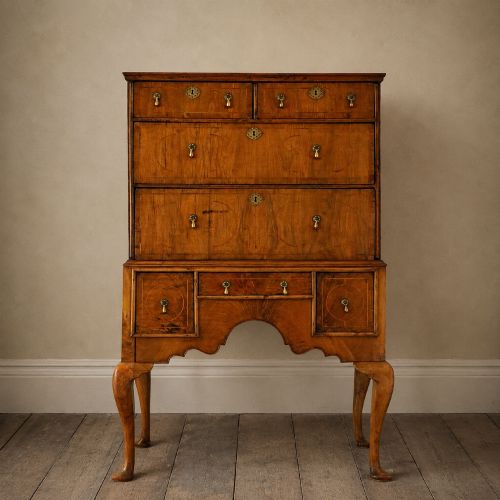
Makers set these upper chests upon separate or integrated stands raised on cabriole or turned legs. Brass drop handles and escutcheons secure the drawers while providing functional hardware detail.
Some cabinets hide tiny secret drawers behind grand architectural facades.
Distinctions in Quality
The choice of veneer figures and the skill of the matching across drawer fronts dictate the visual impact of the piece. Superior examples display symmetrical burr walnut figuring that flows naturally across the elevations.
Proportion and the integrity of the stand determine the structural distinction of the furniture. Pieces retaining their original associated stands with harmonious leg curves command greater appreciation among collectors.
The Early Walnut Chest Stand Glossary
- Chest on stand
- A two-part form consisting of a drawer chest resting upon a table-like base with legs. This design elevates the storage off the ground.
- Burr walnut
- Timber taken from the growth excrescences of walnut trees, yielding highly figured grain patterns. Cabinetmakers sliced this wood into thin veneers for decorative drawer fronts.
- Cabriole leg
- A furniture leg that curves outward and then tapers inward, terminating in a pad or foot. This form derives from classical Chinese furniture and gained popularity in the early eighteenth century.
- Crossbanding
- A strip of veneer laid perpendicularly to the grain of the surrounding surface. It creates a formal border around drawer perimeters.
- Queen Anne style
- A design period spanning the late seventeenth and early eighteenth centuries characterised by curved lines and cabriole legs. Furniture from this era prioritises domestic comfort and graceful proportions.
Early Walnut Chest Stand: Frequently Asked Questions
What is an early walnut chest stand?
An early walnut chest stand is a piece of furniture featuring a drawer chest mounted on a raised table base. These items date predominantly from the eighteenth century.
They combine high-status timber with compact vertical storage. The design allows for an elevated profile compared to standard floor chests.
How were these cabinets used originally?
Households utilised these pieces to store textiles, documents, and valuables in private chambers. The elevated height kept contents away from damp ground levels.
Over time, collectors repurposed them to display decorative objects on top surfaces while storing smaller items inside.
How do I identify a George I piece?
George I period furniture typically exhibits architectural walnut veneers and substantial proportions built around the early eighteenth century. Cabriole legs with pad feet frequently support the base.
Cabinetmakers of this era employed crossbanding and brass drop handles. The construction prioritised figured wood over elaborate carved ornament.
Are stands usually original to the chests?
Many surviving chests and stands have endured centuries of domestic use, leading to occasional period alterations or associated bases. Evaluating the timber uniformity helps determine the history of the union.
Both original and period-associated combinations appear frequently in the historical record. Each configuration reflects the practical maintenance of antique furniture.
How should I care for walnut veneer?
Walnut veneer requires stable indoor humidity levels and protection from direct sunlight to prevent timber shrinkage. Maintaining gentle conditions preserves the original polish and grain.
Avoid placing these items near active heat sources. Regular dusting with a soft cloth maintains the surface without abrasive polishes.