
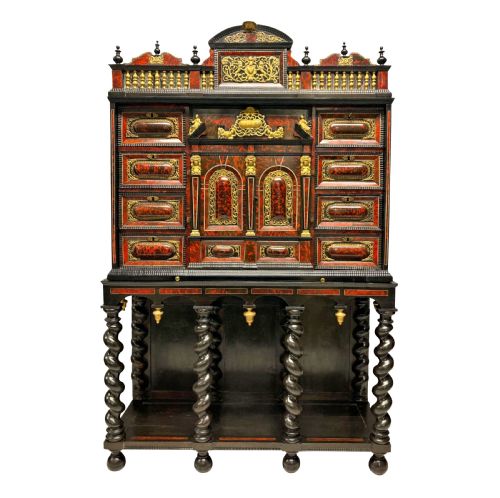
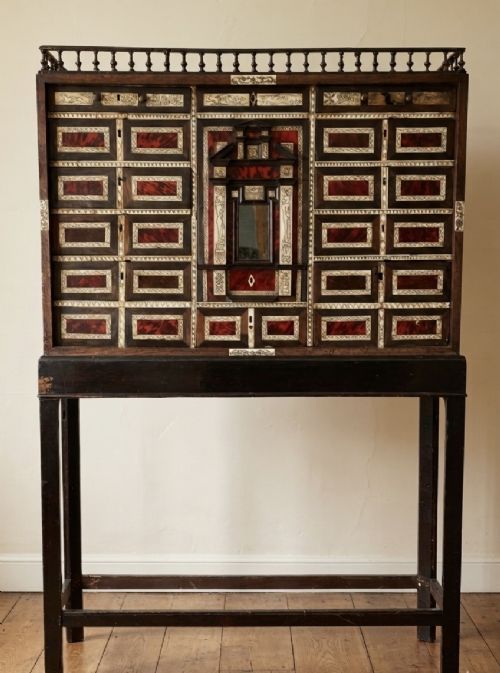


Baroque Collector Cabinet
A baroque collector cabinet holds secrets behind intricate doors, bringing grand seventeenth and eighteenth-century craftsmanship into a room.
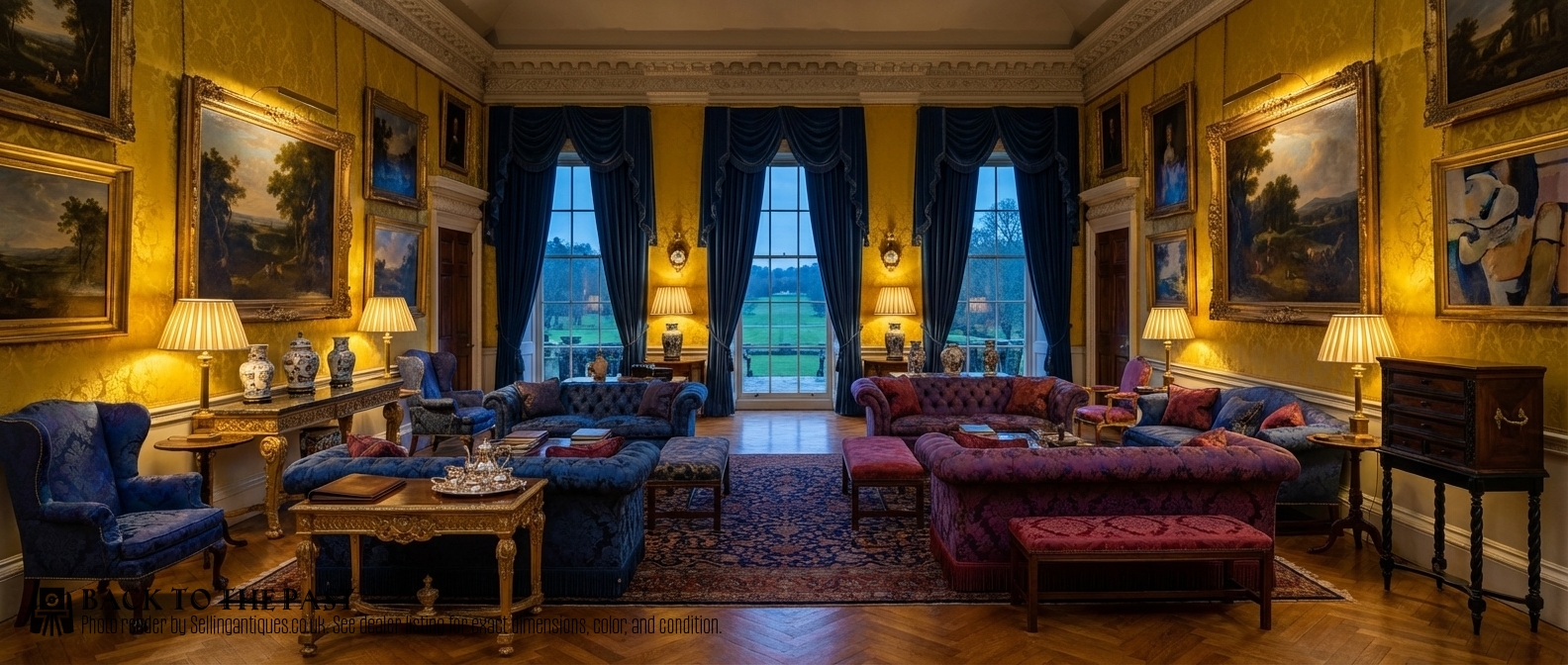
Baroque Collector Cabinet
A baroque collector cabinet sits on a dedicated stand or rests upon a table, designed to secure precious curiosities and documents. These pieces emerge chiefly from seventeenth and eighteenth century workshops across continental Europe, reflecting distinct regional tastes from Spanish to Dutch centres.
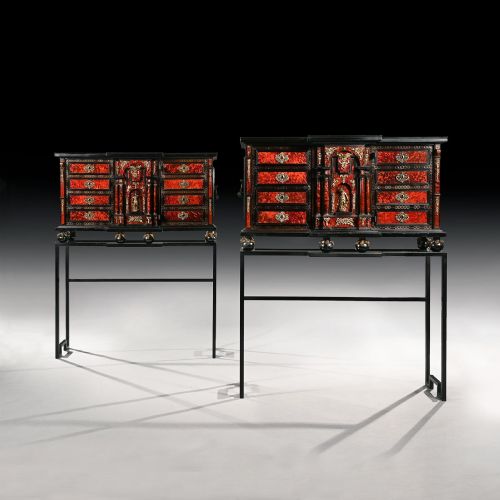
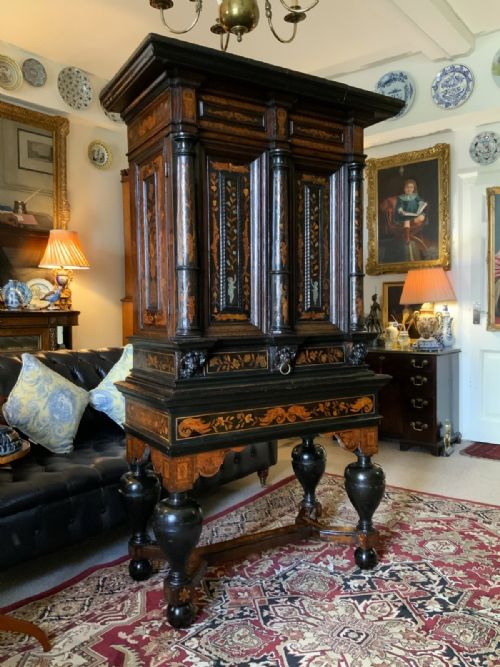
The most frequent forms met here are cabinets on stands alongside compact table cabinets and writing escritoires. Regional varieties span Flemish architectural façades, Spanish tortoiseshell surfaces, and German or Dutch marquetry details.
Ownership of such a piece places a historic receptacle for valuables directly into a domestic interior. Each item balances architectural presence with compartmentalised utility.
Materials and construction
Carinthian walnut, fruitwood, and dense ebonised wood form the robust structural carcases. Precious surface veneers utilise tortoiseshell, kingwood, and olive wood oyster figures.
Intricate embellishments incorporate bone inlays, gilt bronze mounts, pewter line work, and wrought iron hardware. These contrasting materials create rich textural depth across the primary façades and internal drawers.
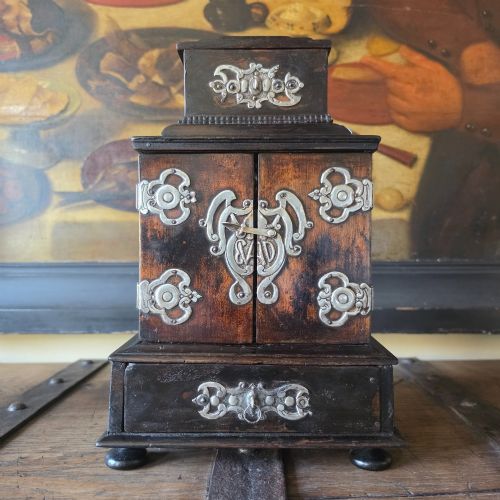
Some table cabinets conceal revolving tabernacles, offering secret compartments that reward the curious investigator with unexpected turns.
Assessing quality
Excellence rests in the precision of the marquetry and the integrity of delicate surface veneers like tortoiseshell and oyster cut wood. Finer examples display meticulous alignment in bone inlay and well-preserved gilt bronze mounts.
The sophistication of internal drawer arrangements and the architectural harmony of the stand separate standard joinery from masterwork production. Original stands and unified hardware elevate the historical integrity of the piece.
The Baroque Collector Cabinet Glossary
- Marquetry
- Decorative patterns formed by fitting together thin slices of wood and other materials onto a carcase. This technique defines the intricate surface designs seen on Dutch and German pieces.
- Oyster veneer
- Wood sections cut transversely from small branches to reveal circular growth rings resembling oyster shells. Seventeenth century cabinet makers prized this patterned grain.
- Vargueno
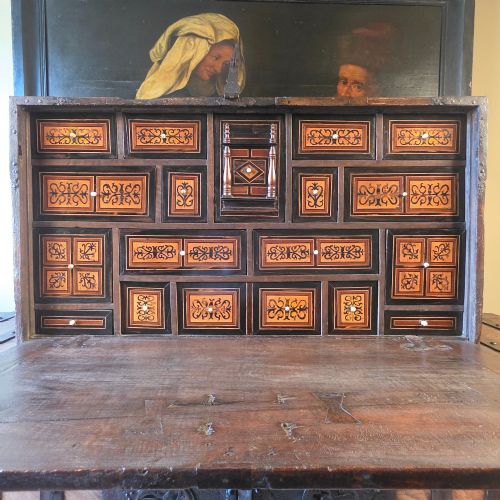
- A traditional Spanish desk cabinet featuring a drop front that reveals numerous small drawers and compartments. These portable writing chests often rest on ornate wooden supports.
- Tabernacle
- A central architectural shrine-like recess within a cabinet interior, often surrounded by revolving compartments or smaller drawers. It forms the visual focus of the internal layout.
- Ebonisation
- The process of treating lighter timbers such as fruitwood or pearwood to imitate solid ebony. This dark finish provides high contrast for tortoiseshell and bone decorations.
Baroque Collector Cabinet: Frequently Asked Questions
What fits inside a table cabinet?
These compact pieces were built to house letters, personal documents, coins, and small precious curiosities within their fitted internal drawers.
Today, they serve a similar purpose for storing modern keepsakes while functioning as sculptural focal points on desks or side tables.
How do I identify a cabinet on stand?
A cabinet on stand consists of a primary box section paired with a matching support structure designed specifically for it. The lower frames often feature robust legs united by decorative stretchers.
Matching timber usage and consistent stylistic wear between the upper chest and the base help confirm their original pairing.
Where were these cabinets made?
Makers across seventeenth and eighteenth century Europe produced these works, with notable production centres in Flanders, Spain, Germany, Italy, and the Netherlands.
Each region developed distinct decorative vocabularies, such as Flemish architectural façades or Spanish tortoiseshell panelling.
How do I care for tortoiseshell surfaces?
Tortoiseshell requires stable environmental conditions away from direct sunlight and excessive humidity to prevent warping or cracking. Gentle dusting with a dry microfibre cloth preserves the natural lustre of the material.
Harsh chemical polishes must be avoided to protect both the shell and the surrounding wood veneers.