
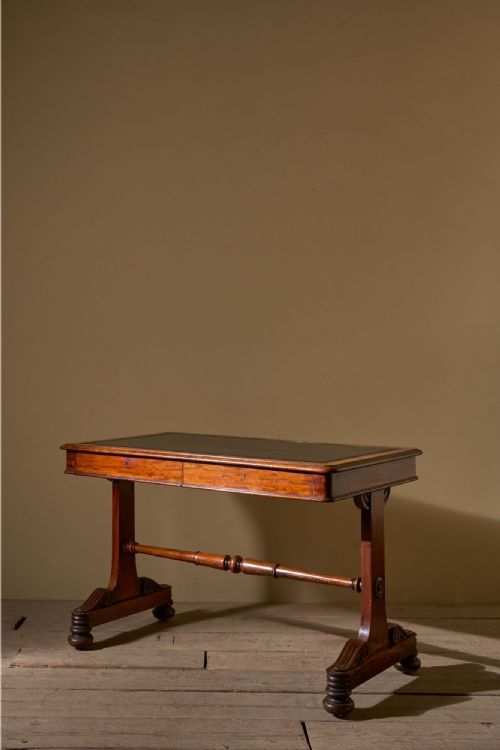
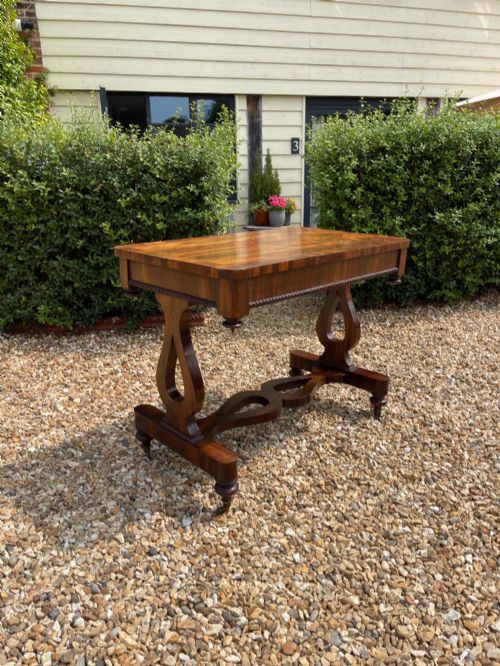
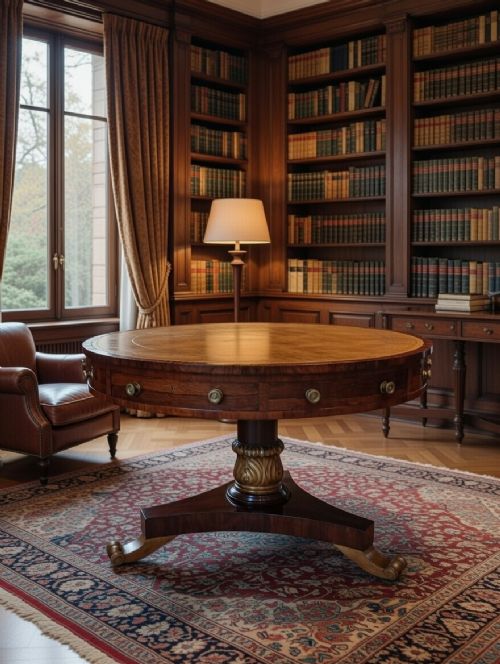
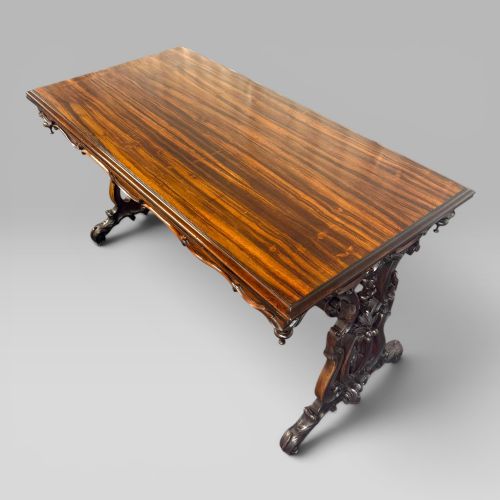





Early Victorian Writing Desk
An early victorian writing desk brings solid timber construction and practical writing surfaces into any room.
Early Victorian Writing Desk
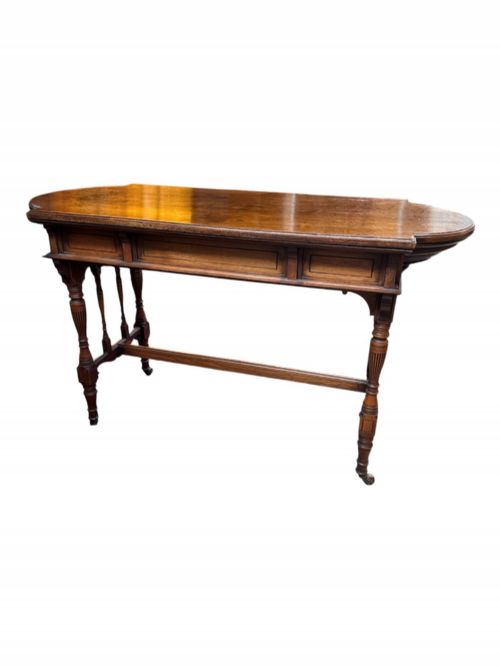
An early victorian writing desk is a functional piece of antique furniture designed for correspondence and paperwork, emerging predominantly during the mid-nineteenth century. When you search for an early victorian writing desk, you encounter various formats ranging from compact writing slopes and davenports to large partners desks and library tables.
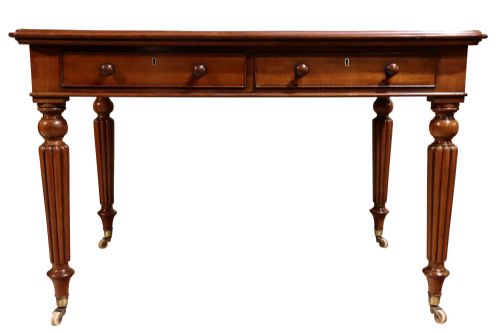
The pieces appearing in these records span writing tables with inset leather tops, pedestals with multiple drawers, and secretaire bookcases that combine storage with a drop-down writing flap. Mahogany remains the dominant timber across these examples, alongside rosewood, walnut, and occasional oak or satinbirch constructions.
Most items date from roughly 1840 to 1860, reflecting the cabinet-making standards of the early Victorian period and occasionally overlapping with late Georgian or William IV design influences. These forms serve modern homes as functional workspace furniture or architectural focal points.
How They Were Made
Cabinet-makers of this era relied heavily on solid mahogany, rosewood, and walnut, frequently applying figured veneers or flame mahogany to drawer fronts and top surfaces to create visual depth. Secondary timbers like pine and oak appear within drawer linings and internal framing.
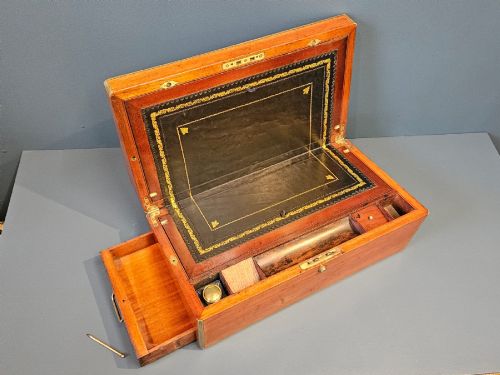
Writing surfaces typically incorporate inset panels of black or brown leather, frequently decorated with gold tooling around the perimeter. Brass handles, escutcheons, and occasional brass binding provide structural reinforcement and decorative contrast to the dark wood.
Construction techniques include hand-cut dovetails on drawer boxes and secure mortise and tenon joints for frames and legs. Desks with writing slopes or portable boxes often feature intricate internal pigeonholes and velvet-lined writing boards.
Listings feature mahogany, rosewood, walnut, and oak alongside inset leather and baize writing surfaces.
What Varies In Quality
The caliber of an early victorian writing desk depends heavily on the selection of timber and the complexity of its internal arrangement. Pieces utilising highly figured burr walnut, rosewood, or flame mahogany represent more ambitious workshop output than plain utilitarian items.
Joinery execution and hardware selection further separate standard items from finer workshop productions. The presence of branded maker marks, secondary locking mechanisms, and finely detailed drawer construction indicate higher-tier craftsmanship.
Johnstone and Jeanes·Gillows·Fisher·Holland and Sons
The Early Victorian Writing Desk Glossary
- Davenport desk
- A compact box-form desk featuring a sloping, often leather-lined writing surface above a bank of side drawers. This form became popular for smaller rooms and boudoirs during the nineteenth century.
- Partners desk
- A large pedestal desk designed with drawers and cupboards on both sides so two people can work facing each other. These pieces represent larger, more substantial library or study furniture.
- Writing slope
- A portable or stationary inclined box that opens to reveal a slanted writing surface and compartments for ink, pens, and stationery. These objects are often brass-bound or inlaid with decorative wood veneers.
- Secretaire bookcase
- A tall storage cabinet featuring a central drawer or compartment that drops down to form a writing desk, positioned beneath upper bookshelves. It combines display space with enclosed workspace.
- Tooled leather
- Leather writing inserts decorated with pressed or gilded patterns around the border using heated metal tools. This treatment provides a durable and refined writing surface.
Early Victorian Writing Desk: Frequently Asked Questions
What is a davenport desk?
A davenport desk is a compact writing cabinet featuring a sloping top and side drawers.
Cabinet-makers designed these small desks to occupy minimal floor space while offering secure stationery storage.
How do I identify an early victorian desk?
These desks are identified by mid-nineteenth-century timber choices such as mahogany and rosewood combined with classic joinery methods.
They often feature inset leather writing surfaces and traditional drawer construction dating between 1840 and 1860.
What is a partners desk?
A partners desk is a large double-sided workspace fitted with drawers and cupboards accessible from both directions.
Libraries and large studies originally utilised these desks to allow two individuals to work opposite one another.
Are writing slopes portable?
Many writing slopes are designed as portable boxes with hinged lids that fold flat to create a writing surface.
Victorian travellers and writers used these lap desks to transport writing materials securely.