


Early Twentieth Century Lighting
Early twentieth century lighting brings functional engineering and domestic warmth together through brass, glass and enamel fixtures.
Early Twentieth Century Lighting
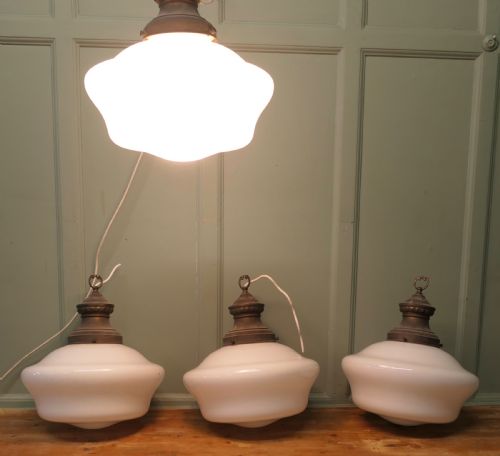
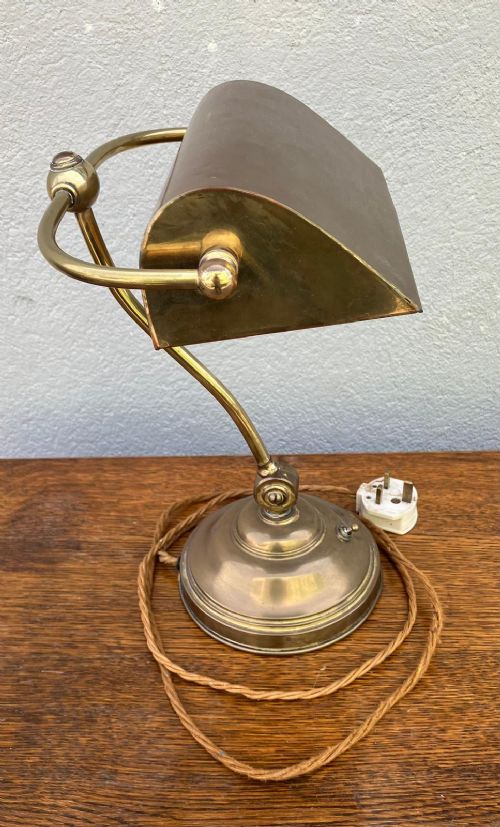
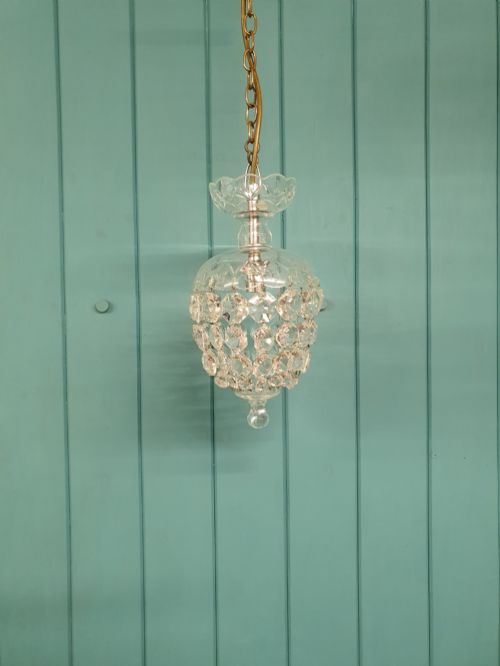
When you search for early twentieth century lighting, you encounter utilitarian factory pendants, grand chandeliers, and adjustable desk lamps spanning the Edwardian era through the nineteen thirties. These objects originate from industrial workshops, civic spaces, and domestic interiors across Britain and Europe.
The selections on this page highlight brass fittings, opal glass shades, and heavy iron frameworks. Forms range from multi-armed Dutch chandeliers and fairground units to scientific instruments adapted for illumination.
Industrial ceiling lights and brass desk lamps appear most frequently in this collection. They reflect a period when domestic and workplace lighting evolved rapidly alongside electrical infrastructure.
Materials and construction methods
Makers utilised solid brass, iron, and blown glass to construct robust fixtures designed for daily utility. Metal components were cast, hammered, or turned on lathes, creating durable frames that housed early electrical wiring or traditional oil burners.
Shades incorporated opal glass, canvas, and enamelled metal to diffuse light effectively across workspaces and reception rooms. Riveted joints and patinated surfaces demonstrate the mechanical fabrication techniques standard to the era.
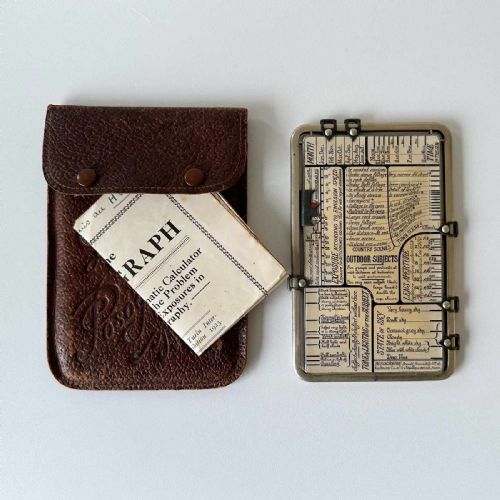
One listed photographic exposure machine by Auguste Robert Kauffman proves that early twentieth century lighting also served science.
Assessing quality in period lighting
Quality rests on the integrity of the original metalwork, the weight of the cast brass or iron, and the survival of unmodified glass elements. Heavy gauge components and clean, purposeful casting separate high grade industrial and domestic pieces from ordinary production.
The articulation of decorative details, such as the figural casting on a Minerva fitting or the complex arm structure of a Dutch chandelier, indicates the standard of workshop execution. Original surface patination and intact structural fixings further elevate a piece.
Auguste Robert Kauffman
The Early Twentieth Century Lighting Glossary
- Pendant light
- A hanging light fixture suspended from the ceiling by a cord, chain, or metal rod. These units directed illumination downwards over tables and work areas.
- Amsterdam School
- An architectural and design style of the early twentieth century characterised by expressive brickwork, organic forms, and rich metal detailing. It heavily influenced Dutch decorative arts of the period.
- Opal glass
- A milky, translucent white glass used extensively for lamp shades. This material diffuses harsh glare into a soft, even ambient glow.
- Pricket candlestick
- A candleholder featuring a sharp metal spike upon which the candle is mounted. They often appeared in ecclesiastical or formal domestic settings before widespread electrification.
- Chandelier
- A branched, multi-light ceiling fixture designed to hold numerous bulbs or candles. Period examples utilised brass or iron frameworks to support several arms radiating from a central stem.
Early Twentieth Century Lighting: Frequently Asked Questions
How do I wire a vintage light?
Period fixtures require professional rewiring to meet modern safety standards while retaining their original exterior components. A qualified electrician can thread modern flex through the historic brass stems and tubes.
Original lamp holders are often replaced with safety-compliant interiors, though the external metal shell or shade is carefully preserved to maintain the authentic appearance of the piece.
Are these lights compatible with standard bulbs?
Many ceiling lights and desk lamps accept standard modern LED or incandescent bulbs once the internal lampholders are updated. The physical clearance inside older glass shades should be checked before selecting bulb sizes.
Compact or historic style LED filaments work particularly well inside opal glass pendants and industrial shades, replicating the warm tone of early twentieth century illumination.
How do I clean antique brass?
Historic brass fixtures develop a dark oxidation layer known as patina over decades of exposure to air and handling. Cleaning should be limited to gentle dusting with a soft cloth to preserve this historical surface.
Harsh metal polishes strip away the aged finish and reduce the character of the object. Warm water and mild soap are sufficient for removing accumulated grease from industrial shades.
What rooms suit industrial ceiling lights?
Enamel factory pendants and heavy brass fittings suit kitchens, hallways, and open plan living spaces where direct, functional illumination is required. Their utilitarian aesthetic contrasts effectively with contemporary interiors.
Suspension heights must be adjusted carefully to ensure the heavy metal shades clear walkways and effectively anchor the seating or dining arrangements below them.